


Behind the Stunts: What It Takes to Perform with Fire, Bikes and Precision

Watching someone jump a bicycle onto an obstacle from a standstill is impressive enough.
Add fire, juggling and acrobatics and you've got an entirely different kind of entertainment.
But there's something audiences don't always recognize about these performances.
The real skill isn't simply doing something dangerous or physically impressive. It's having enough control to repeat those movements consistently, knowing when to push the limits and understanding how to keep an audience engaged without exhausting yourself or the people watching.
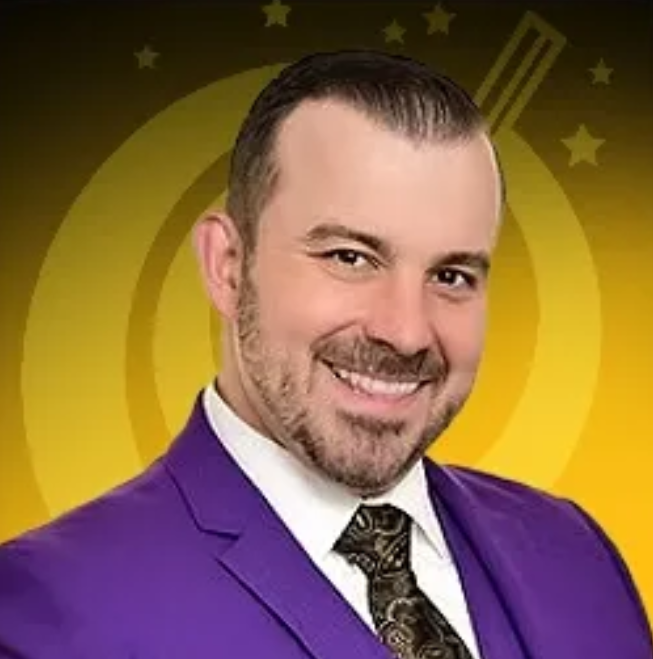
That's something professional entertainer Joe Janicki, better known as “Jumping Joe,” understands from experience.
Joe has spent more than a decade performing professionally, combining bike trials, fire manipulation, juggling and acrobatic movement into his shows. During our conversation on Magical Memories Unlocked, we explored what goes into developing those skills, how performers manage the physical demands and why some of the most important decisions happen before a stunt ever begins.
Bike Trials vs. BMX: Two Very Different Types of Skill
When most people hear the words "bike stunt show," they picture BMX riders launching off ramps, doing backflips and spinning through the air.
Joe's specialty is something different.
It's called bike trials, a cycling discipline centered on maneuvering a bicycle over obstacles while maintaining balance and control, typically without putting a foot on the ground.
Instead of relying primarily on speed and ramps to generate momentum, bike trials riders use strength, precision and technique to navigate obstacles that might seem impossible to get over on two wheels.
A rider might jump onto a platform from a nearly stationary position, balance on a narrow surface or hop between obstacles at different heights.

Joe has been competing in bike trials since his teenage years, long before he incorporated the discipline into professional entertainment.
The distinction becomes especially interesting when you consider what the audience is actually watching.
A BMX rider might build up speed before launching into a jump. A bike trials rider can generate an impressive amount of height and distance from a standstill using carefully coordinated body movements.
Both demand extraordinary skill, but they're demonstrating different abilities.
Joe even mentioned that audiences sometimes ask him to do a backflip, not realizing that the techniques they're seeing are part of an entirely different discipline.
The challenge in bike trials is often less about how spectacular a single jump looks and more about the extraordinary amount of control required to execute it.
The Physical Conditioning Behind a Professional Stunt Show
One of the more revealing parts of our conversation was how much time Joe spends maintaining the physical conditioning necessary to perform.
When an entertainer makes something look effortless, it's easy to underestimate how physically demanding the routine actually is.
For Joe, bike trials requires a combination of leg strength, balance, coordination and cardiovascular endurance.
He explained that much of the power behind his bicycle maneuvers comes directly from his legs. To develop that strength, he incorporates exercises such as squats and leg presses into his training.
He also mountain bikes and practices juggling for extended periods to maintain his endurance.
That conditioning isn't simply about becoming a better competitor. It's essential to his ability to deliver consistent professional performances.
Joe described how even a few minutes of his bike show would be difficult without the level of fitness he's developed.
And unlike an athlete who might prepare for one major competition, a professional entertainer may need to perform several times in a single day.
Each show requires enough energy and precision to give the audience a complete experience.
That's why managing physical endurance becomes part of the craft itself.
Why a Longer Stunt Show Isn't Necessarily a Better Show
One of the most useful insights Joe shared concerns performance length.
It's understandable why an event organizer might assume that a 45 minute fire show offers more entertainment than a 20 minute performance.
But for a physically demanding specialty act, that isn't necessarily true.
Joe explained that he typically finds 20 to 30 minutes to be an effective range for a continuous solo fire performance, with some performers preferring even shorter sets.
Over the years, he's developed the ability to maintain a high energy fire routine for approximately 30 minutes.
Beyond that point, however, fatigue begins to affect the performance.
The movements become harder to execute with the same intensity and the potential for mistakes increases.
A performer might technically be capable of continuing, but that doesn't mean the audience will be getting the best version of the show.
Maintaining intensity matters more than filling time
Joe described a common request from clients who want a 45 minute fire performance.
Rather than simply stretching his solo routine beyond its ideal length, he may recommend adding another entertainer.
That allows the performers to alternate routines, introduce different skills and maintain the overall energy without depending on one person's endurance for the entire show.
It's an important distinction.
The goal isn't necessarily to maximize how long someone is performing. It's to maximize the quality of the entertainment within the available time.
This principle extends beyond fire performances.
Joe shared a story about participating in a large circus production featuring approximately 25 performers, including aerialists, acrobats and fire jugglers.
Productions like this demonstrate the variety of acts involved in circus entertainment, where different performance disciplines come together to create a complete show.
The production was scheduled for two hours.
Despite the variety of acts, the audience began losing interest and becoming uncomfortable after about an hour, particularly because they were sitting outside in the sun.
His conclusion was that the show would have been more effective if the strongest material had been presented in a shorter period.
It's a useful reminder that more entertainment doesn't automatically produce a better audience experience.
Sometimes the best show is the one that ends while everyone is still excited.
The Difference Between Performing a Trick and Entertaining an Audience
Technical skill alone doesn't guarantee an engaging performance.
An entertainer also needs to understand how to present those skills so the audience appreciates what they're seeing.
Joe's bike trials demonstrations are a good example.
He explained that he could perform many of his stunts in approximately 15 to 20 minutes if he focused exclusively on the tricks.
But his typical show lasts closer to 30 minutes because he incorporates conversation, storytelling and audience interaction.
He takes time to explain what he's doing, build anticipation and help spectators appreciate the difficulty of particular maneuvers.
That changes the experience.
Instead of watching a succession of impressive bicycle tricks, the audience begins to understand why those tricks are impressive.
They become more invested in what happens next.
For younger audiences, Joe adds another dimension.
He talks about how his own interest in bicycles and juggling developed when he was a child and how years of practice eventually created opportunities he never imagined.
His message isn't that every child should become a professional stunt performer.
It's that developing something you love can lead to unexpected possibilities.
As Joe described it, his goal evolved from simply making people happy to inspiring them.
That message is particularly relevant in school programs and summer camp performances, where entertainment can also become an opportunity to encourage persistence, confidence and personal growth.
The Precision and Judgment Behind Fire Performance Safety
Fire performances add another layer of complexity.
Flames naturally capture attention, but working with them requires more than the ability to manipulate a prop.
For professional fire performers, delivering a captivating show also means understanding the preparation, safety considerations and judgment required when working with live flames.
When I asked Joe how he approaches safety, he emphasized that experience and preparation are fundamental.
He described the importance of understanding exactly what each routine requires, recognizing the potential hazards and maintaining appropriate operating procedures.
For his fire shows, he discussed designated fuel areas, performance boundaries, fire extinguishers, fire blankets and safety personnel when available.
He also described maintaining insurance and fire performance certification.
These are aspects of Joe's own professional practices rather than a universal checklist for every fire performance. Actual requirements depend on the performer, venue, local regulations and conditions.
Knowing when not to perform a stunt
One particularly interesting example involved audience participation.
Joe sometimes incorporates volunteers into his bike trials demonstrations, but he generally limits volunteer involvement during fire performances.
Even within his bike shows, he considers his physical condition before deciding whether a particular audience participation segment is appropriate.
If he's already completed several performances and feels fatigued, he may choose to skip an interaction that he would otherwise include.
That judgment is part of the expertise.
It's not just knowing how to execute a difficult movement.
It's recognizing whether the circumstances are right to execute it in the first place.
Fire, LED and Juggling: How One Skill Can Create Different Experiences
Another interesting aspect of Joe's work is how the same underlying skills can be adapted into different performance styles.
His specialty involves flower sticks, sometimes called devil sticks, along with other forms of object manipulation.
Unlike the traditional image of juggling three balls in the air, Joe's routines include rolling sticks across his body, tossing multiple objects and incorporating acrobatic movements.
Those techniques can be performed with fire props, LED equipment or traditional nonflammable juggling props.
Each version creates a different experience.
Fire introduces visual intensity and the dramatic element of working with flames.
LED performances use illuminated props to produce visual effects without actual fire.
Traditional juggling shifts more attention toward the physical techniques and creativity of the movements themselves.
Joe explained that removing fire can actually create opportunities to explore different tricks because he isn't working with the same hazards.
Choosing between a stage show and roaming entertainment
The presentation style can change as well.
A fire show might be structured as a featured performance where the audience gathers to watch a complete routine.
LED juggling could provide atmospheric entertainment in a darker environment.
Traditional juggling might become a roaming experience where guests watch smaller demonstrations up close.
Joe particularly enjoys the opportunity for personal interaction that roaming juggling creates.
Instead of performing for an entire audience at once, he can approach smaller groups and give them a close look at the techniques.
This illustrates an important part of professional entertainment: the performer isn't just choosing which tricks to do.
They're choosing how those tricks should be experienced.
How Audience Participation Can Change an Entire Performance
Joe shared an example from an event he performed through Magical Memories Entertainment that illustrates how adaptability can make a difference.
He had been booked for an hourlong LED juggling performance.
When he arrived, the expectation was that he would continuously juggle illuminated props for the entire hour.
Joe recognized that watching the same style of performance for that long could become repetitive.
Rather than simply repeating tricks until the time was up, he expanded the experience.
He introduced additional props and invited children to participate in supervised, non-fire juggling activities.
That allowed the audience to engage directly with the skills they had been watching.
It also gave the children a greater appreciation for how difficult those movements were to master.
What initially seemed like a challenging performance format became an opportunity to create something more interactive.
The experience reinforces an idea that came up repeatedly throughout our conversation.
A successful entertainer needs to understand what the audience is experiencing, not just what the performer is doing.
Why Professional Entertainers Never Really Stop Practicing
Toward the end of our conversation, Joe discussed something that helps explain how he's maintained his enthusiasm after more than a decade of performing.
He continues to challenge himself.
For him, practicing isn't simply a matter of repeating the routines he's already mastered.
He's constantly working toward new techniques, more difficult juggling patterns and improvements in his bike trials abilities.
He also participates in communities where he can learn from other performers and see what people at the highest levels of their disciplines are developing.
That continued growth matters to him both professionally and personally.
Joe explained that he doesn't want his work to become something he does automatically without enjoying it.
By setting new goals and continuing to develop his abilities, he keeps the same interests that originally drew him into juggling and cycling exciting.
There's also an interesting personal connection to his career.
Joe originally studied graphic design and expected to pursue work as a visual artist.
Instead, opportunities in live entertainment led him toward becoming a performing artist.
The creative interests were still there. They simply developed in a direction he hadn't anticipated.
It's a fitting example of the message he now shares with younger audiences.
The things you spend time learning today may eventually become valuable in ways you don't recognize yet.
Watch the Full Conversation with Jumping Joe
There's a lot more to Joe's story than can fit into a single article.
Our conversation also explores his experiences performing at music festivals, holiday celebrations and large community events, along with the differences between entertaining a crowd of children and performing for a major festival audience.
If you're interested in the techniques, preparation and personal experiences behind these types of performances, you can watch the full interview below.

The Real Skill Is Knowing How to Make It All Work Together
It's easy to watch a fire performer or stunt cyclist and focus entirely on the biggest trick.
But the longer we talked, the clearer it became that the actual performance is only one part of the work.
There's the time spent learning the movements, the conditioning needed to execute them consistently, the judgment involved in managing risk and the experience required to keep an audience engaged.
And then there's the ability to bring all those pieces together in a way that feels natural to the people watching.
That's part of what we enjoy exploring through Magical Memories Unlocked at Magical Memories Entertainment.
Getting to know the people behind the performances helps us better understand the creativity, training and professional judgment that go into the entertainment we bring to events.
Joe's career is a particularly interesting example because his work combines several different disciplines, each requiring its own set of skills.
Whether he's performing with fire, balancing on a bicycle or demonstrating an intricate juggling routine, the foundation remains the same.
Years of practice, continuous improvement and an understanding that the ultimate goal isn't just to impress the audience.
It's to give them something genuinely worth experiencing.
Comments