


What Makes a Great Entertainer? It's More Than the Performance
What makes someone a great entertainer?
Is it their ability to perform a magic trick, paint an incredible design or bring a favorite character to life?
Those skills certainly matter. But after more than 20 years in the entertainment industry, I've learned that knowing how to perform is only part of what makes an entertainer successful.
The other part is knowing how to connect with people.
It's something that came up repeatedly when I spoke with Stephanie Pearl, a longtime member of the Magical Memories Entertainment team, during our Magical Memories Unlocked: Entertainer Deep Dive conversation.
Stephanie has worked in hospitality, bartending, character entertainment, face painting, balloon twisting, bubbles, photo booths and event management. What makes her perspective interesting isn't simply the number of things she's done.
It's how those different experiences have shaped her understanding of what entertaining people actually means.
Entertainment Starts With People, Not the Activity
Before Stephanie began entertaining at children's parties, she spent years working in customer service and hospitality.
She worked in restaurants, bartended events and spent time in the hotel industry. Those experiences gave her a foundation that would eventually become just as important as learning to paint faces or portray characters.
As Stephanie explained, working with the public teaches you patience, adaptability and how to handle different personalities.
In bartending, for example, you aren't simply preparing and serving drinks. You're constantly interacting with guests, reading situations, managing expectations and making judgment calls.
Sometimes that means making conversation. Other times it means recognizing when somebody needs assistance or when a situation requires a different approach.
Those same people skills carry directly into entertainment.
A face painter might be hired to create designs, but they also need to interact with children who are excited, nervous, impatient or unsure of what they want.
A character entertainer might be scheduled for an appearance, but the experience depends on how they interact with guests once they arrive.
Stephanie's hospitality background taught her to approach each interaction with the guest's experience in mind.
One lesson from her hotel experience particularly stuck with her: Make people feel welcome and put their experience first.
That philosophy applies just as much to entertaining a room full of children as it does to welcoming someone into a hotel.
The Difference Between Performing a Service and Creating an Experience
There's a distinction I often make when talking about entertainment.
The activity itself isn't necessarily the experience.
Think about a child getting their face painted.
From a technical perspective, the entertainer is applying paint to create a design. But from the child's perspective, something much bigger might be happening.
They're sitting with an artist who is giving them individual attention. They're watching their chosen design gradually come together. They're anticipating what they'll look like when it's finished.
And then comes the mirror.
Stephanie described how much she enjoys that moment when a child finally sees their completed face painting.

What's particularly interesting is that face painting wasn't something she initially expected to enjoy.
In fact, when she first began learning it, she was nervous about whether she could do it successfully or whether children would be happy with her work.
Over time, that nervousness gave way to something unexpected.
She discovered that the painting process itself could be relaxing.
While the child enjoys the excitement of their transformation, Stephanie enjoys the quiet, focused interaction that happens along the way.
It's a great example of how an entertainer and a guest can experience the same moment differently while both finding something meaningful in it.
The painting matters, of course.
But the interaction surrounding it is what gives the activity its personal value.
Why Adaptability Is One of an Entertainer's Most Valuable Skills
One of the things that stands out about Stephanie's career is that she didn't begin with a plan to become a multitalented entertainer.
Her first opportunity with Magical Memories Entertainment actually came from a casual conversation at a mutual friend's house.
Someone suggested that she'd make a great princess character.
That conversation eventually turned into actual character appearances.
From there, Stephanie began learning additional entertainment skills, including balloon twisting and face painting.
Later, she took on bubble activities and other event assignments.
Each new opportunity came with its own learning curve.
Stephanie freely admits that she's someone who worries about unfamiliar situations.
When she was first asked to learn face painting, she questioned whether she could do it.
When she began facilitating bubble activities, she had similar concerns.
But she also discovered something important about herself.
Sometimes you don't know what you're capable of until you actually try.
Of course, that doesn't mean an entertainer should simply show up and attempt something they've never learned.
During our conversation, we discussed the importance of training, having the proper equipment and gaining experience before taking on new responsibilities.
For Stephanie, building those skills gradually allowed her to become more comfortable in different performance environments.
And that versatility opened the door to opportunities she hadn't originally considered.
Versatility Doesn't Mean Every Entertainer Has to Do Everything
There's an important distinction here.
Being a versatile entertainer isn't necessarily about offering the largest possible list of services.
It's about developing the confidence, judgment and flexibility to succeed in different situations.
Stephanie discovered that she particularly enjoys face painting, despite her initial hesitation.
She also acknowledged that balloon twisting is less comfortable for her because of the physical irritation it can cause her hands.
That's a useful reminder that entertainers have different strengths and preferences.
Learning multiple skills can expand someone's opportunities, but understanding which activities best suit them is equally valuable.
What Happens When Something Goes Wrong at an Event?
One of my favorite stories from our conversation involved a photo booth event Stephanie worked at Bear Mountain.
Magical Memories Entertainment had two photo booths operating at the event, one upstairs and one downstairs.
Stephanie was overseeing the downstairs booth.
Both booths had been tested and appeared to be working properly.
Then the first guest approached Stephanie's booth to take a picture.
And it stopped working.
Now, anyone who has spent time in live events knows that equipment problems can happen, even when everything works during setup.
What matters is how the situation gets handled.
Rather than panicking or creating an uncomfortable moment for the guests, Stephanie made a joke about the camera and explained that another photo booth was available upstairs.
She then guided the guests to the working booth while the other attendant came downstairs to address the problem.
Once the equipment was working again, they switched back.

It wasn't the situation anyone had planned.
But Stephanie kept the guests moving, maintained a lighthearted atmosphere and worked with another team member to resolve the issue.
That story illustrates something important about professional entertainment.
The ability to handle an unexpected problem without allowing it to dominate the guest experience is a skill of its own.
Technical preparation matters. So does having people who can troubleshoot when necessary.
But there's also a human element.
Guests take their cues from the people running an activity.
When an entertainer remains composed and helps everyone understand what to do next, a potentially frustrating interruption becomes much easier to navigate.
Stephanie didn't need to pretend nothing had happened.
She simply found a way to keep the event moving while the problem was resolved.
The Real Magic of Character Entertainment
Another story from our conversation involved a character appearance Stephanie performed as Moana at a children's party in Connecticut.
It's a reminder of what makes character entertainment so memorable: bringing a familiar character to life takes more than a costume. It takes personality, creativity and genuine interaction.
I remember this particular event because I was there performing a magic show.
At the time, Moana was a relatively new character and Stephanie wasn't particularly familiar with her.
She had to learn about the character and prepare for the appearance.
But what I remember most wasn't the costume.
It was how completely Stephanie committed to interacting with the children.
She was expressive, animated and willing to dance and play along with them.

The children responded to that energy.
By the time the appearance was over, the birthday girl had formed such a connection with Stephanie's character that she was upset to see her leave.
That's what I mean when I say there's a difference between wearing a costume and creating an experience.
A recognizable costume can get a child's attention.
But it's the interaction that makes the character feel real to them.
There's another part of this story that has stayed with me.
Years later, I happened to run into the parent from that same event at an airport after returning from a conference in Las Vegas.
They remembered the party.
They remembered the entertainment.
And they remembered Magical Memories Entertainment.
For me, that's one of the best examples of why the work we do matters.
The party itself might last only a few hours, but the connections created during it can stay with a family long afterward.
Why Entertainers Have to Understand Their Audience
One thing Stephanie and I kept coming back to was the importance of understanding who you're entertaining.
Different audiences respond to different things.
And even the same activity can create different experiences depending on the people participating.
Take bubble entertainment.
Stephanie described how exciting it can be to watch children react to bubbles, especially when they're able to participate directly.
But she also pointed out that adults often become just as excited.
There's something about bubbles that encourages people to play.

That excitement can make the activity engaging, but it also requires the entertainer to stay attentive to what's happening around them.
Stephanie shared a story about facilitating bubbles in a gymnasium, where she had established boundaries and instructed children to move carefully because of slippery surfaces.
Despite those instructions, one excited child ended up slipping while chasing bubbles.
The story reinforced a practical reality of interactive entertainment.
When guests are having fun, they may become so focused on the activity that they stop paying attention to everything around them.
For an entertainer, managing the experience includes helping participants understand boundaries and responding appropriately when something unexpected happens.
The goal isn't simply to generate excitement.
It's to guide that excitement in a way that works for the activity and the environment.
Sometimes the Best Entertainers Are Still Nervous
One of the more revealing things Stephanie shared was how she often feels before trying something new.
From the outside, she can appear confident, expressive and completely comfortable interacting with guests.
Internally, she says she's often worrying about everything that could go wrong.
That was particularly true when she began facilitating bubble activities.
She worried about learning the equipment, remembering what to do and successfully delivering the experience.
But she prepared, practiced and reminded herself to focus on the activity rather than everything that might go wrong.
I think that's an important distinction for anyone interested in working in entertainment.
Confidence doesn't necessarily mean never feeling nervous.
For Stephanie, it has often meant learning something new despite that nervousness and allowing experience to gradually build her confidence.
Her advice to people interested in entering the entertainment industry reflects that same philosophy.
Start small.
Find something you're interested in or believe you could do well. Learn the skills, gain experience and build from there.
You don't have to know how to do everything on day one.
Sometimes the first step is simply discovering that you're capable of more than you originally thought.
Watch the Full Conversation With Stephanie Pearl
There's much more to Stephanie's story, including her experiences with mascot characters, what she's learned from working in event management and why she continues returning to entertainment even while pursuing other professional interests.
You can watch our complete Magical Memories Unlocked: Entertainer Deep Dive conversation below.

Great Entertainment Is About How People Feel
If there's one idea that connects Stephanie's many experiences, it's that the most important part of entertainment isn't always the thing the entertainer is doing.
It's what happens between the entertainer and the audience.
A child might remember the princess who danced with them.
A family might remember the photo booth attendant who kept everyone laughing even when the camera wasn't cooperating.
A face painter might remember the child's reaction when they looked in the mirror.
Those interactions are what turn individual activities into personal experiences.
At Magical Memories Entertainment, we're fortunate to work with entertainers who bring different talents, backgrounds and perspectives to the events we produce.
Conversations like this one are an opportunity to explore the skills and thinking that guests don't always get to see.
Because behind every great performance is a person making decisions, adapting to situations and finding ways to connect with the people in front of them.
And sometimes, that's where the real magic happens.
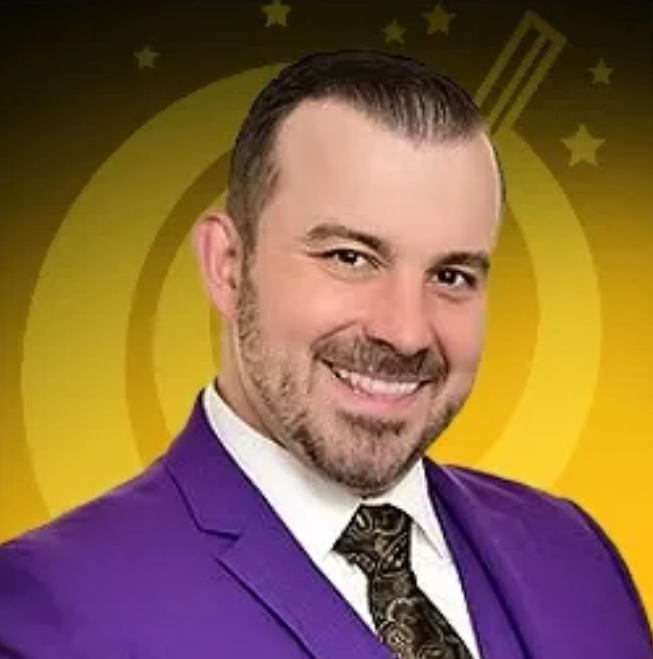
Magical Memories Unlocked: Entertainer Deep Dive is hosted by Steven Burchard, owner of Magical Memories Entertainment. Join us live every Monday as we explore the people, skills and stories behind the entertainment industry.


Comments