


What Makes a Great Children's Magician? It's More Than Magic Tricks

A magician can perform an incredible trick and still lose an audience. Meanwhile, another magician might perform something relatively simple and have an entire room of children laughing, shouting and hanging on every moment.
So what makes the difference?
It turns out that some of the most important skills in children's magic have very little to do with the tricks themselves.
That's what makes children's magic shows so engaging: the combination of surprising tricks, humor, and a performer who knows how to connect with young audiences.
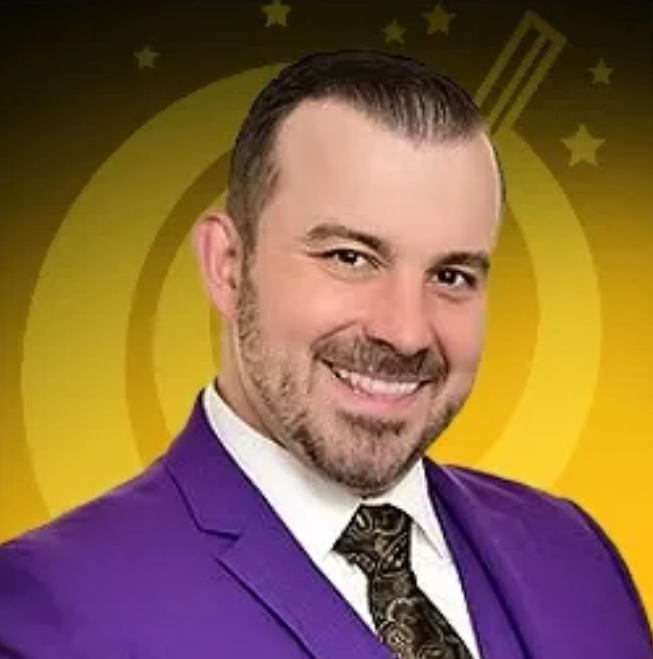
During a conversation on Magical Memories Unlocked, I explored this question with Rob Dell’Aquila, better known as The Great Roberto. Rob has been performing magic since childhood and has spent years entertaining audiences at birthday parties, family events and other celebrations.
What emerged from our conversation was an interesting look at the psychology behind children's entertainment and why a successful magic show depends just as much on connecting with the audience as it does on creating the illusion.
The Best Magic Tricks Give Children Something to React To
One of Rob's favorite routines is a classic magic effect called the Stratosphere.
The premise is simple. Three colored balls, green, yellow and red, are supposed to go into a tube in a particular order.
But every time the magician removes the cover, the balls are in the wrong order.
Naturally, the children notice.
They start calling out the mistake. They insist the magician is doing it wrong. Rob playfully suggests that perhaps the children don't know their colors.
That only makes them more determined to prove him wrong.
The routine continues with increasingly ridiculous results, including a red ball that somehow returns to the tube after it was supposedly removed.
What makes this one of Rob's favorite tricks isn't necessarily the illusion itself. It's the reaction he gets from the children.
He can feel the audience becoming more involved with every mistake.
And that's where the real entertainment happens.
Instead of sitting quietly and watching a magician demonstrate a skill, the children become part of the experience. They're correcting him, reacting to the surprises and emotionally invested in what happens next.
For a children's magician, knowing how to create that kind of participation can be just as valuable as knowing how to perform the trick.
Why Children's Magic Requires a Different Approach
Not every audience responds to magic the same way.
Rob explained that he approaches a show for four-year-olds differently from one designed for seven or eight-year-olds.
Some routines work especially well with younger children. Others are more appropriate for older kids who understand different types of humor and can follow more involved presentations.
When the audience includes a mix of ages, Rob adjusts his material to give different groups opportunities to participate.

This adaptability is what makes family entertainment so engaging, allowing children and adults to enjoy a shared experience while connecting with the performance in different ways.
This is an important distinction because children's magic isn't simply adult magic performed with colorful props.
The presentation has to make sense to the audience.
Younger children might enjoy repetition, visual comedy and the opportunity to loudly correct the performer. Older children may respond to different challenges, surprises and more developed humor.
In both cases, the magician needs to understand what will keep the audience interested.
Rob also adapts his shows to the size of the audience.
He's performed for hundreds of people and has also entertained just three children at a birthday party when most of the expected guests canceled.
It's a reminder that great birthday party entertainment isn't about how many guests attend, but how meaningful and memorable the experience is for those who do.
For a larger audience, he may need bigger effects and a sound system. For a smaller group, the performance can become more personal.
The underlying goal remains the same: establish a connection with the people in front of him.
Experience Allows a Magician to Focus on the Audience
One of the most revealing parts of our conversation came when I asked Rob what happens behind the scenes that audiences might not realize.
His answer highlighted an interesting difference between learning a magic trick and mastering it.
When Rob performs something new, there's a lot to think about.
Where does each prop belong? What needs to happen next? When should the audience see a particular object? Is everything positioned correctly for the next part of the routine?
These details require concentration.
But when he's performing something he's done hundreds or thousands of times, those technical decisions become much more familiar.
Instead of concentrating on what his hands and props need to do next, he can pay more attention to the audience.
He can watch their reactions, adjust his delivery and look for opportunities to make the moment more entertaining.
That's a significant part of what experience brings to a performance.
A magician who is completely occupied with remembering the mechanics of a trick has less attention available for the people watching.
A magician who knows the routine thoroughly has more freedom to interact, improvise and respond to the room.
In children's entertainment, where the audience can be especially vocal and unpredictable, that flexibility makes a difference.
How Magicians Keep Familiar Tricks Feeling Fresh
Performing the same routines repeatedly creates another challenge.
How do you prevent a show from becoming stale?
Rob shared a story about his daughter, who used to accompany him to performances when she was younger.
After attending so many shows, she eventually knew parts of his presentation well enough that he noticed her mouthing the words along with him.
That was a wake-up call.
He realized that even though the tricks were working, he didn't want his presentation to become so automatic that every moment was delivered exactly the same way.
Today, he experiments with different approaches.
He might change a joke, adjust how he introduces an effect or try a different interaction to see whether it produces a stronger audience reaction.
He also balances familiar material with routines he performs less frequently.
The established tricks provide a dependable foundation while newer material gives him opportunities to experiment and continue developing as a performer.
Rob explained that he has enough material to present approximately three different complete shows, allowing him to change things when returning to entertain the same audience.
It's a useful reminder that experience doesn't have to mean repetition without improvement.
Even a routine a magician has performed a thousand times can provide opportunities to learn something new.
The Special Challenge of Performing Magic With Live Animals
Another interesting aspect of Rob's performances is his work with animals.
Over the years, he's incorporated rabbits, doves and even trained Pomeranians into his magic shows.
One of his earlier acts featured a sequence of dove productions followed by an illusion in which two Pomeranians appeared where the audience had previously seen birds.
Today, he focuses primarily on smaller performances and rabbit magic.
His rabbit Bandit became especially important to him during the pandemic, when they spent much more time together.
But incorporating live animals into a magic show involves much more than bringing a rabbit onto the stage.
Rob discussed the repetition and patience involved in getting an animal comfortable with a particular routine.
The rabbit needs to become familiar with its surroundings and the equipment involved in the illusion.
Rob also pays close attention to the animal's individual temperament.
At the time of our conversation, he was training two younger rabbits. One was adapting well while the other was more nervous.
He was clear that if a rabbit didn't become comfortable enough to perform, it would simply remain a pet.
That distinction matters.
For Rob, an animal's suitability for a routine is something to evaluate rather than assume.
His experience also demonstrates that animals have individual personalities. What works beautifully with one rabbit may not work with another.
His approach emphasizes familiarity, comfort and recognizing when an animal may not be suited to a particular performance.
Why the Rabbit Reveal Is About More Than the Surprise
One of Rob's favorite ways to end a magic show involves a routine called the Test Tube Bunny.
He starts by getting the children excited about meeting his rabbit.
After building up their anticipation, he reveals what appears to be a rabbit printed on a piece of fabric.
Naturally, the children are disappointed.
But Rob tells them that his rabbit knows magic and can make itself disappear.
The rabbit image goes into a tube and, moments later, disappears from the fabric.
When the tube is opened, there's a real rabbit inside.
The children finally get the surprise they've been waiting for.

What's interesting about this routine is how much of its impact comes from the presentation.
Rob doesn't simply produce a rabbit and expect the audience to be impressed.
He creates anticipation, introduces a playful disappointment and builds toward the final reveal.
The children already care about meeting the rabbit before the actual magic happens.
That's what gives the ending its emotional payoff.
It also reflects a broader principle of effective children's entertainment: the audience's investment in what is happening can be just as important as the mechanics of the effect.
The Most Important Lesson Rob Learned About Entertainment
Toward the end of our conversation, Rob shared advice from his father that has stayed with him throughout his career.
His father was a musician and entertainer who introduced Rob to professional performing when he was still a child.
They eventually worked together in variety shows featuring music, magic and comedy.
Although Rob learned a great deal about performing during those years, one lesson stood out.
His father frequently reminded him that their job was to entertain people.
The specific skill being demonstrated was secondary.
Rob recalled his father encouraging him to make his piano playing more visually entertaining, even when the additional movement wasn't necessary for the music itself.
His father wasn't evaluating the performance solely as a musician. He was thinking about what the audience was experiencing.

That same philosophy carried over into Rob's magic.
He explained that magicians sometimes become focused on the technical cleverness of an illusion. They might appreciate an especially complicated method or a difficult technique.
But most audiences aren't evaluating magic from that perspective.
They're there to enjoy themselves.
As Rob explained, the goal isn't simply to impress people with the cleverest possible method. It's to give them something magical, mysterious and above all, fun.
That may be the most valuable distinction between performing a trick successfully and delivering a genuinely entertaining magic show.
The Real Magic Happens Between the Performer and the Audience
There are countless ways to perform a magic trick.
Some rely on elaborate props and illusions. Others use everyday objects, simple visual effects or audience participation.
But watching Rob describe his approach makes one thing clear: the trick itself is only part of the experience.
A great children's magician understands how to create anticipation, build laughter, invite participation and respond to the unexpected.
The preparation and technical skill make the illusion possible.
The connection with the audience is what makes the performance entertaining.
That's one of the reasons we created Magical Memories Unlocked at Magical Memories Entertainment. Speaking directly with working entertainers gives us an opportunity to explore the thinking, experience and skills that audiences don't always get to see.
And sometimes the most interesting thing behind a magic trick isn't how the illusion works.
It's understanding why people love watching it.
Watch the Full Conversation With The Great Roberto
Rob shares additional stories about growing up in entertainment, performing alongside his father, training animals and developing his magic routines.
Watch the full conversation below for a closer look at his experience as a children's magician.

Magical Memories Unlocked features conversations with entertainers about the skills, stories and experiences behind live entertainment.
Comments