


The Art of Live Music: How Musicians Set the Tone for an Event
There's something different about hearing a familiar song performed live.
You might recognize the melody immediately, but it doesn't sound exactly like the version you've heard on the radio a hundred times. The tempo might be a little different. The arrangement might be simpler. The musician might even change the way they're playing based on how the audience is responding.
That's part of what makes live music interesting. It's not just about which songs are being played. It's about how they're performed and how those performances fit the moment.
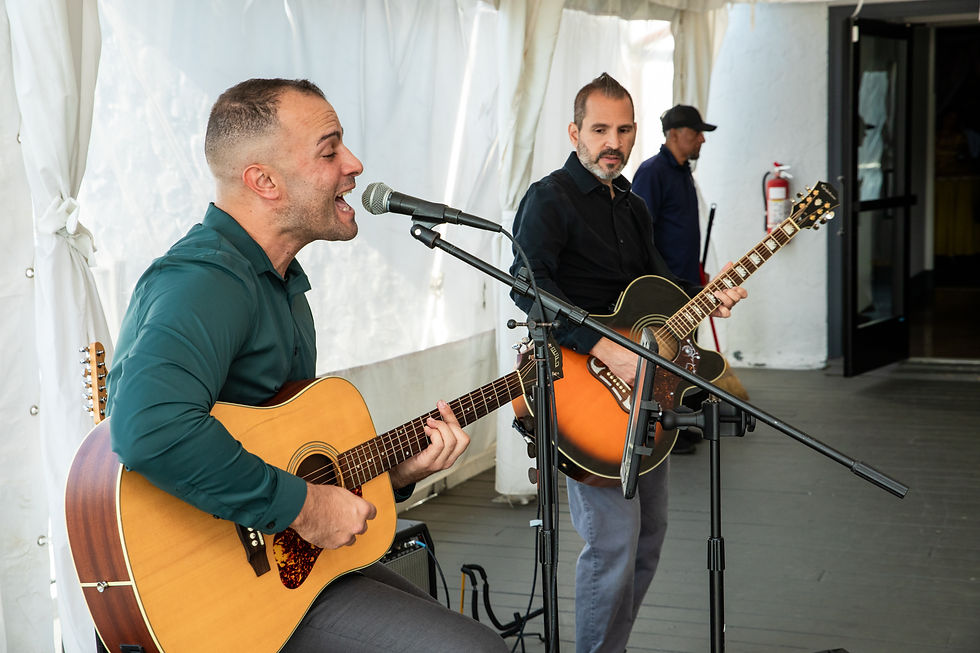
Experienced live musicians bring more than a familiar melody to an event, adapting their sound and performance to create an atmosphere that feels right for the occasion.
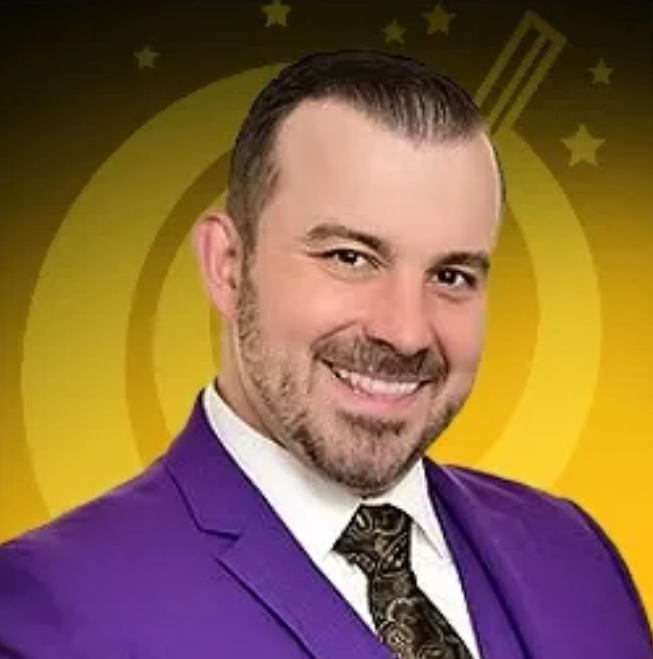
On Magical Memories Unlocked, I had the opportunity to explore this with John Caruso, a singer, songwriter and multi-instrumentalist who performs under the name Jay Caruso.
John and I have known each other since high school and he's worked with Magical Memories Entertainment on weddings, cocktail hours and other events for several years. He even performed during the cocktail hour at my own wedding.
Our conversation offered a closer look at what goes into creating the right musical atmosphere, from selecting songs before an event to making adjustments once the celebration is underway.
A Good Setlist Starts Before the First Song
When most people think about hiring a musician, they focus on the songs they want to hear.
But an experienced performer is thinking about more than the playlist.
John has built an extensive repertoire over more than a decade of solo performing. He told me that his collection of cover songs adds up to roughly five days of music.
Having that many songs available gives him options, but knowing which ones to play is where the real decision-making begins.
When I asked how he prepares a setlist, he described a process built around imagining himself at the event.
He considers the occasion, the people attending and what kind of atmosphere would make sense.
For a wedding cocktail hour, that might mean incorporating romantic songs alongside recognizable upbeat music. For a birthday party or mitzvah, the selections might lean toward music familiar to the guests and appropriate for the celebration.
He also pays attention to the lyrics and overall feeling of a song rather than choosing it simply because a particular artist made it famous.
That's an important distinction.
A song can be popular without necessarily being the right choice for every event. The goal isn't to perform every song people know. It's to select music that supports the experience they're there to enjoy.
Why Musicians Prepare More Music Than They'll Actually Play
One detail from our conversation stood out because it reveals how much flexibility goes into a seemingly straightforward performance.
For a typical one-hour cocktail set, John estimates that he'll perform approximately 15 songs.
But he doesn't prepare just 15.
He often plans around 25 songs, giving himself more material than he expects to need.
That extra preparation makes it easier to respond to what happens during the event.
A particular song might run longer than expected. Guests might make requests. The crowd might respond especially well to one style of music, encouraging him to continue in that direction.
John also described how a musician can use an instrumental passage to create some flexibility during a performance.
The audience hears a continuous musical experience, but the performer is making small decisions throughout the set.
Having additional material ready allows those decisions to happen naturally rather than forcing the musician to follow a rigid playlist.
Reading the Room Is Part of the Performance
A setlist provides direction, but it doesn't necessarily determine everything a musician will play.
John explained that he pays attention to the audience throughout the event.
His usual cocktail hour performance features acoustic guitar and vocals with a relaxed, natural sound. But relaxed doesn't have to mean slow or sleepy.
If the crowd is becoming more energetic, he may adjust the music accordingly.
He described situations where guests begin responding more enthusiastically and he changes the setlist to make the performance livelier.
This is one of the advantages of having a musician performing in real time.
The performer can respond to the energy of the room rather than simply delivering the same predetermined sequence of songs.
It's also why two performances by the same musician can feel different, even when the repertoire is similar.
The audience becomes part of the equation.
The Difference Between Playing a Song and Interpreting It
John's background makes his perspective especially interesting.
He started playing drums when he was approximately three or four years old and grew up surrounded by music. His family included several musicians and had been involved in both record sales and musical instrument retail.
He eventually took up guitar as a teenager, began performing with bands and later developed his own solo music.
Today, his work includes singing, songwriting, guitar, drums and music production.
That experience gives him several ways to approach a song.
When we discussed requests, John explained that learning a new cover doesn't necessarily mean reproducing every detail of the original recording.
A musician can approach a song at different levels of complexity depending on the arrangement and the instruments available.
For example, a song originally recorded with a full band can be adapted for a single acoustic guitar and voice.
The melody, lyrics and recognizable character of the song remain, but the presentation changes.
John has occasionally learned requested songs with only a day or two of preparation. In those situations, he works within what he can comfortably perform and adjusts the arrangement accordingly.
That ability to interpret music is part of the skill involved in solo performance.
A guitarist isn't simply recreating a recording. They're presenting their own version of it.
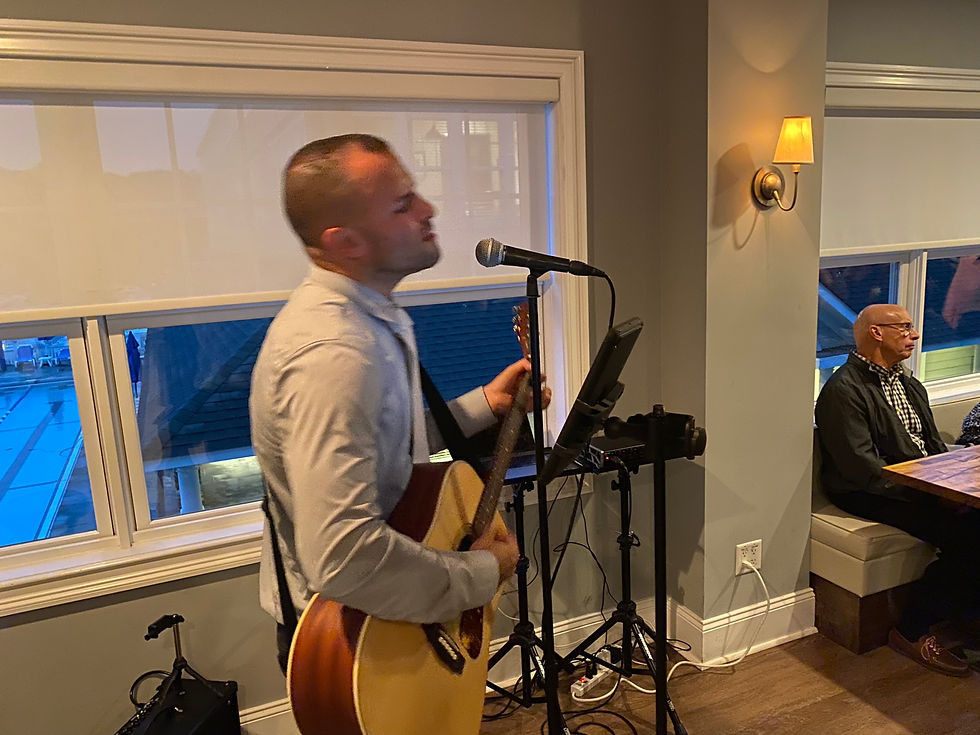
And that version can bring a completely different feeling to a familiar song.
Why Acoustic Music Doesn't Necessarily Mean Unamplified Music
Another interesting part of our conversation addressed a misconception that comes up when planning live entertainment.
People sometimes hear the phrase acoustic musician and picture someone sitting in a corner playing guitar without any sound equipment.
In practice, that's not always how acoustic performances work.
John typically performs with an acoustic guitar, vocals and a compact sound system.
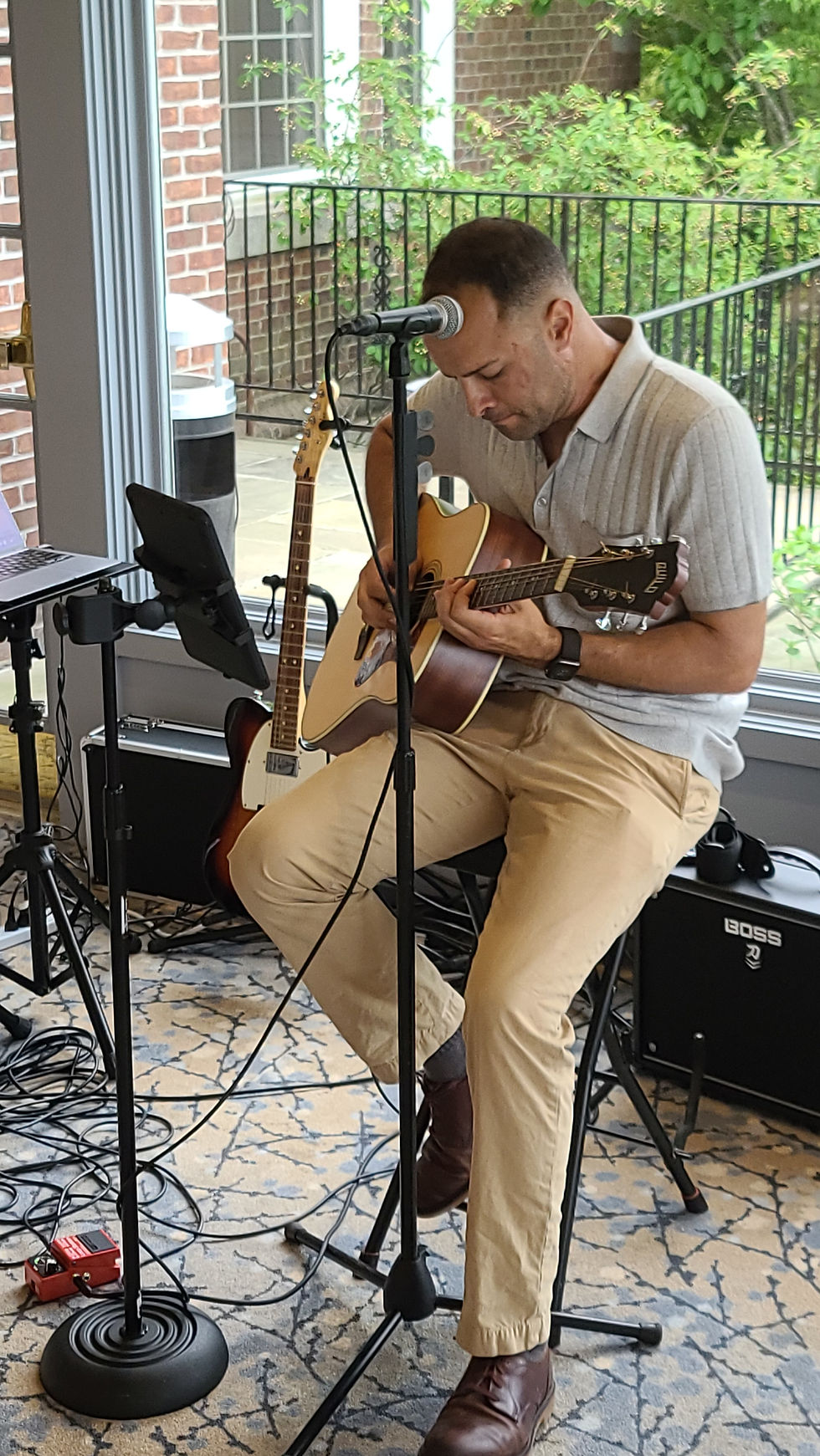
His guitar uses a pickup to send its sound through amplification, allowing the music to reach the audience without requiring him to play or sing excessively loudly.
The result is still the natural sound of an acoustic guitar. It's simply amplified to suit the space.
This distinction matters because acoustic describes the instrument and its sound, not necessarily the absence of a speaker.
John recalled arriving at a restaurant event and discovering that amplification wasn't permitted in the performance area.
That created a problem because he was expecting to perform for a sizable audience.
Without amplification, both the guitar and vocals would struggle to reach everyone comfortably.
It's an example of how a technical detail that seems minor during planning can affect the actual performance.
John also emphasized that the size of the room helps determine the sound equipment he needs. A larger space may require a different setup than an intimate gathering.
The objective isn't necessarily to make the music loud.
It's to make sure guests can hear it appropriately throughout the space.
How Live Music Changes Throughout an Event
One of the questions I asked John was how his approach changes when he's performing for several hours rather than a single cocktail hour.
His answer highlighted something that doesn't always get considered when planning entertainment: events have different phases.
At the beginning of a celebration, guests may still be arriving, greeting one another and settling into the environment.
The music helps establish the mood.
As the event continues, people become more comfortable. Conversations develop, the energy changes and guests may become more engaged with the performance.
John described approaching longer engagements with those transitions in mind.
For example, when performing at season-opening dinners at Fairview Country Club, he would treat the opening portion much like a cocktail hour and then adjust the music as the evening progressed.
He explained that the first hour or two often requires particular attention because that's when the atmosphere is still developing.
Later in the evening, once guests are relaxed and enjoying themselves, the performance can build on that energy.
This doesn't mean every celebration needs to become a dance party.
It means the music should make sense for what's happening in the room.
A successful musical performance isn't necessarily one that maintains the same energy from beginning to end. Sometimes the skill is knowing when to keep things comfortable and when to become more energetic.
What Happens When a Live Musician Performs With a DJ?
John's experience isn't limited to acoustic guitar.
He's also spent years performing drums alongside a DJ, which led to another interesting part of our conversation.

For someone who hasn't experienced that combination, the concept is relatively simple.
The DJ performs a set using recorded music while a live drummer plays along with the mix.
The audience still hears familiar recordings, but the live percussion adds another musical element to the performance.
John explained that he's performed this way using both electronic drums and a traditional acoustic drum kit.
He's also worked in arrangements that included live saxophone and violin alongside the DJ.
At that point, the performance begins combining aspects of a DJ experience with elements of a live band.
It's an interesting middle ground because the musical foundation remains the DJ's mix while the instrumentalists contribute live performances.
John also made an important observation when we compared DJs and musicians.
He considers DJs performing artists, too.
Rather than treating one option as automatically better than the other, he focused on the different sounds and experiences they create.
A solo acoustic guitarist can provide a consistent, intimate musical atmosphere.
For wedding entertainment, that distinction can be especially important, as different parts of the celebration may call for different styles of music.
A DJ can deliver the fuller sound of recorded music and is generally better suited to keeping a large crowd dancing for several hours.
Adding live instruments to a DJ performance offers another creative possibility.
The right choice depends on the sound and energy the event calls for.
Sometimes the Audience Surprises the Musician
One of my favorite parts of talking with working entertainers is hearing about the moments they couldn't necessarily plan.
For John, some of those moments happen when guests connect with songs in unexpected ways.
He described occasions when an audience began singing along during a performance.
Those moments are especially memorable because they aren't guaranteed, even when the musician is playing a recognizable song.
Another thing that surprises him is seeing younger guests respond enthusiastically to older music.
He recalled playing songs that would generally be considered oldies and watching children or younger audience members begin dancing.
It's a reminder that a good song doesn't necessarily belong to one generation.
People can connect with the rhythm, melody and feeling of music regardless of when it was originally released.
And sometimes those reactions are exactly what make a performance memorable.
A song that seems like a simple background selection can suddenly become something the entire room shares.
Why the Human Element Still Matters
With practically unlimited music available through streaming services, it's easier than ever to put together a playlist for an event.
But a playlist and a live performance are two different experiences.
A playlist delivers the recordings you've selected.
A live musician brings interpretation, flexibility and a human connection to those songs.
They can change an arrangement, respond to a request, adjust the energy and create a consistent musical sound throughout a performance.
When I think about having John perform at my own wedding, one of the things I appreciated was that consistency.
Rather than hearing different recorded voices and production styles with every song, our cocktail hour had a unified sound shaped by one musician.
That created a natural musical atmosphere that fit the experience we wanted.
It's also why understanding how musicians work matters.
At Magical Memories Entertainment, we work with entertainers across a wide range of specialties.
Conversations like this give us an opportunity to explore the actual thinking and experience behind the performances people enjoy.
Because the difference between simply having music at an event and having music that feels right often comes down to the decisions being made by the person performing it.
Watch the Conversation With John Caruso
John shares more about his journey from drummer to solo musician, his approach to live performances and the experiences that have shaped his career.
We also discuss his songwriting, the technical side of live music and what he's learned from years of performing at celebrations.

One of the things John mentioned toward the end of our conversation was that the part of his career he's proudest of isn't necessarily a particular performance or musical accomplishment.
It's the relationships he's developed with the people he's performed for.
Over time, those relationships have led to additional celebrations with the same families and opportunities to be part of important moments in their lives.
That's a meaningful way to look at the role of an entertainer.
The music matters, but so does being part of an experience people want to share again.
For more conversations with the people behind live entertainment, join us for Magical Memories Unlocked: Your Guide to Event Success.
Comments