


What Makes a Great Live Entertainer? It's More Than the Act
Swallowing a sword in front of an audience is impressive. So is eating fire, performing magic or making a room full of children laugh with a puppet.
But being able to do something impressive and being able to entertain people are two different skills.
That's something that became particularly clear during my conversation with Brent Allan on Magical Memories Unlocked: Entertainer Deep Dive.
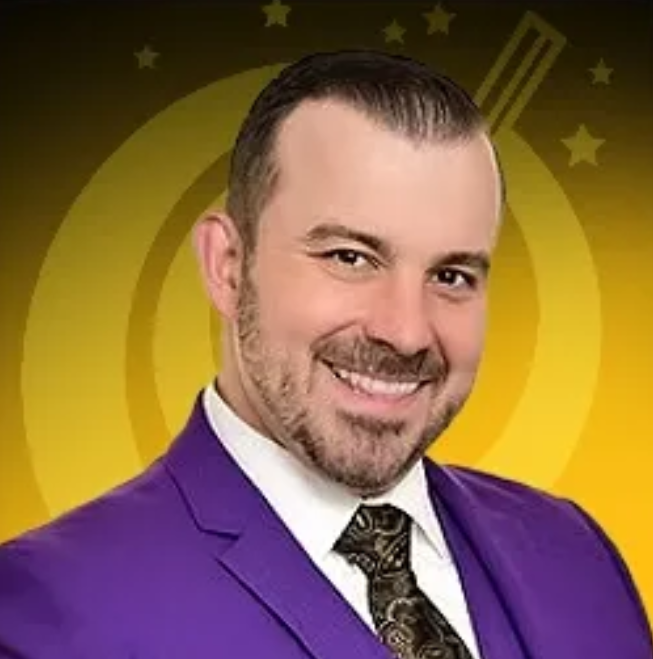
Brent has spent more than two decades working professionally in entertainment. His background includes magic, juggling, stage hypnosis, fire eating, sword swallowing, puppetry and educational performances. He's worked everywhere from Renaissance festivals to schools, libraries and private events.
With that kind of variety, there's plenty to discuss about the individual acts. But one of the most valuable lessons from our conversation wasn't about a particular trick or stunt.
It was about understanding the audience.
As Brent put it, the goal is to perform with your audience, not at them.
An Impressive Skill Doesn't Automatically Make an Entertaining Show
Brent originally became interested in entertainment after watching a close friend perform close-up magic at a nightclub near Indianapolis.
That experience led him into magic and eventually into other disciplines, including juggling and stage hypnosis.
As he developed his career, he started looking for ways to distinguish himself from other performers. That eventually brought him into fire eating and sword swallowing.
Sword swallowing is a particularly interesting example because it's not an illusion in Brent's act.
He uses a real, rigid sword that was specially made for him. Although the blade isn't sharp, the stunt itself is genuine.
During performances, he even invites an audience member to inspect the sword and confirm that it doesn't collapse, bend or disappear.
Learning the skill wasn't quick. Brent described spending approximately four years training before performing sword swallowing publicly for the first time.
That's a tremendous investment in developing a single ability.
But when I asked Brent what advice he would give other entertainers, he didn't tell them to learn more difficult tricks.
Instead, he brought the conversation back to audience connection.
"It's less about the tricks or stunts you do in the show and more about how you connect with your audience."
That distinction matters.
An entertainer can spend years mastering something technically difficult, but the audience doesn't experience those years of practice. They experience what's happening in front of them at that particular moment.
The technical ability makes the performance possible. The entertainer's personality, timing and interaction make it engaging.
Performing With the Audience Changes the Experience
One of Brent's favorite techniques is to look for opportunities to interact with individual audience members.
At Renaissance festivals, where guests are often dressed in costumes and enjoying the atmosphere, there's plenty of material to work with.
He described seeing someone sit in the front row holding an enormous turkey leg.
Rather than ignoring it and continuing through his prepared script, he'll make a joke about the audience member bringing a dead bird to eat during the show.
It's a small interaction, but it accomplishes something important.
That audience member becomes part of the performance.
The people sitting nearby recognize that the entertainer is responding to something happening in their environment rather than simply repeating lines.
The moment belongs to that particular audience.
Brent explained the difference this way:
"Then it becomes no longer performing at the audience. You're performing with them."
This is one of the things that makes live entertainment different from watching a video.
A recorded performance can be technically flawless. It can have excellent production value and perfectly timed jokes.
But it can't notice what someone in the third row just did and turn that into a shared experience.
Live entertainers have that opportunity every time they step in front of a crowd.
The challenge is knowing how to recognize and use those moments.
The Same Entertainer Can Deliver Completely Different Experiences
Another interesting part of Brent's career is how dramatically his performances change depending on the setting.
At Renaissance festivals, he performs a sideshow-style act involving fire eating, sword swallowing and other unusual stunts.
He performs in character, under the stage name Molotov, with a show called Stupid Human Tricks.
The character, costume, humor and material are all designed around that particular environment.
A Renaissance festival audience arrives expecting something different from what they'd expect at an elementary school assembly.
And Brent approaches those performances accordingly.
When working with young children, he uses puppets, age-appropriate performances from the world of children's magicians and material designed for their age.
He also offers educational programs, including science demonstrations for schools.
These types of programs can be particularly effective during school assemblies, where entertainment needs to engage students while supporting the purpose of the gathering.
These aren't simply toned-down versions of his Renaissance festival act.
They're different shows designed for different audiences.
Understanding What Different Ages Find Entertaining
Brent offered a particularly useful explanation of why he approaches younger audiences differently.
When he started performing for very young children, he found that puppets were often more effective than traditional magic.
His reasoning was simple. A three-year-old doesn't necessarily understand what's supposed to be impossible.
Magic depends partly on recognizing that something shouldn't be able to happen.
For a young child who is still learning how the world works, that distinction may not carry the same meaning.
A puppet, however, gives the child a character to respond to and interact with.
That understanding led Brent to expand his entertainment skills rather than trying to make every audience appreciate the same type of performance.
He also discussed the challenges of performing for large age ranges.
At one small school, he performed for the entire student body, from kindergarten through 12th grade, because the school had only 93 students.
That's an enormous difference in interests and maturity levels.
What fascinates a kindergartener may barely register with a high school senior.
Brent compared the situation to putting those same students together in a classroom.
Nobody would expect one lesson to be equally appropriate for every grade.
The same challenge applies to entertainment.
A professional performer can adjust material and expectations, but understanding the intended audience before the event makes a significant difference.
Adaptability Is More Than Having Multiple Talents
It's easy to look at Brent's career and describe him as somebody who does a little bit of everything.
But his versatility goes beyond knowing multiple performance disciplines.
He has developed different ways to use those skills depending on where he's working.
During the spring and fall, he concentrates heavily on Renaissance festivals.
Summer brings library reading programs.
Winter is more focused on school shows and assemblies.
Each environment has its own expectations, audiences and practical considerations.
Creating New Shows Around Library Reading Themes
For example, Brent explained how he develops programs around annual summer reading themes.
Different library systems may participate in different reading initiatives, including iREAD and the Collaborative Summer Library Program.
Rather than relying entirely on one standard show, he creates themed programming that connects with those initiatives.
He discussed developing a dinosaur-themed show called The Great Dino Safari and a farming-themed program called Brent Allan and Friends Funny Farm.
The significance isn't simply that he changes the show's title.
He's using entertainment as a way to support the purpose of the event.
A library summer reading program isn't just trying to fill a room for an afternoon. It's trying to encourage participation in reading and library activities.
Building a performance around the theme gives the entertainment a stronger connection to that goal.
This also illustrates why choosing entertainment based only on the category can be limiting.
Two magicians might both offer excellent performances, but their approaches could be completely different.
One might specialize in sophisticated sleight of hand for adults.
Another might excel at interactive educational programs for young children.
Neither needs to be considered better overall.
The question is which experience makes sense for the people attending.
Some of the Best Performance Material Isn't Planned
Toward the end of our conversation, Brent shared something he's been experimenting with at Renaissance festivals.
Most of his regular festival performances follow a familiar structure.
That makes sense. Each show often has a new audience that hasn't seen his material before.
But after performing the same routines hundreds of times, Brent wanted a way to challenge himself and develop new ideas.
So he introduced a different format for the final show of the day.
He calls it his FAFO show, which he jokingly describes as his "fun around and find out" show.
Instead of walking onstage with a completely planned routine, he starts without knowing exactly what he's going to perform.
He talks to the audience, responds to their reactions and sometimes brings out material he hasn't performed in years.
Other times, he experiments with something new that isn't fully developed yet.
The audience knows they're watching something more spontaneous.
For Brent, this creates an opportunity to test ideas in front of real people.
He explained that some of the best jokes in his established shows weren't originally written into his scripts.
They developed because an audience member said something unexpected and he responded.
The reaction was good enough that he remembered the moment and eventually incorporated it into future performances.
Why Live Feedback Matters
Practicing a routine alone can help an entertainer work through the mechanics.
But it doesn't fully answer questions about how an audience will react.
Will the joke get a laugh?
Will people understand the setup?
Does a particular moment create excitement or confusion?
Is the audience still engaged?
Those answers become clearer when the material is tested in front of people.
Brent's experimental performances give him a way to learn those things while continuing to entertain.
I shared a similar habit during our conversation.
Whenever possible, I record my own performances, even if that means setting a phone off to the side with a less-than-perfect camera angle.
The purpose isn't necessarily to create a polished video.
It's to capture moments I might otherwise forget.
A spontaneous joke or an unexpected audience reaction might be worth revisiting later.
For performers, those observations can become part of improving the show over time.
And for the audience, they help create performances that feel responsive rather than mechanical.
Professionalism Also Happens Before the Performance
Audience interaction is a major part of Brent's approach, but our conversation also explored the preparation that allows him to perform effectively.
Some of those details are surprisingly practical.
For example, Brent explained that he eventually transitioned to battery-powered sound equipment after encountering venues without reliable access to electricity.
Now his microphone and speakers can operate without being plugged into an outlet.
That makes a difference when he's performing at outdoor festivals, libraries or other locations where the setup isn't always predictable.
It's a good example of how experience changes the way entertainers prepare.
The performance itself might look the same to the audience, but the equipment decisions behind it can make the day considerably easier.
Preparation Matters Even More With Specialized Entertainment
Brent's experience with fire and sword swallowing also highlights the importance of knowing the limitations of a performance.
He discussed the training, insurance considerations and safety preparations involved in his fire performances.
He explained that his own insurance generally requires him to perform fire acts outdoors without a roof overhead.
He also described how fire safety needs change depending on the type and scale of the performance.
A solo fire eater working with small props has different considerations from a group performing with large fire equipment.
Those are important distinctions because not every act has the same requirements.
The lesson isn't that every entertainer should follow Brent's exact procedures.
For circus and specialty performers, understanding the equipment, venue conditions and requirements of each individual act is an essential part of event planning.
It's that specialized performances require specialized preparation, and event organizers need to understand the requirements of the particular act they're booking.
For anyone planning an event involving fire or other potentially dangerous performance elements, confirming appropriate insurance, training, venue permissions and applicable safety requirements should be part of the process.
The Right Entertainer Is the One Who Fits the Event
One of the things Brent and I agreed on was the importance of finding the right entertainment for the situation.
During the conversation, Brent pointed out that an entertainer fitting within the budget doesn't automatically make that person a good fit for the event.
That's a distinction we talk about frequently at Magical Memories Entertainment.
The most expensive entertainer isn't necessarily the right one.
Neither is the entertainer with the longest list of skills.
A successful match depends on the audience, environment, event goals, budget and experience the organizer wants guests to have.
Brent's own career illustrates that point.
The person who swallows swords at a Renaissance festival can also perform a puppet show for younger children or present a science program at a school.
But that doesn't mean those experiences are interchangeable.
What matters is understanding which skills to use, how to present them and who is sitting in front of the stage.
That applies to virtually every type of entertainment, from magicians and DJs to comedians, musicians and interactive performers.
Watch the Conversation With Brent Allan
There's considerably more to Brent's story, including how he developed his unusual performance skills, what he's learned working across different event environments and how he's built a full-time career doing something he enjoys.
We also explored the behind-the-scenes realities of fire performances, foam parties, school shows and library programs.
You can watch our full conversation on Magical Memories Unlocked: Entertainer Deep Dive below.

Great Entertainment Is About the People Watching
There's one idea from Brent's interview that works particularly well as a final takeaway.
A performer can have extraordinary technical abilities, years of experience and an impressive collection of routines.
But the performance isn't complete without the audience.
The reactions, conversations and unexpected moments are part of what make live entertainment special.
And sometimes the most memorable part of a show isn't the difficult stunt somebody spent years mastering.
It's the moment the entertainer notices something happening in the room and makes everybody feel like they're part of it.
That's the difference between simply watching entertainment and experiencing it.
At Magical Memories Entertainment, these are the kinds of conversations we enjoy exploring through Magical Memories Unlocked. Understanding the people and thinking behind the performances helps us appreciate what makes different entertainment experiences work.
Join us for more conversations with working entertainers as we continue our Entertainer Deep Dive series.
Comments