


What Makes a Great Entertainer? Why the Best Performances Go Beyond the Tricks

You can learn to juggle. You can learn to walk on stilts. With enough training, you might even find yourself suspended high above an audience on aerial silks.
But knowing how to perform a skill and knowing how to entertain people are two very different things.
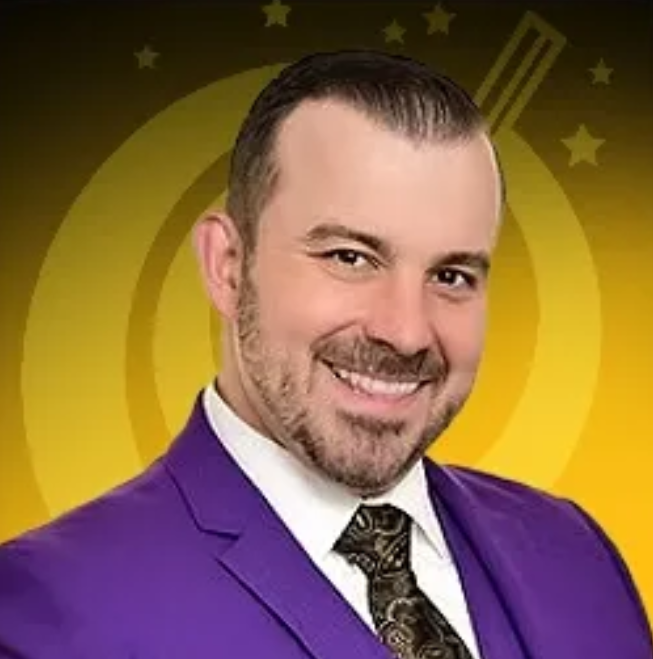
That's one of the ideas that stood out during my conversation with professional circus entertainer Callie Compton on Magical Memories Unlocked.
Callie has spent more than 16 years working as a professional entertainer. Her performances include aerial arts, juggling, hula hooping, stilt walking and interactive circus shows. She's the kind of performer who can take on several different roles depending on what an event needs.
Yet when we started talking about what makes someone a great entertainer, the conversation kept returning to something much simpler than mastering another trick.
The ability to connect with people.
Being a Skilled Performer Doesn't Automatically Make You a Great Entertainer
There's a natural tendency to evaluate performers by how technically impressive they are.
Who can juggle the most objects? Who can perform the most complicated aerial drop?
Who can execute the most difficult acrobatic routine?
Those achievements require tremendous dedication, but Callie made an interesting distinction between being the most technically advanced performer and being the right performer for an audience.
Consider aerial entertainment.
Callie explained that someone watching an aerialist perform a double star drop might be just as impressed as they would be watching a quadruple star drop. To someone without an aerial background, both can look extraordinary.
The difference in technical difficulty may be significant to the performer, but that doesn't necessarily translate into a more enjoyable experience for the audience.
And sometimes the venue doesn't even have the height required for the more complicated routine.
As Callie put it:
"The highest level skills might not even be the most memorable."
That doesn't mean technical ability isn't important. It means that technical skill is only one part of the equation.
An entertainer also needs to understand the audience, the environment and the kind of experience they're trying to create.
Why Callie Compton Became a Jack of All Trades
Callie's career actually began with a very specific goal.
When she was around 13 or 14, she attended an aerial demonstration at a convention.
After trying a brief introductory workshop, she approached the instructor and announced that she wanted to spend the rest of her life doing it.
She pursued that ambition seriously, taking classes, seeking out experienced teachers and even working around the studio to help pay for her training.
But as she developed professionally, she discovered that being an aerialist alone wouldn't necessarily give her the career she wanted.
An agent once explained that the aerial performers he booked for touring productions also needed a ground act.
For a traveling circus with a relatively small cast, having entertainers who can perform multiple acts allows the production to offer more variety without bringing along an entirely separate performer for every specialty.
Callie decided to learn hula hooping.
Drawing on her dance background, she developed an act within a matter of weeks. What began as a practical career decision became another creative passion.
She started experimenting with multi-hoop choreography, unusual movements and equipment she could make herself.
One of her signature pieces is a slinky made from 21 connected hoops.
Her versatility continued growing into juggling, stilt walking and other performance styles.
At one point, a client needed a knife juggler for a parade that was only two weeks away.
Callie took on the challenge, learned the skill and eventually made knife juggling a significant part of her act.
But her career illustrates an important distinction.
Learning more skills gave Callie more things she could perform. Developing showmanship gave her more ways to connect those skills to an audience.
The Difference Between Performing for an Audience and Performing With One
One of the most interesting parts of our conversation was the distinction Callie made between traditional stage shows and interactive event entertainment.
In a touring circus production, an entertainer may perform essentially the same routine night after night.
The locations and audiences change, but the choreography, music and overall structure remain consistent.
That repetition allows performers to refine their work until the timing and presentation are extremely precise.
Interactive event entertainment is different.
At a corporate event, festival or private celebration, every conversation with a guest can go somewhere unexpected.
A child might ask a stilt walker how they became so tall.
An adult might suddenly find themselves participating in a hula hoop contest.
A juggling routine might turn into a playful exchange with someone in the crowd.
Callie described these interactions as a form of improvisation and live theater.
The performer has to think on their feet because the audience becomes part of the experience.
A routine that works perfectly in front of a seated audience might need an entirely different approach when guests are walking around, socializing or arriving at different times.
And that requires a skill that isn't always obvious when watching a performance video.
Knowing how to read people.
Sometimes the Most Important Moment Isn't Part of the Show
Callie shared a particularly meaningful example of how an entertainer's interaction with an audience can go well beyond the performance itself.
Callie has Type 1 diabetes and wears medical devices that are sometimes visible while she's performing.
At an event, a young girl noticed Callie's insulin pump and pointed to her own.
The girl recognized that they had something in common.
She asked Callie whether she could do what Callie was doing.
The child had been told that she couldn't participate in sports because of concerns about managing her blood sugar.
Callie explained that having diabetes didn't automatically mean she had to give up those ambitions, while also acknowledging that adjusting to a new diagnosis can take time.
It was a personal exchange between a performer and a child who saw someone like herself doing something she hadn't thought was possible.
That moment had very little to do with juggling, aerial silks or stilt walking.
It had everything to do with the person behind those skills.
Later in our conversation, Callie recalled another meaningful experience performing with a Shrine Circus production. Following the show, children approached the performers and wanted to interact with them. Some were children connected to Shriners Hospitals.
For Callie, having the opportunity to speak with those children and share her own experiences was particularly important.
These were the kinds of moments she remembered just as strongly as performing on major stages.
There's something worth recognizing here.
An entertainer might spend years perfecting a routine that lasts five minutes, yet an audience member's most meaningful memory could come from a brief conversation afterward.
Why Personality Matters in Stilt Walking and Circus Entertainment
Stilt walking is a good example of how personality can completely change an entertainment experience.
At its most basic, stilt walking creates a visual spectacle. Someone walks into the room towering above everyone else and naturally attracts attention.
But what happens next?
Does the performer simply stand there for photographs?
Do they interact with guests?
Can they make someone laugh, improvise a conversation or bring a character to life?
Callie explained that many events don't necessarily require stilt walkers who can perform advanced acrobatic lifts or complicated tricks.
Sometimes the most valuable thing a performer brings is the ability to make people feel comfortable approaching them.

She also prefers using two-foot stilts for many appearances because they allow her to interact more naturally with children.
Rather than being so tall that a child has to jump to reach her, she can bend down and give them a high five.
It's a relatively small decision, but it demonstrates how an experienced performer thinks beyond the visual effect.
The goal isn't simply to be taller.
It's to use that height to create a character people want to meet.
A Costume Is Only the Beginning of a Character
Callie also discussed the importance of theatrical character development.
She's performed as everything from an LED robot to a tree-inspired character she calls Aunt Earth.

She described performing alongside flamingo stilt walkers whose height and unusual proportions became part of the character design.
When the character makes sense visually, the stilts stop feeling like equipment and become part of the illusion.
But Callie wants to go even further.
One of her goals is to develop stronger personalities and backstories for the characters she performs.
For example, she has a pirate character that she particularly enjoys.
Rather than simply wearing a pirate costume and telling a few pirate jokes, she wants to think about how that character behaves, what motivates them and how they interact with guests.
That's the difference between someone wearing a costume and someone bringing a character to life.
Callie and I explored these ideas along with her experiences in aerial performance, circus touring, creative character development and the realities of working as a professional entertainer.
Watch the full conversation.

A Great Family Show Should Entertain the Adults Too
One of Callie's strongest opinions about interactive entertainment concerns the audience members who sometimes get overlooked.
The adults.
Her one-woman circus show features what she jokingly calls her trained hula hoops, along with juggling, magic and audience participation.
Naturally, children are a major part of the experience.
But Callie doesn't want the adults to sit in the background while the children have all the fun.
She wants everyone involved.
Sometimes that means bringing parents onstage for a hula hoop contest.

Other times, it's encouraging adults to respond to something happening in the show or play along with a joke.
She even described calling attention to a parent who is distracted by their phone and inviting them back into the experience.
Callie has a simple way of describing her approach:
"It's not a kid show, it's a family show."
That distinction changes how you think about entertaining a mixed-age audience.
Rather than designing a performance solely for the children, great family entertainment creates opportunities for the entire family to participate.
And sometimes seeing a parent attempt a hula hoop trick is just as entertaining for the children as watching a professional do it.
The Physical Skill Is Only Half the Work
Of course, none of this means the physical training behind circus entertainment should be overlooked.
During our conversation, Callie described the tremendous preparation involved in aerial performance.
She practices regularly, teaches classes and pays close attention to her physical conditioning.
There are also equipment considerations, costume preparation and specialized rigging requirements.
One detail that may surprise people is the amount of force generated during an aerial routine.
Callie described measuring more than 800 pounds of force during one of her larger drops.
That's dramatically different from simply supporting someone's body weight while they're hanging still.
It's why professional aerial rigging requires properly evaluated equipment, suitable structures and people qualified to assess those requirements.
The same commitment to preparation appears in Callie's approach to stilt walking.
Her training group uses a skill progression that includes everything from basic movement to negotiating obstacles, responding to people approaching unexpectedly and eventually performing more advanced acrobatics.
These details help explain why experienced entertainers often make difficult performances look so natural.
The audience sees an effortless moment.
They don't necessarily see the years of preparation that made it possible.
But even after that technical foundation has been established, Callie believes there's another area that deserves just as much practice.
Human interaction.
Callie's Advice to New Entertainers: Practice Talking to People
Near the end of our conversation, I asked Callie what advice she would give someone who wanted to become a professional entertainer.
Her response wasn't to learn another juggling pattern or practice a more difficult aerial trick.
It was to practice interacting with people.
She suggested making a deliberate effort to speak with unfamiliar people during everyday activities.
Ask someone how their day is going.
Start a conversation while waiting in line.
Become comfortable making eye contact and responding naturally.
It's to develop confidence communicating with people when there's no script.
For a performer, that confidence matters.
Callie pointed out that an audience can often sense when someone is uncomfortable or nervous. Even when the technical routine is solid, uncertainty in the performer's interactions can affect how people respond.
Her advice was particularly relevant to entertainers who spend most of their practice time working on their physical skills.
Because once those skills are strong enough to perform professionally, the next challenge is learning to share them with people.
As Callie put it:
"Anyone can learn to juggle. Anyone can learn to stilt walk, but the interaction part is much harder to teach."
It's a useful reminder that entertaining isn't simply a matter of demonstrating what you can do.
It's also about knowing what to do with the attention you've earned.
The Best Entertainer Is the One Who Fits the Experience
There's another point from our conversation that connects all of these ideas.
When evaluating performers, Callie isn't particularly interested in claiming to be the best at everything she does.
She's interested in being the best fit for the people who hire her.
An event that needs an elegant visual performance has different requirements from a festival where guests want to interact with colorful characters.
A seated circus show calls for different skills than a corporate reception where entertainers move through the crowd.
A performer can be exceptionally talented and still not be the right choice for a particular audience.
This is something I relate to through my work with Magical Memories Entertainment.
Our job isn't simply to match a client with someone who performs a requested skill. It's to understand the experience the client wants and identify the entertainment that can help create it.
Sometimes that means introducing an idea the client hadn't considered.
Someone planning a winter-themed celebration might envision a snow queen character without thinking about whether that character should be on stilts, interacting with guests or incorporating another performance element.
Understanding the possibilities allows us to explore what would actually work best.
Callie's approach reinforces why getting to know entertainers and understanding how they work matters.
The performance category tells you what someone does.
It doesn't necessarily tell you what kind of experience they'll create.
What Audiences Remember About Live Entertainment
Toward the end of our interview, Callie reflected on how her preferences have changed throughout her career.
Earlier on, she would have favored traditional stage performances over interactive event entertainment.
But more recently, she's developed a greater appreciation for those unscripted, personal moments with an audience.
The individual conversations.
The unexpected reactions.
The times when people become so involved in what's happening that taking a picture isn't their first thought.
We also discussed how technology and artificial intelligence might affect the future of live entertainment.
My perspective is that as more of our daily experiences become digital or automated, genuine human interaction may become even more valuable.
A technically perfect routine is impressive.
But there's something different about watching a real person take a risk, respond to an audience and create something that exists only in that particular moment.
Callie's career demonstrates that distinction particularly well.
She's invested years in learning difficult skills, developing creative acts and building a career around professional circus entertainment.
Conversations like this are why we created Magical Memories Unlocked, where we explore the talent, experience and personalities behind live entertainment.
Yet when asked what aspiring performers should work on, she returned to the simplest thing.
Talk to people.
Because sometimes the most memorable part of a performance isn't the trick itself.
It's the connection that happens because of it.
Comments