


What Makes a Great Circus Performer? It's More Than the Tricks
Imagine watching someone juggle five clubs while balancing one on their foot, then kick that club back into the air without ever breaking the juggling pattern.
That's an extraordinary skill. Most people couldn't come close to doing it.
But does that automatically make someone a great entertainer?
Not necessarily.
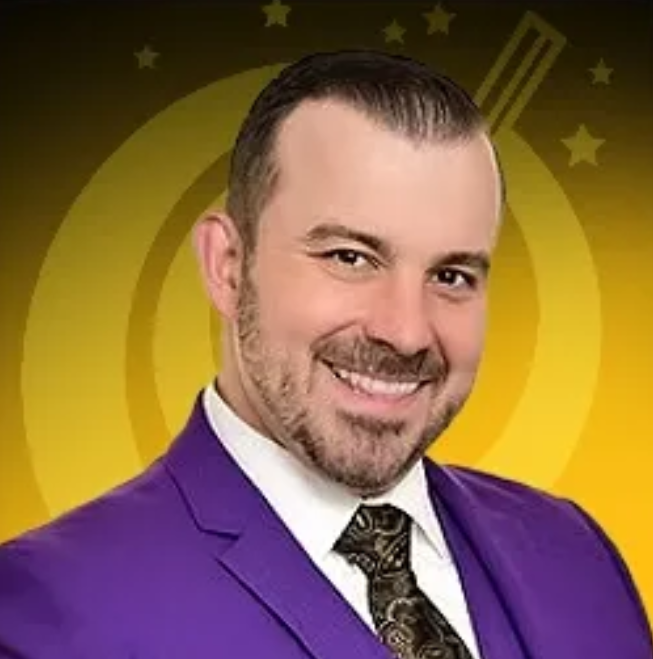
It's a distinction that circus veteran Greg Milstein understands particularly well. Greg has been performing professionally since 1982, trained at Ringling Bros. and Barnum & Bailey Clown College and has performed in more than 30 countries. His career has included juggling, clowning, circus education, directing and producing.
I've known and worked with Greg for well over a decade, so when we had the opportunity to record an in-person episode of Magical Memories Unlocked while traveling together for our Freedom Circus production, there was plenty to discuss.
One of the most interesting subjects we explored was something that often gets overlooked when people watch circus performers.
Being exceptionally good at a skill and being exceptionally good at entertaining an audience are two different things.
A Great Circus Act Isn't Necessarily a Complete Show
Greg shared a story about working with a world class Russian juggler whose technical abilities were remarkable.
This performer could juggle seven rings while tap dancing. He had the type of skill that other professional jugglers admired.
When Greg explained that they would be performing together in a one hour show, the juggler wanted to know how many performers would be involved.
Just the two of them.
The juggler was confused. His act was approximately seven minutes long.
Who would perform the remaining 53 minutes?
Greg's answer was simple. He would.
That conversation illustrates an important distinction in the circus industry.
A circus act is a developed performance built around a particular skill or combination of skills. It might last several minutes and be extraordinary within that time.
A complete circus show requires much more.
Professional circus entertainment brings together performance skills, showmanship and thoughtful production to create an experience that holds the audience's attention from beginning to end.
Someone has to connect those individual moments, maintain the audience's attention, establish a rhythm and create an experience that works from beginning to end.
As Greg explained, a performer presenting a 45 minute or hour long solo show needs enough material, personality, comedy and audience interaction to carry that entire production.
You can be one of the best jugglers in the world without necessarily having those additional skills.
And there's nothing wrong with that.
A great seven minute juggling act can be an important part of a larger circus production.
The distinction is understanding what the performer has actually developed.
Technical Skill and Showmanship Are Different Talents
Greg shared another experience that makes this distinction even clearer.
He was visiting a juggling club when he noticed someone practicing an incredibly difficult routine.
The man was juggling five clubs. He would throw one into the air, catch it vertically on his foot, continue juggling the remaining four clubs and then kick the fifth back into the pattern.
Greg recognized how technically impressive this was.
It's a reminder that professional juggling performers can develop remarkable technical abilities, even though transforming those skills into an engaging show requires a different kind of experience.
He approached the man, complimented his abilities and asked whether he would be interested in performing in a show.
The response caught him off guard.
"You mean do it in front of other people?"
The man had absolutely no interest.
He was a research physicist who enjoyed juggling as a hobby. He loved the challenge of learning difficult patterns and developing technical skills, but performing for an audience wasn't something he wanted to do.
In fact, after their conversation, he returned to practicing while facing the corner of the room.
This wasn't a case of someone lacking talent.
He had tremendous talent.
What he didn't have was an interest in being an entertainer.
The ability to execute an incredible trick doesn't automatically include the desire or ability to hold an audience's attention.
That distinction applies well beyond circus.
A musician might be technically brilliant but uncomfortable engaging with a crowd. A magician might master difficult sleight of hand without having developed a compelling stage presence.
The technical skill is the foundation. Turning that skill into entertainment requires another layer of development.
How Circus Performers Turn Skills Into Entertainment
So what does that additional layer actually look like?
Greg's own performances offer several examples.
His one man circus show can include juggling, spinning plates, hat manipulation, unicycling, balance board routines, diabolo and balloon comedy.
But the show isn't simply a sequence of different tricks.
It includes music, comedy, audience participation and interaction between the routines.

The variety of skills creates opportunities for different kinds of entertainment.
A juggling routine might focus on technical difficulty. A balancing routine might create suspense. A comedy sequence might involve an audience volunteer.
Together, those moments create a show with more variety than a continuous demonstration of physical abilities.
Making the Audience Part of the Comedy
One particularly interesting point Greg raised was that circus comedy doesn't always depend on telling jokes.
Sometimes the situation itself is the comedy.
For example, he described bringing a volunteer onto the stage and introducing that person as the world's greatest plate spinner.
Suddenly, this ordinary audience member is wearing a hat with spinning plates and participating in a ridiculous circus routine.

The audience knows this person isn't really a professional plate spinner.
That's part of what makes it funny.
The humor comes from the situation, the performer's presentation and the audience's connection to the volunteer.
Instead of simply watching someone demonstrate an impressive skill, the crowd becomes emotionally involved in what's happening.
And the volunteer gets to become the star of the moment.
That's a different kind of entertainment than watching someone execute a technically perfect juggling pattern.
Both have value, but they create different experiences.
Why Timing and Audience Awareness Matter
Another part of showmanship is recognizing what works for the audience in front of you.
Greg talked about a juggling joke he used decades ago.
After explaining how to throw juggling balls into the air, he would deliver the punchline that the secret to juggling was "throwing up."
In the 1980s, he remembers getting consistent laughs from children.
Today, that same joke often gets almost no reaction.
Greg isn't entirely sure why.
He speculated that the audience might interpret the phrase more literally or simply have a different sense of humor.
Meanwhile, a reference to a current internet trend could generate a huge response.
It's a small example, but it reveals something important about performing over several decades.
Audiences change.
Cultural references change. Humor changes. Expectations change.
An entertainer needs to recognize those changes rather than assuming that material which worked 20 or 30 years ago will always produce the same response.
That's part of what makes live entertainment different from simply demonstrating a rehearsed skill.
The routine might be practiced, but the audience is always new.
When Circus Becomes Storytelling
One of the more unusual parts of Greg's career is an act he created called Balloon Jazz.
At first, the idea of balloon entertainment might bring to mind someone twisting balloon animals at a birthday party.
Greg's production takes that same basic skill and uses it in a completely different way.
Balloon Jazz is a theatrical performance choreographed to classical music.
Rather than simply making balloon sculptures, Greg uses balloons, mime, physical comedy and music to tell a story.

A balloon swan appears alongside music from Swan Lake.
A Viking themed balloon sword fight unfolds during Ride of the Valkyries.
Other moments explore themes such as conflict, peace and love.
The audience doesn't necessarily need to know the names of the musical compositions to understand what's happening.
Greg described using a balloon bumblebee alongside Flight of the Bumblebee. Even if someone doesn't recognize the composition, the relationship between the music, the movement and the character makes sense.
The performance communicates visually.
That has allowed Greg to present the act internationally, including in countries where the audience doesn't share his spoken language.
He also described how different audiences respond to the deeper artistic themes of the piece.
According to Greg, audiences in Russia responded particularly strongly to the relationship between classical music and the visual storytelling.
What started as balloon manipulation became a theatrical presentation with meaning beyond the individual balloon creations.
It's an excellent example of how a performer can take a familiar circus or variety entertainment skill and develop it into something much more substantial.
The artistry isn't just in what the performer can physically create.
It's in what they communicate through that skill.
A Circus Show Is Built Around the Audience
Throughout our conversation, Greg kept returning to the importance of connecting with the people watching.
That connection can take different forms.
Some performances are designed to generate laughter. Others emphasize physical beauty, suspense, music or storytelling.
A traditional circus show might feature a ringmaster introducing individual acts and interacting with clowns.
A contemporary theatrical circus production might use choreography, costumes and music to create a continuous artistic experience.
A solo variety performer might combine multiple circus disciplines with comedy and audience participation.
These are different approaches, but the underlying challenge is similar.
Across different forms of live entertainment, performers must understand how to adapt their skills and presentation to the audience and the experience they're trying to create.
The performer needs to create something that audiences want to experience, not simply something technically difficult to execute.
Greg also challenged the assumption that circus entertainment is primarily for children.
He explained that some of his favorite performances happen when adults and children enjoy a family show together.
The children respond to certain moments while adults appreciate other layers of humor and performance.
He also discussed theatrical circus productions that are intended specifically for mature audiences.
Circus is a broad art form, and the appropriate performance style depends on the audience and the experience being created.
What Makes a Complete Circus Entertainer?
After more than four decades in the industry, Greg has experienced circus from nearly every perspective.
He's performed as an individual artist, worked in ensemble productions, toured internationally, taught circus skills and helped develop shows.
One of the advantages of having a fully developed solo performance, he explained, is the ability to incorporate other performers into it.
If the foundation of a show is already strong, additional acts can be integrated into an established structure.

That allows an ensemble to come together and present a cohesive production even when its individual performers haven't spent years working together.
But that ability comes from understanding much more than the technical disciplines involved.
It requires knowing how a show flows, how performers interact and how to connect one moment to the next.
This is why the most technically accomplished circus artist isn't necessarily the right person to host or carry an entire production.magine watching
Some performers specialize in extraordinary individual acts.
Others specialize in developing and presenting complete shows.
And some have spent years learning how to do both.

Watch my full conversation with Greg Milstein on Magical Memories Unlocked as we explore his circus career, performance philosophy, international experiences and the evolution of circus entertainment.
The Real Art Is What Happens Beyond the Trick
One of the things I appreciate about conversations like this is getting to explore the thinking behind performances that audiences might otherwise experience only for a few minutes.
When someone watches a juggler, they see the clubs flying through the air.
They don't necessarily see the years of practice, the development of the routine, the decisions about pacing or the experience required to make an audience laugh at exactly the right moment.
And when someone watches a complete circus show, they might never realize how many different skills are working together to make the performance feel natural.
Greg's stories demonstrate that circus performance isn't just about doing something difficult.
It's about taking that difficult skill and deciding what to do with it.
Sometimes the result is a remarkable technical demonstration.
Sometimes it's a comedy routine that makes an audience member the star.
And sometimes it's a theatrical performance that tells a story without a single spoken word.

That's what makes circus such an interesting art form to explore.
At Magical Memories Entertainment, conversations like this allow us to explore the skills, creativity and experience behind the performances we bring to events.
The tricks might be what first capture our attention.
What the performer does with those tricks is what makes it entertainment.
Magical Memories Unlocked is an ongoing conversation with professional entertainers about their craft, experiences and the thinking behind live entertainment. Join us every Monday as we explore another side of the industry.
Comments