


Beyond the Tricks: What Makes a Great Circus Performer?

Watching someone juggle seven objects or walk through a crowd on towering stilts is impressive. But being able to perform a difficult trick and knowing how to entertain an audience are two very different skills.
The technical ability might get someone's attention. What happens next determines whether they actually connect with the performance.
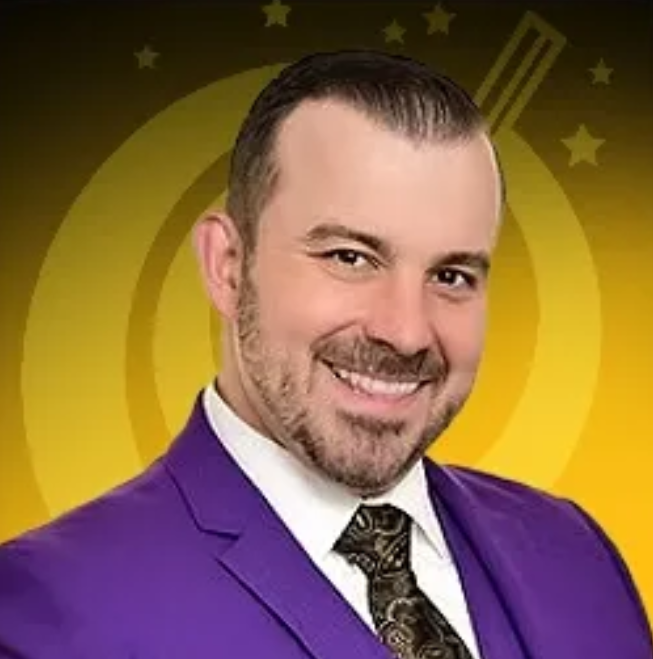
That distinction became a central part of my conversation with circus performer Nathaniel Douglas Allenby on Magical Memories Unlocked.
Nathaniel has spent more than 15 years performing professionally, with experience ranging from street performances across Europe to elaborate character work at Disneyland. Along the way, he's developed an approach to entertainment that goes well beyond the tricks themselves.
His perspective offers an interesting look at something that often goes unnoticed: great performers aren't just watching what they're doing. They're watching everyone around them.
Learning to Juggle Was Only the Beginning
Nathaniel didn't set out to become a professional circus performer.
Growing up in rural Oregon, he was academically focused and originally interested in politics. His career eventually took a completely different direction when a friend offered him a one-way ticket to Europe and a bicycle.
The catch? They would be traveling with very little money, and Nathaniel needed to learn how to juggle so they could entertain people on the streets along the way.
What began as a practical way to support their travels eventually became a career.
Nathaniel went on to develop skills in juggling, stilt walking, puppeteering, mime, clowning, character acting and other forms of performance.

During our conversation, he estimated that he'd invested between 25,000 and 30,000 hours into developing his various skills and talents.
That's an extraordinary amount of practice.
But one of the most interesting things about his experience is that thousands of hours spent learning tricks weren't necessarily what taught him how to connect with an audience.
Some of those lessons came from traveling.
Others came from performing in unfamiliar environments, learning from mistakes and discovering how differently people respond to the same entertainment.
The Skill Most Audiences Never Notice: Reading the Room
Imagine a performer walking into a corporate reception.
Some guests are laughing, talking loudly and actively looking for entertainment. Others are having quiet conversations or simply observing their surroundings.
A technically talented performer might approach both groups with the same routine.
An experienced entertainer recognizes that those guests may want completely different interactions.
Nathaniel explained that before he begins performing, he observes how people are behaving.
He's looking at their energy, the atmosphere and the kinds of interactions they're already having.
Are they relaxed and playful? Are they formal and reserved? Are they looking for attention or trying to avoid it?
Those observations help determine how he approaches the performance.
For example, at a more formal gathering, he might rely on technical demonstrations and restrained humor. At a lively celebration where guests are actively participating, he might introduce more physical comedy or invite people into the act.
Even environmental factors influence his choices.
If it's particularly windy, he may avoid juggling clubs or rings because the conditions make those props less predictable.
These aren't decisions about whether he can perform a particular trick.
They're decisions about whether that trick is right for the people and environment in front of him.
And that's an important difference.
What Traveling Through Different Cultures Taught Him About Performing
One of the most interesting parts of Nathaniel's background is how much of his early performance experience came from traveling through Europe and Mexico.
He spent approximately six years traveling, meeting people from different backgrounds and discovering that approaches to interaction that worked in one place didn't necessarily work somewhere else.
Even something as simple as greeting a stranger could require a different approach.
Nathaniel described how attempting to speak someone's local language, even imperfectly, could open the door to an interaction.
He also learned to pay attention to personal space, body language and whether someone actually welcomed the attention.
Those experiences eventually influenced his approach to performing at events.
A particularly interesting example involved how he interacts with children.
When Nathaniel sees a group of kids, he doesn't automatically approach the quietest or most hesitant child first.
Instead, he looks for the children who are already showing curiosity and excitement.
The child who appears uncertain or frightened may need more time before feeling comfortable interacting.
By beginning with someone who's ready to participate, he can establish a playful atmosphere without forcing the experience on someone who isn't ready.
The same principle applies to adults.
Not every guest wants to become part of the entertainment, and recognizing that can be just as important as knowing how to engage the guests who do.
The Difference Between Performing at People and Performing With Them
There's a subtle distinction between delivering a rehearsed performance and creating an experience that feels connected to the audience.
Nathaniel described how a show can feel flat when it's performed exactly the same way regardless of the circumstances.
The tricks might be technically flawless, but the experience can still feel disconnected from the people watching.
His approach is to continually observe what's happening as he performs.
Which tricks are getting applause?
What makes people laugh?
When do guests move closer?
What encourages someone to ask a question or participate?
These responses provide information that helps him adjust the performance in real time.
He also emphasized the importance of making interactions feel natural.
After years of performing, Nathaniel has developed a large collection of responses to common audience questions. But the challenge isn't simply memorizing those responses.
It's knowing when and how to use them without making the interaction feel rehearsed.
That combination of preparation and spontaneity is an important part of showmanship.
A performer can practice a juggling routine thousands of times. Learning how to deliver that routine differently for different audiences takes another level of experience.
Why More Impressive Tricks Don't Always Make Better Entertainment
It's easy to assume that a performer who can execute more difficult tricks will automatically provide a better show.
But technical difficulty and entertainment value aren't necessarily the same thing.
Nathaniel shared a useful example involving juggling.
An audience might be amazed when someone successfully juggles seven objects.
But if that performer continues doing essentially the same thing for another 15 minutes, the novelty eventually wears off.
The skill hasn't become less impressive.
The audience has simply adjusted to what they're seeing.
That's why Nathaniel emphasizes variety, pacing and knowing when to move on.
For a food-themed festival at SeaWorld San Diego, for example, he's incorporated juggling props such as spatulas, ladles, a rubber chicken and even a plunger.
These choices give him more opportunities for humor and make the performance relevant to the setting.
The audience isn't just watching someone demonstrate coordination.
They're experiencing a character who understands the event and can play with its theme.

Sometimes Less Performance Creates More Interest
Nathaniel also discussed how the length and frequency of an act affect its impact.
For many of his roaming performances, he prefers approximately 30-minute sets rather than longer continuous appearances.
For certain physically demanding acts, he described shorter performance periods.
And some specialty routines work particularly well as brief appearances.
Chair stacking was one example.
An impressive chair-stacking routine might last only five to seven minutes, but those minutes can capture an entire crowd's attention.
Repeating the same routine too frequently, however, can reduce its impact.
Someone who was captivated the first time may feel less interested after seeing exactly the same act several times.
The lesson isn't that audiences have short attention spans.
It's that performers need to understand pacing, variety and the value of leaving people wanting more.
These durations reflect Nathaniel's approach and the types of acts he discussed, not fixed requirements for every circus performance.
Knowing When Not to Perform Is Part of the Job
One of the less obvious skills Nathaniel discussed was recognizing when entertainment might interrupt rather than enhance an experience.
Consider a cocktail reception.
Guests are moving around, meeting people and having conversations. A roaming entertainer can become part of that atmosphere, creating small moments of surprise and interaction.
But the same approach might not work during an intimate dinner when guests are focused on their meals and conversations.
Nathaniel explained that a skilled roaming performer should recognize natural openings.
A magician, for example, might approach when there's a lull in a conversation rather than interrupting two people who are deeply engaged.
The performer also needs to be comfortable recognizing when someone isn't interested.
That's not a failed interaction.
It's an appropriate response to the audience.
This is also why the distinction between a formal show and roaming entertainment.
A stage show asks an audience to focus its attention on one performance.
Roaming entertainment generally works around the event's existing activities, contributing to the atmosphere without demanding everyone's attention at once.
Neither approach is inherently better.
They serve different purposes, and an experienced performer understands how to work within each environment.
What Disneyland Taught Nathaniel About Professionalism
Another fascinating part of Nathaniel's career involved performing at Disneyland.
His work included operating a large puppet while walking on stilts, an example of how stilt walking entertainment can combine physical coordination, character work and audience interaction.

The equipment was substantial.
He described wearing a harness supporting a puppet weighing approximately 40 pounds, complete with mechanisms controlling its movements.
The work required balance, coordination, endurance and enough familiarity with the equipment to interact naturally with guests.
At the same time, the performance environment was very different from the independent events he was accustomed to.
Rather than continually tailoring an act to a new audience or client, much of the Disney work focused on repeating a polished performance with tremendous consistency.
Nathaniel described the expectation as making the same experience as precise and polished as possible.
He credits that environment with helping him develop a higher level of professionalism.
It's an interesting contrast.
His traveling years taught him flexibility and cultural awareness.
His Disney experience reinforced precision, consistency and the discipline required to deliver a performance repeatedly under demanding conditions.
Both became part of his approach to live entertainment.

Watch my full conversation with Nathaniel Douglas Allenby on Magical Memories Unlocked as we explore circus performance, audience interaction and the experiences that shaped his career.
A Personal Story That Shows What Audience Connection Really Means
Near the end of our conversation, I asked Nathaniel about a performance experience that had stayed with him.
He shared a story from Disneyland involving a young blind woman who was visiting with her parents.
At the time, Nathaniel was performing on stilts with a large pink flamingo puppet.
His challenge was figuring out how to share an experience that was primarily visual with someone who couldn't see it.
He began interacting with her family and gradually found ways to include her in the encounter through the puppet's physical presence and movements.
What developed was a playful and emotional moment for everyone involved.
Nathaniel described how the interaction eventually brought them to tears.
The family later submitted a letter of appreciation through the park, and Nathaniel kept that letter among his most meaningful personal possessions.
What makes this story especially interesting isn't the technical complexity of the puppet.
It's the fact that Nathaniel recognized the usual performance wouldn't communicate the same experience to this guest.
Rather than simply continuing through his routine, he found another way to connect.
His account also illustrates the importance of sensitivity to an individual's needs and comfort. It's a personal experience, not a universal procedure for interacting with guests with disabilities.
For Nathaniel, that encounter became a reminder that the way a performer approaches an audience can matter just as much as the act itself.
And I think that's an important distinction for anyone working in entertainment.
The Best Performers Never Stop Learning
Nathaniel has accumulated thousands of hours of experience, but he doesn't describe performance as a skill someone eventually finishes learning.
He talks about the importance of continuing to practice, experimenting with new ideas and improving through mistakes.
He uses the phrase "fail forward" to describe that process.
For someone learning to juggle, dropping an object is part of developing the skill.
For someone developing as an entertainer, an interaction that doesn't land can provide similar feedback.
The important part is recognizing what happened and using that information to make the next performance better.
That applies to technical ability, timing, comedy, audience awareness and even the way performers communicate with clients before arriving at an event.
Great entertainment isn't created by practice alone.
It's created by combining practice with observation, experience and the willingness to adjust.
It's Not Just About the Trick
One of the reasons I enjoy hosting Magical Memories Unlocked is the opportunity to get beyond what audiences normally see and understand the thinking behind the performance.
Nathaniel's story is a great example.
On the surface, his work involves juggling, stilts, puppets and circus entertainment.
But the deeper skill is understanding people.
Knowing when to approach someone. When to step away. How to adjust the energy of a performance. How to make an interaction feel personal even after performing similar routines hundreds of times.
At Magical Memories Entertainment, we work with entertainers across a wide range of specialties, and conversations like this help illustrate why evaluating a performance requires looking beyond the obvious technical skills.
After all, a perfectly executed trick can be impressive.
But a performer who understands how to connect that trick to the people watching can create something far more meaningful.
That's the difference between simply seeing entertainment and actually experiencing it.
Comments