


Behind the Costume: What Makes a Great Character Performer?

Anyone can put on a superhero costume. But making a room full of children believe they're actually meeting their favorite superhero? That's an entirely different skill.
There's a big difference between someone showing up in a costume, giving a few high fives and posing for pictures and someone who genuinely brings a character to life.
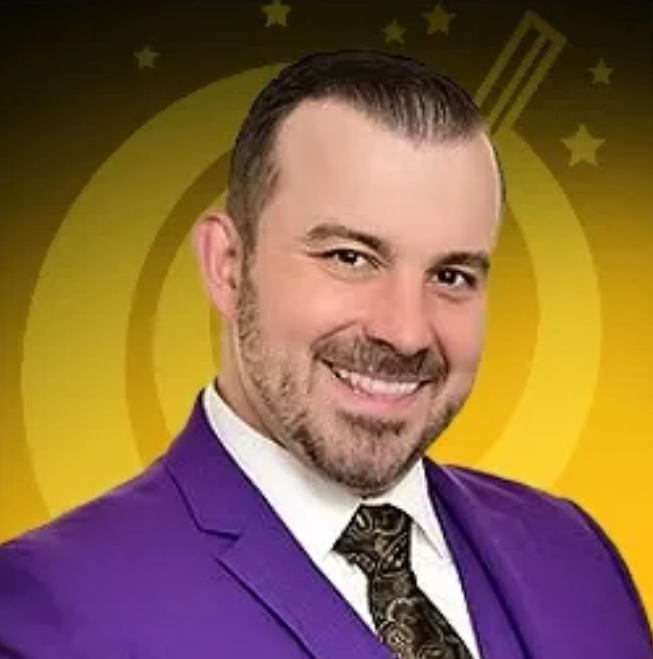
That difference was at the center of a recent conversation I had with David Sabsels, a character entertainer with more than 17 years of experience, on Magical Memories Unlocked: Entertainer Deep Dive.
David has performed more than 50 different characters throughout his career, from superheroes and cartoon favorites to holiday characters. What makes his perspective interesting isn't just the variety of costumes he's worn. It's how seriously he takes the performance happening inside them.
And the more we talked, the clearer something became: A great character performance has a lot more to do with the person inside the costume than the costume itself.
The Costume Is Only the Beginning
One of the first things David emphasized was that character entertainment requires actual performance skills.
As he put it:
"Anyone can just put a costume on, but you have to embody it and be a performer."
That sounds simple, but think about what it means.
If a child meets Spider-Man, they aren't necessarily interested in standing next to someone wearing a Spider-Man costume. They want to interact with Spider-Man.
They want to ask questions about villains, practice their superhero moves and maybe even help save the day.
For David, that means staying in character, understanding the personality he's portraying and keeping the experience moving.
He's also a longtime comic book and superhero fan, which turns out to be a pretty valuable part of his work.
When children ask Spider-Man about Venom or other villains, he knows what they're talking about. Rather than treating those questions as interruptions, he uses that knowledge to build games and imaginative scenarios.
In one of his Spider-Man activities, children become superheroes themselves, following him into imaginary battles against villains like Venom and Sandman.
Suddenly, they're not just watching a character.
They're part of the story.
Children Don't Always Follow the Script
One of the more interesting parts of character entertainment is that the audience can be completely unpredictable.
Young children ask questions, change directions, get distracted and occasionally come up with ideas that no entertainer could have anticipated.
A character performer has to respond without losing the illusion.
David shared that children will sometimes ask him questions while he's already leading a game. Between keeping everyone engaged and the difficulty of hearing through certain mascot heads, it isn't always possible to respond to every question individually.
Sometimes a quick acknowledgment or high five helps bring the child back into the activity.
Other times, their ideas create an entirely new moment.
David recalled performing as Captain America at a birthday party where the birthday child's favorite character wasn't another superhero. It was Thanos.
The child arrived dressed as Thanos with an elaborate Infinity Gauntlet.
Rather than simply posing for a standard birthday picture, David turned the moment into a scene, pretending Captain America was trying to take the gauntlet away.
It's a small example of something important.
The entertainer didn't need a completely scripted activity to make that moment work. He understood the characters, recognized what the child was excited about and played along.
That's where knowledge, creativity and improvisation meet.
Why Audience Engagement Matters More Than Costume Quality
David takes costume quality seriously. He prefers costumes that closely resemble the characters children recognize from television and movies.
But he also pointed out that a beautiful costume doesn't guarantee a great performance.
He's seen impressive costumes worn by performers who barely interact with their audiences. He's also worked with older costumes that still produce great reactions because the person wearing them knows how to engage.
His emphasis is on keeping children involved rather than allowing the appearance to become a passive photo opportunity.
That's what makes character entertainment memorable: the opportunity for children to interact, play and become part of the story rather than simply meet someone in costume.
That can mean dancing, playing games, acting out scenes or simply responding to whatever is happening around him.
David even encourages parents to participate.
When he's running a game, he makes it clear that adults are welcome too. Sometimes the parents join in and become part of the fun.
That changes the dynamic of the appearance. Instead of a character performing at a group of children, the character is creating an experience with them.
And depending on the event, that can make all the difference.
A Great Character Performer Knows When to Back Off
Not every child reacts to a character with excitement.
Some children are nervous around oversized mascot heads. Others become overwhelmed when a character they normally see on television suddenly appears in front of them.
David explained that one of the most important things he does when entering an event is read the room.
He watches how children react and adjusts his approach.
If a child hides behind a parent, he doesn't immediately approach or insist on a hug.
Sometimes he'll give the parent a high five first to show that the interaction is friendly.
If the child still doesn't want to participate, he moves on.
Often, children gradually become comfortable after watching their friends join the games.

They may eventually approach him on their own.
Other times, they never want to interact, and that's okay too.
During our conversation, David shared that he's even had situations where the birthday child was so frightened that he discussed shortening or adjusting the appearance with the parents.
That takes judgment.
The entire point of bringing a character to a celebration is to make the experience enjoyable. If the guest of honor is frightened, insisting on continuing exactly as planned can defeat that purpose.
An experienced performer understands that enthusiasm isn't the same thing as forcing participation.
Sometimes the best way to create a positive interaction is to give someone the space to decide when they're ready.
The Physical Challenges Nobody Sees
There's another side of character performance that most audiences rarely think about.
The person inside that mascot costume is working hard.
And some costumes are considerably more difficult to perform in than others.
David talked about costumes with heavy foam components, limited mobility and complicated pieces that take time to put on.
A full mascot head can also limit hearing and visibility.
That creates challenges when children are running around, particularly when very small children stand directly beside a performer or hold onto their legs.
It's one reason the surroundings matter and why adult supervision remains important during character appearances.
Then there's the heat.
Performing active games inside a full-body costume during the summer can become physically demanding very quickly.
David explained that he sometimes uses fans inside mascot heads and cooling vests underneath certain costumes. Those measures can help him tolerate the conditions, but they don't eliminate the heat.
He also shared a particularly serious experience involving an inflatable Minion costume.
When the costume's fan failed during a summer appearance, he tried to continue performing rather than disappoint the client.
It was a mistake he hasn't forgotten.
Without the functioning fan, the costume became difficult to breathe in. David grew lightheaded and had to stop the performance.
He described it as a lesson he learned the hard way and said he no longer performs in inflatable costumes.
It's a reminder that costume limitations aren't just an inconvenience.
They can become a safety issue.
For entertainers, understanding the physical demands of their equipment is part of the job.
For families and event planners, recognizing those limitations helps create a better environment for the performance.
Why Longer Isn't Always Better
One of the practical questions I asked David was how long a character appearance should last.
His answer was interesting because it challenged the assumption that booking more time automatically creates a better experience.
David typically prefers 45 minutes for an interactive character performance.
His reasoning is based on the kind of activities he performs and the younger children who often make up his audience.
During that time, he can make his entrance, engage children in games, create interactive moments and take pictures.
For his performance style, he believes that provides enough time to keep the energy moving without stretching the experience beyond the children's attention.
He makes an important distinction between an interactive performance and a meet-and-greet appearance.
A meet-and-greet might involve guests approaching individually for photos and brief interactions. That can be structured differently from 45 minutes of continuous movement and games.
It's not that 45 minutes is a universal standard for character entertainment. It's David's professional preference based on how he performs.
The larger lesson is that appearance length should reflect what the entertainer is actually expected to do.
An energetic, interactive character performance and a stationary photo opportunity are two different experiences.
Even the Timing of the Appearance Changes the Experience
David also shared a scheduling preference that makes a lot of sense when you consider his performance style.
Whenever possible, he prefers arriving before the children begin eating pizza and cake.
Why?
Because it's difficult to lead exciting character activities when everyone is focused on lunch.
During our conversation, I joked that pizza always wins.
And in the world of children's entertainment, there's quite a bit of truth to that.
David explained that some party venues only allow character entertainers into designated party rooms. That can restrict the space available for games and movement.
When the character arrives during mealtime, the appearance may become a series of high fives and pictures instead of the interactive performance he'd prefer to deliver.
Of course, every venue and event is different. Sometimes the schedule or available space determines what's possible.
But his perspective highlights something worth remembering.
The entertainment doesn't exist independently from the rest of the event. The timing, environment and audience's attention all influence what the performer can accomplish.
This is especially true for children's entertainment, where thoughtful scheduling helps create an experience that fits naturally into the celebration.
The Little Details Help Keep the Character Alive
There are also details David works on long before the children arrive.
For certain characters, he adjusts his own appearance to better match the role. He talked about shaving his beard when portraying characters like Captain America or Blippi.
He also customizes costumes.
For example, he's had costume gloves and sleeves modified so that exposed skin doesn't interrupt the overall appearance.
His Batman costume includes accessories inspired by his favorite version of the character, the 1989 Michael Keaton portrayal.
These details might seem minor individually, but they support the illusion he's trying to create.
David also shared that he uses professional cleaners and tailors to maintain and modify his costumes.
It's a reminder that a character appearance doesn't begin when the performer walks into the party.
There are hours of preparation, equipment maintenance and creative decisions behind what might look like a relatively simple experience.
When the Character Becomes More Real Than the Performer
Toward the end of our conversation, we talked about something that anyone who's spent time performing in character might recognize.
The difference between how people react to you in costume and how they react after you change.
David described walking into events as a character and seeing children jump with excitement.
Then, after the appearance, he'll change back into his regular clothes and walk past the same children.
They don't recognize him.
I could relate to that because I've actually encountered David at events multiple times without knowing what he looked like outside his costumes.
To the children, the person they were excited to meet wasn't David.
It was the character.
That's an interesting part of this kind of entertainment. The performer spends the entire appearance creating a connection while deliberately remaining invisible as an individual.
And when it's done well, that invisibility is part of the magic.
David wants children to feel like they've actually played with their favorite superhero or cartoon character.
Not because the costume alone convinced them, but because the interaction made the character feel real.
The Person Inside the Costume Makes the Difference
Character entertainment is easy to underestimate.
From the outside, it can look like a straightforward service. Someone arrives dressed as a popular character, takes some pictures, entertains the children and leaves.
But David's experience reveals how much more is involved.
There's acting, improvisation, physical stamina, audience awareness, character knowledge and the ability to make decisions in the moment.
There's also an understanding that no two groups of children are going to react exactly the same way.
That combination of skills is what separates wearing a costume from delivering an actual character performance.
At Magical Memories Entertainment, conversations like this are part of why we created Magical Memories Unlocked. We get to explore the work, personalities and expertise behind different kinds of live entertainment and share what makes these experiences work.
Because while the costumes might be what initially catches everyone's attention, it's the performer inside who brings the character to life.
Watch the full conversation with David Sabsels below for more stories and insight into the world of character entertainment.

Magical Memories Unlocked: Entertainer Deep Dive features conversations with working entertainers about their experiences, skills and what goes into creating memorable moments for audiences.
Comments