


What Makes a Good Magician? Why the Trick Is Only Part of the Show
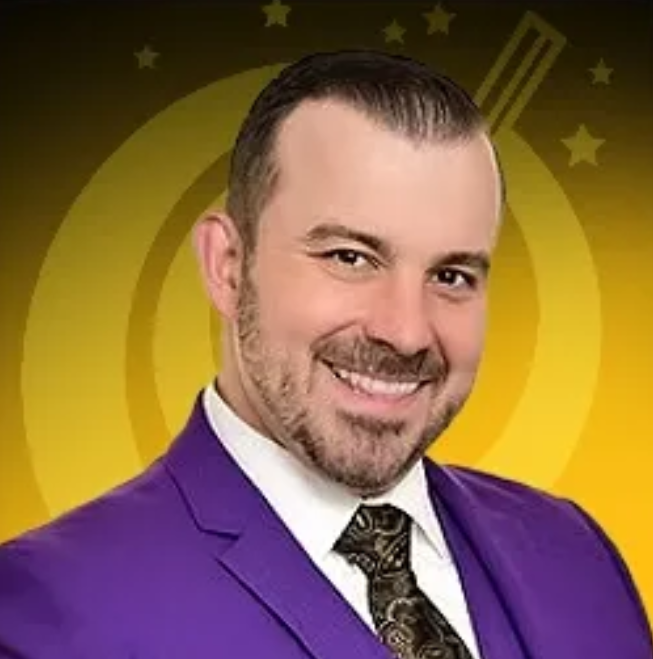

A magician can spend years perfecting sleight of hand, learning complicated routines and collecting impressive tricks. But there's another skill that doesn't come from simply practicing with a deck of cards.
Knowing how to entertain people.
It's the difference between an audience watching someone demonstrate a trick and an audience becoming genuinely involved in the experience.
That's something magician Bill Hogland understands after approximately 35 years of performing at birthday parties, summer camps, family celebrations and community events.
His experience also reflects the role of entertainment for summer camps, where engaging young audiences requires a combination of skill, adaptability and audience participation.
During our conversation on Magical Memories Unlocked: Entertainer Deep Dive, Bill shared how his approach to magic has evolved, why he puts so much emphasis on presentation and how even an ordinary object can become the centerpiece of an entertaining routine.
His perspective raises an interesting question: What actually makes someone a good magician?
Learning Magic Is Different From Learning to Entertain
Bill's interest in magic started when he was a kid.
After seeing magic performed, he began borrowing books from the library, including The Amateur Magician's Handbook by Henry Hay. Eventually, he discovered Tannen's Magic and started exploring tricks beyond those he could learn from books.
Like many beginners, his early performances focused on the mechanics. Someone would select a card, he would find it and the trick would be over.
The objective was to fool somebody.
That began changing when he joined a magic club and met experienced performers who helped him understand the entertainment side of the craft.
Bill recalled performing at an auto parts store grand opening alongside another magician. He was doing a relatively simple routine involving a card on a string, but the audience was laughing and enjoying themselves.
The magician watching him recognized something important. Bill wasn't simply demonstrating a trick anymore. He was entertaining people.
That realization helped shape the way he approached magic going forward.
Learning how a trick works is only the beginning. Learning how to present it, connect with the audience and create an entertaining experience is an entirely different part of the process.
The Presentation Can Matter More Than the Difficulty of the Trick
One of the most interesting things about Bill's magic is how often he uses ordinary objects.
He doesn't rely on large illusions or elaborate equipment. Much of his material involves cards, rope, string, bags and other familiar items.
He even mentioned that some of the objects used in his routines come from places like Walmart or dollar stores.
What makes them entertaining isn't necessarily the object itself. It's what he does with it.
Turning a Classic Magic Trick Into Something Different
Consider the classic egg bag routine.
In its traditional form, a magician places an egg into a bag. The egg disappears and reappears as the performer involves the audience in the mystery.
Bill performs his own variation, but instead of using an egg, he uses a miniature soccer ball.
That small change opens up opportunities for audience participation.
He can ask children whether they like soccer, let them handle the ball and even have them throw it back to him as part of the routine.
Suddenly, something traditionally presented as a more formal magic effect becomes a playful experience that children can relate to.

The underlying concept hasn't changed dramatically. The presentation has.
And that's the important distinction.
A magician doesn't always need a more complicated trick to make a routine better.
Sometimes the improvement comes from finding a more interesting way to present what they already know.
Simple Doesn't Mean Easy
During our conversation, Bill described much of his material as simple magic.
I wanted to clarify what he meant because there's an important difference between a simple presentation and an easy trick.
Bill wasn't suggesting that his performances require no skill.
He uses sleight of hand and relies heavily on misdirection. What he prefers are effects that don't take an unnecessarily long time to develop.
Rather than spending several minutes counting cards or working through a complicated sequence, he favors routines that move along and keep people engaged.
His approach is to spend more time developing the presentation than pursuing increasingly difficult technical skills.
That doesn't mean advanced magic has no place. It means technical difficulty and entertainment value aren't necessarily the same thing.
A highly complicated trick can leave an audience uninterested if the presentation doesn't connect.
Meanwhile, a familiar effect can become entertaining in the hands of someone who knows how to build anticipation, create humor and involve the people watching.
Audience Engagement Starts Before the First Trick
When Bill performs walk around magic, he doesn't simply approach a table and immediately begin demonstrating an effect.
He starts by establishing a connection.
Sometimes that involves a funny name tag. Other times it's a playful introduction or a little joke about being a magician.
The goal is to break the ice.
By the time he brings out the cards or begins a routine, the audience already has a sense of his personality.
That matters because walk around magic is fundamentally different from performing on a stage.
A stage performer often has the audience's attention from the beginning. With walk around entertainment, the magician is entering an existing social environment.
People might be eating, talking or catching up with friends. They haven't necessarily gathered specifically to watch a performance.
The entertainer needs to create that moment of interest.
Bill's approach is to make people comfortable first and introduce the magic naturally.
Why Short, Personal Performances Work
With walk around magic, Bill typically approaches individuals or small groups and presents a few close up effects before moving to the next table.
A card trick, a rope routine or something unexpected from his bag might become a miniature show for that group.
It's a personal experience that doesn't require everyone at the event to stop what they're doing.
Bill also sometimes combines walk around magic with a larger performance.
Guests get to experience a little magic individually before having the option to watch a longer show.
What's interesting is that he recognizes not everyone wants the same entertainment experience.
Some people are perfectly happy watching a few tricks at their table. Others want to become more involved.
A good entertainer understands that distinction and can respond accordingly.
How a Magician Manages a Room Full of Excited Children
Performing for children presents an entirely different challenge.
Kids are enthusiastic, curious and often eager to get involved. That energy can make a magic show entertaining, but it also requires experience to manage.
Bill's approach isn't to eliminate the excitement.
It's to guide it.
During our conversation, we discussed the idea of controlled chaos. A children's magician wants laughter, reactions and participation without allowing the performance to become completely disorganized.

Bill starts managing that dynamic before the tricks even begin.
The Way Children Sit Can Change the Show
For larger groups, Bill prefers having children seated together, either in chairs or on the floor.
When the audience reaches approximately 30 to 40 children or more, he often requests a center aisle.
That allows him to move into the audience, interact with different sections and keep children engaged throughout the performance.
It's a relatively small logistical decision that can make a meaningful difference in how he manages the room.
The audience isn't simply watching someone perform from a distance.
Bill can move between them, build anticipation and make different parts of the room feel involved.
Getting Children to Participate Without Losing Control
One of Bill's methods for encouraging good audience behavior is explaining how he chooses his helpers.
He tells children that he's looking for people who are laughing, paying attention and enjoying the show rather than jumping up and down demanding to be selected.
It's a clever way of establishing expectations without turning the performance into a lecture.
Instead of repeatedly telling children what not to do, he gives them something positive to work toward.
He also recognizes that not every child needs to come onstage.
When a volunteer participates in a routine, that child can represent the larger audience.
Everyone else is still invested in seeing what happens.
The goal isn't to get every child physically involved in every trick.
It's to make the entire audience feel like part of the experience.
The Best Performers Know How to Adapt When Things Go Wrong
No live performance unfolds exactly as planned.
Props get misplaced. An audience reacts differently than expected. A room is noisier than anticipated.
Experienced entertainers develop ways to handle those situations without letting them derail the show.
Bill shared a story that illustrates this particularly well.
The First Communion Show That Almost Didn't Happen
Bill arrived at a restaurant to perform at a First Communion celebration and discovered another magician was there.
There had been a booking mix-up.
After some confusion, the other entertainer determined that he had been booked incorrectly and left. Bill was the magician scheduled for the event.
By that point, Bill had only a few minutes to set up.
The room wasn't particularly conducive to a magic show either.
Guests were still eating and talking. Children were scattered around the restaurant. When he started performing, only about six kids were sitting in front of him.
Rather than becoming frustrated or demanding that everyone gather, Bill turned the problem into audience participation.
He asked the children to clap and scream as loudly as they could on the count of three.
They did.
Then he encouraged them to do it even louder.
The noise caught people's attention.
A few more children came over. Parents started watching from the background.
By the end of the show, Bill recalled having approximately 25 children watching along with about 10 adults.
What began as a difficult performance environment had become a successful show.
The solution wasn't a more impressive trick.
It was understanding how to engage the people already in front of him.
Experience Means Knowing How to Recover
Bill also acknowledged something that performers don't always discuss openly.
Magic tricks sometimes go wrong.
A card might not be where it's supposed to be. Something might fall. A prop might end up in the wrong place.
For Bill, humor is often part of the recovery.
Rather than drawing unnecessary attention to a mistake, he finds a way to acknowledge what happened, make a joke and keep the performance moving.
That ability develops through experience.
Practicing a routine helps a magician learn what is supposed to happen. Performing it for real audiences teaches them what to do when something unexpected happens.
A Good Magic Show Isn't Exactly the Same Every Time
After decades of performing, Bill has certain routines he regularly returns to.
But that doesn't mean every performance is identical.
He explained that even when the tricks are the same, the audience can make the experience completely different.
One group might respond to a joke that another barely notices.
A child might say something unexpected that leads to an entirely new moment.
A volunteer might react in a way that changes the direction of the routine.

For Bill, these moments are part of what keeps performing interesting.
He also changes material when returning to familiar venues, mixing established favorites with different effects and sometimes rearranging the order of the show.
That balance allows him to maintain routines he knows work while keeping the experience fresh.
The audience isn't seeing a prerecorded sequence.
They're interacting with a performer who responds to what's happening in front of him.
And that distinction is a significant part of live entertainment.
Making the Audience Feel Included
One of the more meaningful details Bill shared had very little to do with sleight of hand.
He talked about adapting his performance for children who use wheelchairs.
Because his setup includes a relatively small, movable table, he can sometimes bring part of the performance directly to a child rather than requiring that child to come to the front.
They can handle props and participate while remaining comfortably where they are.
It's a thoughtful example of how adapting the presentation can make a difference in someone's experience.
Bill's goal is to include people whenever he can.

That same philosophy extends beyond traditional parties.
He volunteers at Give Kids The World Village in Florida, where he performs close up magic for families visiting the area.
Often, the magic is only part of the interaction.
He talks with the children about their plans, shares jokes and creates a moment of personal attention.
When I asked Bill what he was most proud of in his career, he returned to those volunteer experiences.
For him, being able to use the skills he's developed to make someone else happy carries a particular kind of meaning.
It's a reminder that entertainment isn't always about the size of an audience or how elaborate the performance looks.
Sometimes it's simply about making a connection with one person.
So, What Really Makes a Good Magician?
There's no single formula for a great magic performance.
Different magicians have different personalities, technical strengths and approaches to entertaining.
Some specialize in sophisticated sleight of hand. Others use elaborate illusions, comedy, storytelling or close up interactions.
The variety of styles found in magician entertainment shows why choosing a performer involves more than simply looking at the tricks they can do.
Bill's approach is grounded in humor, personality and audience participation.
Throughout our conversation, one idea kept coming back: the audience's experience matters more than demonstrating how difficult a trick is.
That philosophy shapes everything from the routines he chooses to the way he arranges a room, selects volunteers and responds when something unexpected happens.
It's also something we value at Magical Memories Entertainment.
After working with Bill for many years, I've seen how important it is to understand an entertainer's personality and performance style, not simply the category of entertainment they provide.
Two magicians might perform similar types of magic and still create completely different experiences.
That's part of what makes live entertainment interesting.
The tricks may create the mystery, but the entertainer creates the connection.
And after 35 years of performing, Bill Hogland continues to demonstrate why that distinction matters.
Watch the Full Conversation With Bill Hogland
Want to hear more about Bill's approach to magic?
In our Magical Memories Unlocked: Entertainer Deep Dive conversation, we explore audience participation, walk around entertainment, performing for different age groups, the realities of live shows and the lessons he's learned throughout his career.

Magical Memories Unlocked is an ongoing series from Magical Memories Entertainment where we explore the people, skills and experiences behind live entertainment.
Join us live every Monday for another conversation with an entertainer about their craft and the work that goes into creating memorable events.
Comments