


What Great Event DJs Do Beyond Playing Music

Anyone can put together a playlist. With today's streaming services, you can have thousands of songs ready to play in seconds.
So what exactly does a professional DJ bring to an event that a playlist doesn't?
It's a fair question, especially when so much music is available at our fingertips.
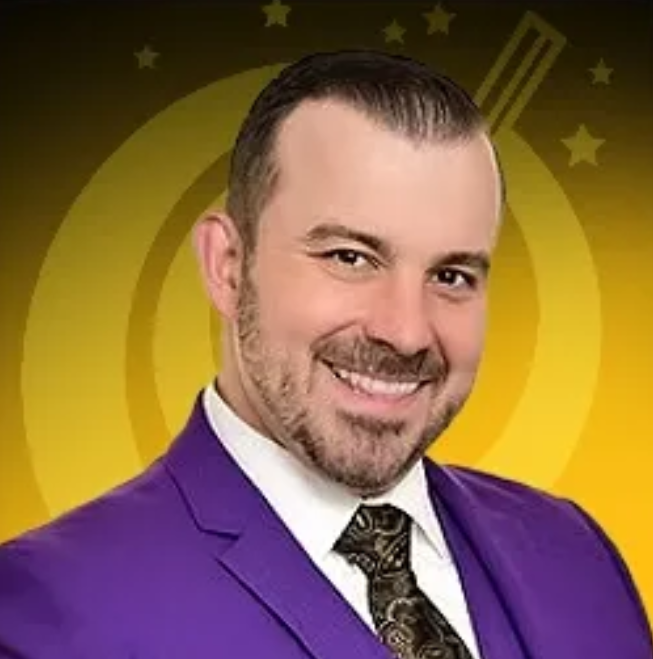
But as DJ and event production coordinator Mikey Blaze explained during our conversation on Magical Memories Unlocked, having the right songs and knowing what to do with them are two very different things.
Mikey has spent nearly 30 years working in entertainment and has personally performed at more than 500 wedding receptions. Over that time, he's learned that being a successful event DJ involves much more than playing music.
It requires understanding the people in the room, knowing how to guide an event and preparing for moments the audience may never realize needed preparation in the first place.
A Playlist Is the Starting Point, Not the Performance
One of the first things I asked Mikey was about the difference between a club DJ and a mobile event DJ.
His answer highlighted something many people don't necessarily think about.
A club DJ often has considerable freedom to choose the music, build a particular sound and take the audience on a musical journey of their own design.
A mobile DJ working at a wedding, corporate event or private party has a different challenge.

The client already has an idea of what they want to hear.
The DJ's responsibility is to take those preferences and turn them into something that works for the entire room.
Mikey described it as taking the format the client provides, adding your own creativity and presenting it to the crowd.
That requires considerably more skill than simply playing songs in the order they appear on a list.
A good DJ understands how to transition between different styles of music, which portions of songs will work best together and how to maintain momentum without losing the musical preferences that make the event personal.
The songs themselves may be familiar, but the way they're presented can make them feel entirely different.
Why Spotify Can't Replace Every Part of a DJ's Job
During our conversation, I raised a question that comes up frequently when discussing event entertainment.
If the client is already choosing the music, why not just use Spotify?
Mikey pointed out that a playlist can certainly work for someone who wants complete control over the music.
But that also means somebody has to manage it.
Someone has to decide when to skip a song, adjust the energy or make a change when what sounded good during planning isn't working in the moment.
That person may end up spending more time managing the music than enjoying the party.
A professional DJ takes on that responsibility.
More importantly, they can interpret the audience's response rather than simply following a predetermined sequence.
A playlist knows which song comes next.
A DJ has to understand whether that song should come next.
That distinction is where much of the craft actually lives.
Why Preparation Matters as Much as Performance
One of the most interesting parts of my conversation with Mikey was his explanation of how his event planning process has evolved.
Early in his career, he relied on relatively simple notes and a short planning questionnaire.
Today, his wedding planning guide has grown to approximately 15 pages.
That level of preparation is an important part of professional wedding DJ entertainment, where music selections, introductions, and timing all contribute to a smooth celebration.
When he mentioned that, I immediately asked whether couples found it overwhelming.
His response raised an important point.
The questions aren't necessarily there because the DJ needs every detail at every moment.
They're there because having those answers ahead of time prevents uncertainty when the event is actually happening.
For Mikey, preparation serves several purposes.
It helps him personalize the event, coordinate with other vendors and know exactly what needs to happen without repeatedly interrupting the client.
The Work Guests Never See
Consider something as simple as introducing a wedding party.
From the guest's perspective, the MC announces a few names, everyone makes their entrance and the celebration continues.
But behind that introduction, someone needs to know the correct order, the music associated with each entrance and how to pronounce every name.
Mikey explained that he practices difficult names repeatedly before an event so he can deliver them confidently.
I actually remember an occasion when he performed at a wedding for Magical Memories Entertainment that included German names with challenging pronunciations.
He had clearly done the preparation because he delivered them correctly, much to the couple's appreciation.
It's a small detail, but it illustrates something important.
The audience only hears the final announcement. They don't see the preparation that makes it sound natural.
The same principle applies to music cues, formal dances, introductions and transitions between different portions of an event.
When those details are handled in advance, the entertainment team can focus on execution instead of figuring things out while everyone is waiting.
How One Wrong Song Changed Mikey's Planning Process
Mikey shared a story from an earlier wedding that demonstrates how professional experience can directly improve an event planning system.
A couple had provided the title of a special song.
Mikey had the song ready, but when the moment arrived, he discovered it wasn't the version they wanted.
The title was correct, but the artist and recording were different.
He managed to locate the correct version in his music library and the evening continued successfully.
However, he didn't simply consider the problem solved and move on.
He changed his process.
Now, when collecting special song requests, his planning paperwork asks couples to provide a direct YouTube link to the exact recording they want.
That simple addition helps eliminate confusion between different artists, recordings and arrangements of the same song.
It's a practical example of how experienced entertainers learn to anticipate problems.
Rather than relying entirely on their ability to recover when something goes wrong, they develop systems that reduce the likelihood of the problem happening again.
And that lesson goes far beyond DJing.
A DJ and an MC Are Not Necessarily the Same Thing
Another distinction we explored was the difference between a DJ and an MC.
The two roles are often combined, but they involve different skills.
A DJ is responsible for selecting, mixing and presenting the music.
An MC, or master of ceremonies, communicates with the audience, introduces important moments and helps guide the event from one activity to the next.

Some entertainers are highly skilled at both.
Others are excellent DJs but aren't particularly comfortable speaking into a microphone.
Mikey made it clear that being talented behind the DJ equipment doesn't automatically make someone an effective MC.
Talking to a Crowd Without Talking at Them
One of Mikey's most interesting observations was about how he approaches speaking to large audiences.
He tells his DJs to think of public speaking as having individual conversations with a hundred people at once.
Rather than simply projecting announcements into a room, the goal is to make the communication feel personal.
That requires more than a confident speaking voice.
It involves timing, listening and understanding the energy of the audience.
Mikey explained that he pays close attention to wedding speeches and toasts, sometimes picking up on small details that he can naturally reference later.
Those connections help make his hosting feel specific to the people being celebrated rather than a series of interchangeable announcements.
Not Every Event Needs the Same MC Energy
Mikey also described how he asks clients to identify the level of MC energy they want during different portions of their event.
He uses a scale from one to five in his planning process.
Some clients prefer a relatively understated host who makes announcements and allows the celebration to unfold naturally.
Others want a high energy personality who actively encourages participation and keeps the room excited.
Neither approach is automatically better.
The important part is understanding which style fits the event and recognizing that different moments may call for different levels of involvement.
An introduction might benefit from enthusiasm while a formal announcement may require something quieter and more focused.
Mikey's approach illustrates that good MCing isn't simply about having a big personality.
It's about knowing when and how to use it.
Why a Well Planned Event Still Needs Flexibility
Preparation is essential, but live events rarely unfold exactly as expected.
Guests arrive late. Schedules change. Someone decides to make an unexpected announcement.
Sometimes a client changes their mind at the last possible moment.
Mikey and I shared a few stories about dealing with those situations during weddings.
One involved a bride changing the entrance order and music while the wedding party was already being lined up.
The DJ had to make changes immediately, including obtaining different music, while keeping the event moving.
The entrance ultimately went well, but it created considerable pressure behind the scenes.
Mikey was quick to point out that although experienced DJs can respond to unexpected changes, that doesn't mean making last minute changes is a good idea.
There is a difference between being flexible and being unnecessarily forced to improvise.
A carefully developed event timeline gives everyone a shared understanding of what's supposed to happen.
The DJ, MC, photographer and other vendors can prepare for the same moments.
If changes become necessary, the team can respond from an established plan rather than starting from scratch.
That combination of preparation and adaptability is a recurring theme throughout Mikey's career.
The DJ's Influence Extends Beyond the Dance Floor
As our conversation continued, Mikey shared something about his career that put many of the technical discussions into perspective.
He spoke about the pride he takes in knowing he's helped create moments people will remember for years.
A photograph on someone's wall might capture a first dance, a celebration or a room full of guests enjoying themselves.
But the moment represented in that photograph doesn't happen entirely by accident.
Music, timing, announcements and the atmosphere created by the entertainment team all influence how people experience it.
Mikey takes that responsibility seriously.
And it's a perspective I share.
At Magical Memories Entertainment, I frequently remind our team that even though we work at events every day, the people attending them don't necessarily experience them that way.
A wedding or bar mitzvah might be an obvious milestone, but a school dance, summer camp activity or backyard celebration can become just as meaningful to someone attending.
An entertainer may perform at hundreds of events, but for a particular guest, one of those events could become a memory they carry for the rest of their life.
That's an important responsibility to understand.
How Event Production Changes the Way a DJ Thinks
Mikey's career has also expanded beyond DJing into event production, rentals and nonprofit event logistics.
These broader production considerations also play an important role in corporate event entertainment, where music, venue layouts, guest interaction, and event schedules need to work together.
That broader experience has influenced how he approaches entertainment.
He looks at an event not only in terms of which songs will be played, but also how the physical environment and production elements support the experience.

During our conversation, he discussed everything from LED video walls to dance floor sizing, table arrangements and tent layouts.
One particularly useful example was how he thinks about dance floors.
Rather than simply recommending the largest possible floor, Mikey described the dance floor as a destination within the event.
It's the physical space where guests gather to participate in a shared experience.
Its size and placement help define how that portion of the event functions.
He also explained that different table arrangements encourage different kinds of interaction.
Round tables can support seated conversation while high top cocktail tables create gathering places where guests can move between groups.
These details may not sound like traditional DJ responsibilities, but they demonstrate how an understanding of event production can influence the entertainment itself.
Music doesn't happen in isolation.
It happens within a space filled with people who are eating, talking, moving, celebrating and responding to everything around them.
Understanding that larger environment helps entertainers make better decisions.
What Makes an Experienced Event DJ Valuable?
The biggest takeaway from my conversation with Mikey is that the value of a professional event DJ isn't limited to their equipment, music library or ability to keep a dance floor busy.
Those things matter, but they're only part of the job.
The deeper skill is understanding how everything comes together.
It's knowing how to turn a client's favorite songs into a cohesive musical experience.
It's asking questions during planning that prevent problems on event day.
It's recognizing when an MC needs to take control of a room and when it's better to step back.
And it's understanding that the music and announcements are contributing to moments that may matter to people long after the event is over.
That kind of experience develops through years of performing, learning and continually improving the process.
As Mikey explained when reflecting on his career, one of his greatest sources of pride is knowing that somewhere out there, someone's favorite night includes a moment he helped create.
For an entertainer, that's a pretty meaningful measure of success.
Watch the Full Conversation with Mikey Blaze
There's considerably more to Mikey's experience than we could explore in one article.
Our full conversation on Magical Memories Unlocked: Entertainer Deep Dive also covers how he got started in the DJ industry, the evolution of event technology, the role of dance floor motivators and why professional production support can make such a difference for nonprofit organizations.
If you're interested in the entertainment industry or what goes into making events work behind the scenes, the conversation offers plenty of additional insight.

Magical Memories Unlocked is produced by Magical Memories Entertainment and hosted by Steven Burchard. Through conversations with working entertainers, we explore the experience, creativity and professional knowledge behind the performances and events people enjoy.
Join us live every Monday for another Magical Memories Unlocked conversation.
Comments