


The Secret to Great Improv Comedy Isn't Being Funny. It's Listening.
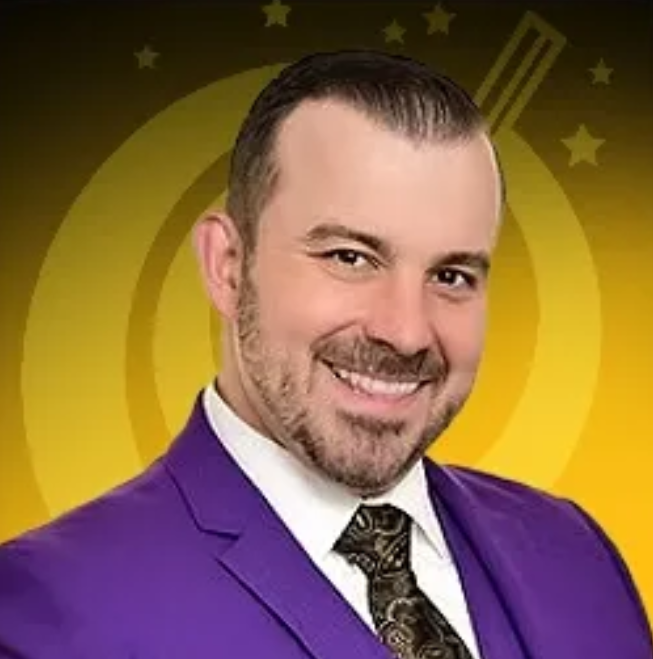

When you watch a great improv comedy performance, it can look almost effortless. Performers create characters, develop ridiculous situations and find ways to make an entire room laugh without following a script.
But how does that actually work?
If you've ever watched an improv show, you've probably wondered how performers come up with material so quickly. Are they naturally funny? Do they have jokes memorized? Is everything really made up on the spot?
The answer is more interesting than you might expect.
During a conversation on Magical Memories Unlocked, I had the opportunity to explore these questions with actor, singer and improv comedian Walt Frasier, who has spent decades performing and teaching improvisational theater.
One of the biggest ideas that emerged from our conversation challenges what many people assume about comedy.
Great improv isn't primarily about being funny. It's about listening.
And the skills that make someone successful on stage can be just as valuable in a classroom, a workplace or an everyday conversation.
What Actually Makes Someone Good at Improv Comedy?
Most people assume that being naturally funny is the most important requirement for an improv comedian.
Certainly, having a sense of humor helps. But Walt explained that trying too hard to be funny can actually work against a performer.
When someone is constantly searching for the perfect joke, they're thinking about what they want to say instead of paying attention to what's happening around them.
That can cause them to miss the very moments that would make a scene entertaining.
Walt describes one of the most important skills in comedy as "listening with your eyes."
It's about paying attention to the entire interaction.
What is your scene partner communicating? How are they reacting? What's happening in the room? What details can you build upon?
Rather than trying to control every moment, a skilled improviser learns to recognize opportunities as they develop.
That distinction matters because improv comedy isn't simply a series of unrelated jokes.
It's storytelling.
The humor often comes from believable characters responding to increasingly ridiculous circumstances.
A performer who listens carefully has more opportunities to develop those circumstances naturally.
How Does Improv Work Without a Script?
One question I specifically wanted to explore with Walt was how much preparation goes into something that's supposedly completely improvised.
After all, if performers are preparing for a show, doesn't that mean at least some of it is planned?
Walt made an important distinction between preparing the structure of a performance and scripting what happens within it.
In a short form improv show, performers might decide ahead of time which games they're going to play.
They could plan to open with a musical game, follow it with a scene involving sound effects and then move into another improvisational challenge.
They may also decide which performers will participate in particular games.
But the actual content of those scenes comes from the audience and the performers' responses in the moment.
An audience member might suggest a location, a profession or an unusual relationship.
The performers then use that information to create an entirely new scene.
According to Walt, the foundation is surprisingly simple.
Listen. Respond. Make a choice. Repeat.
Building a Scene One Decision at a Time
Walt demonstrated this concept with an example involving two brothers.
Imagine one character accusing another of stealing $20 from his wallet.
Immediately, the audience learns something about their relationship.
They're brothers. One believes the other stole money. There's already a conflict.
The second performer now has a choice.
They could reject the accusation and argue that none of it happened.
But doing that might shut down the story before it really begins.
Instead, they could accept the premise and add something new.
Perhaps the older brother needed the money to support his children.
Now the audience knows more about both characters and the situation.
Each new response adds another piece to the story.
This is where the familiar improv principle of "Yes, and" becomes so important.
It doesn't mean every character must agree with everything another character says.
It means accepting the reality being established and contributing something that allows the scene to develop.
The performers aren't trying to predict where the entire story will go.
They're discovering it together.
And that shared discovery is part of what makes improv entertaining.
Why Great Improvisers Don't Need to Force the Laughs
There's an interesting difference between improv comedy and stand up comedy.
Stand up often revolves around one performer presenting jokes, observations and stories to an audience.
Although comedians may improvise portions of their material, successful stand up routines frequently develop through extensive writing, testing and refinement.
Improv, particularly theatrical improv, often relies more heavily on characters, relationships and situations.
Walt compared it to the difference between telling jokes and watching a sitcom.
A sitcom doesn't need every line to be a punchline. Sometimes the humor comes from understanding the characters and watching how they respond to the situation.
The same principle applies to improv.
If two characters have a believable relationship, even a simple disagreement can become funny.
But when performers abandon the scene to chase individual jokes, the audience can lose interest in the story.
Walt's approach emphasizes developing the characters and letting the comedy emerge from their interactions.
That requires something that sounds simple but can be surprisingly difficult.
Trust.
Performers have to trust that their training, instincts and fellow actors will help them find the next moment without forcing it.
What Happens When the Audience Becomes Part of the Story?
One of the most interesting examples Walt shared involved his improvised murder mystery performances.
In interactive murder mystery entertainment, guests can become part of the story, contributing ideas, taking on roles and helping shape the experience as it unfolds.
Most people are familiar with a traditional murder mystery.
Actors portray suspicious characters, a fictional crime takes place and the audience tries to determine who committed it.
But Walt described a variation where the audience helps invent the mystery itself.
Rather than beginning with a fully written plot, he asks guests questions that establish the fictional crime.
Someone might decide where the victim was discovered.
Another guest becomes the coroner and describes what they found.
Other participants contribute details about suspects, motives and circumstances.
Eventually, guests become characters within the story while others take on the role of detectives.

In one performance involving younger participants, someone suggested that the murder weapon was an orca launched from Turkey with enough precision to strike the victim on Long Island.
It's a completely absurd idea.
But in an improvised story, that absurdity becomes part of the fun.
Instead of rejecting the suggestion, the performer can incorporate it into the fictional world everyone is creating together.
The result is something no writer could have predicted in advance because the audience is actively helping shape the experience.
Walt also explained that in this type of mystery, participants aren't necessarily focused on finding one predetermined correct answer.
They're using their imaginations to construct explanations for what happened.
That changes the experience from simply solving a puzzle to collaborating on a story.
And it demonstrates something important about interactive entertainment.
Sometimes the most entertaining moments aren't created by the performers alone.
They're created by giving the audience permission to contribute.
Improv Comedy Can Teach Skills That Have Nothing to Do With Comedy
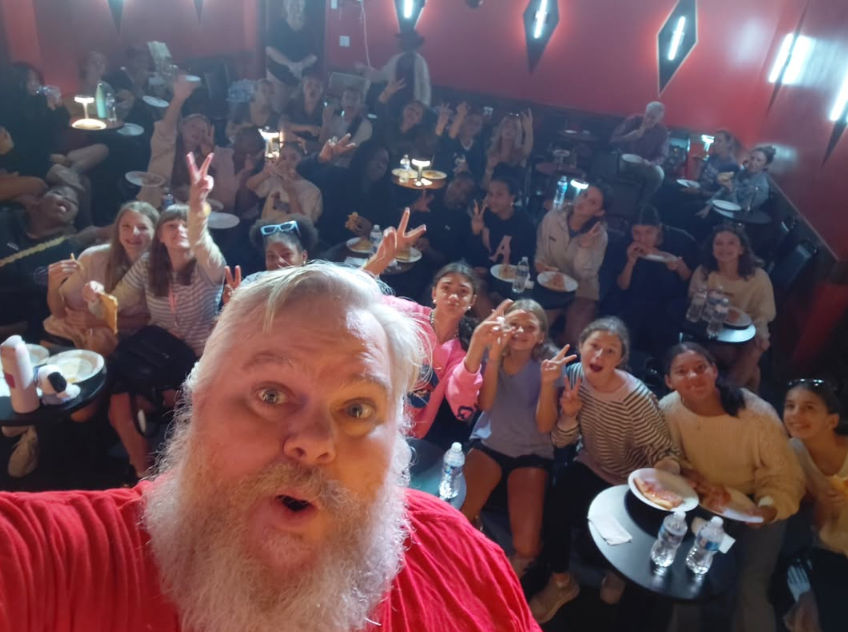
As our conversation continued, Walt explained that much of his work now involves teaching improv rather than simply performing it.
He works with children, students, educators and corporate groups.
What interested me was how many of the same principles apply across those very different audiences.
Whether someone is five years old or an experienced professional, the fundamental challenges are often similar.
People are afraid of making mistakes.
They worry about being judged.
They hesitate because they don't know whether their ideas are good enough.
And sometimes they're so focused on giving the correct answer that they stop participating.
Walt uses improvisational exercises to help people move beyond those barriers.
Building Confidence Through Small Interactions
One example he described was how he introduces improv to people who are uncomfortable performing in front of others.
Rather than immediately putting someone on stage and expecting them to entertain a room, his workshops begin with simple group activities.
Participants might stand in a circle, pass sounds or gestures around the group or play short games that require quick responses.
The activities gradually become more involved.
Eventually, someone who was initially uncomfortable participating may find themselves contributing to a group scene.
But they've reached that point through a series of smaller experiences rather than being thrown directly into a high pressure situation.
Walt described a game called What Are You Doing?
One participant acts out an activity while another asks what they're doing.
The first person responds with a different activity and the next participant begins acting that out.
Each interaction lasts only a few seconds.
There's very little time to overthink.
The goal isn't to deliver a brilliant performance.
It's to make a choice and participate.
In Walt's experience, these small exercises help people become more comfortable taking risks in front of others.
Why Psychological Safety Matters
Another important part of Walt's teaching philosophy is creating an environment where people feel comfortable contributing ideas.
He connected this to the concept of psychological safety.
In a group setting, psychological safety generally refers to people feeling able to speak, ask questions and take interpersonal risks without expecting humiliation or punishment.
Walt sees improv as a practical way to develop that kind of environment.
Participants learn to listen to one another, build upon ideas and support contributions rather than immediately dismissing them.
These same principles make corporate team building activities valuable opportunities for colleagues to practice communication, collaboration and creative problem-solving.
His guiding rule is straightforward:
"Have fun, but never at anybody else's expense."
That principle establishes an important boundary.
Improvisation can involve unexpected situations, ridiculous characters and playful disagreements without making someone in the room the target of the joke.
When participants feel supported rather than judged, they may become more willing to contribute.
And that can make the experience more productive for everyone.
Why Improv Works Differently With Every Audience
Another subject Walt and I explored was how he adjusts his performances for different age groups.
After all, entertaining kindergarten students is very different from performing for teenagers, corporate professionals or older adults.
At least, that's what you might assume.
Walt's perspective was that the underlying skills don't change nearly as much as people expect.
Listening, patience and awareness remain essential.
What changes is how the performer communicates with the audience.
When working with young children, Walt described using a calm, measured presence rather than trying to compete with their energy.
If the room becomes chaotic, he may slow down his voice and movements to help bring the group's attention back to him.
With teenagers, he focuses on maintaining an energetic style without relying on inappropriate language or material.
With adults, he recognizes that participants may bring their own insecurities and reluctance to the experience.

In every situation, the performer needs to recognize what the audience is communicating and respond accordingly.
It's another example of why observation can be more important than having the perfect joke prepared.
The Difference Between Performing Improv and Teaching It
Something worth understanding is that an improv show and an improv workshop aren't necessarily designed to accomplish the same thing.
In a performance, the primary goal is entertainment.
The audience watches professionals create scenes, characters and situations based on suggestions.
They may participate occasionally, but the performers are responsible for carrying the show.
In a workshop, participation becomes the central experience.
The activities are designed to help the participants practice skills themselves.
Walt explained that when a corporate group wants to develop teamwork and communication, he often considers the workshop more appropriate than a traditional performance.
Watching skilled improvisers listen and collaborate can be entertaining.
Actually practicing those behaviors creates a different kind of experience.
This distinction is useful because both formats may involve improvisation, but the value comes from different places.
One demonstrates the craft.
The other gives people an opportunity to experience the process firsthand.
Great Improv Requires More Preparation Than You Might Think
One of the apparent contradictions in improvisational theater is that the best performers often prepare extensively for something they're going to make up.
Walt's background includes acting, singing, music, dance and other performance disciplines.
He explained that those skills contribute to the confidence and flexibility he brings to the stage.
For example, a performer with musical training might suddenly incorporate a song into a scene.
Someone with strong physical theater skills might communicate an entire character through movement.
A performer with experience in dramatic acting may be better prepared to create believable relationships.
These abilities give improvisers more possibilities to draw upon.
But Walt also emphasized that preparation shouldn't become an obstacle during the performance itself.
If someone is constantly thinking about technique while they're on stage, they may stop responding naturally.
His approach is to do the work beforehand and trust that preparation when it's time to perform.
Then, once the performance is finished, evaluate what happened.
What worked?
What didn't?
What could be done differently next time?
Walt described spending time after performances thinking through alternative responses he could have made during particular comedy games.
That kind of reflection allows performers to improve without sacrificing spontaneity during the show.
In other words, the performance may be unscripted, but the skill behind it is developed deliberately.
The Real Value of Learning to Improvise
What makes improv particularly interesting is that many of its underlying skills extend well beyond entertainment.
Listening before responding.
Making decisions without having every answer.
Supporting other people's contributions.
Recognizing when an approach isn't working and adapting.
Learning that an imperfect response doesn't necessarily mean failure.
Those ideas have obvious applications in everyday life.
Walt talked extensively about the importance of helping people develop confidence and a greater sense of control over their own decisions.
He believes that people often hold themselves back because they're afraid of making the wrong choice.
Improvisation gives them opportunities to practice making choices in a relatively low stakes environment.
Sometimes an idea works beautifully.
Sometimes it goes somewhere completely unexpected.
And sometimes it falls flat.
But the experience continues.
That ability to recover, respond and move forward is part of what makes improvisation such an interesting art form.
It's Not About Having the Perfect Answer
After speaking with Walt, one idea connects nearly everything we discussed.
Great improv performers don't need to know exactly what's going to happen next.
They need to pay attention to what's happening now.
That principle applies whether they're entertaining a theater audience, leading a room full of students or helping corporate employees practice communication.
The funny moments come from the characters and situations they create together.
The confidence comes from participating without expecting perfection.
And the connection comes from actually listening to the people around you.
For an art form built around making things up, improv has quite a bit to teach us about paying attention.
That's one of the reasons we enjoy exploring the people and expertise behind live entertainment through Magical Memories Unlocked.
At Magical Memories Entertainment, these conversations help us better understand the skills, creativity and experience that make live performances meaningful.
There's often much more happening behind a successful performance than the audience realizes.
Watch the Full Conversation With Walt Frasier
Walt and I explored improv comedy, murder mystery entertainment, professional performance, audience participation and the role improvisation can play in building confidence.
If you're interested in hearing his stories and understanding more about how professional improvisers approach their craft, you can watch our full conversation below.

For more conversations with working entertainers and a closer look at the skills behind live performance, join us for Magical Memories Unlocked, live every Monday.
Comments