


How Professional DJs Read a Crowd: DJ Steve Hill on Music, Energy and Connecting Generations

A song can clear a dance floor just as quickly as it can fill one. Sometimes the difference has nothing to do with whether the song is good. It comes down to knowing who is in the room, what they respond to and when they're ready to hear it.
That's one of the skills that separates a professional event DJ from someone simply working through a playlist.
During a conversation on Magical Memories Unlocked, I spoke with DJ Steve Hill about his experiences performing at weddings, festivals, community events and venues in different parts of the world. Steve started DJing at his fraternity house in college, playing everything from house music to country and hip-hop. His career eventually took him into hospitality, event entertainment and performances across different markets.
Despite all those different environments, his approach to music has remained remarkably consistent.
For Steve, it starts with paying attention to the people in front of him.
Reading the Room Comes Before Choosing the Next Song
When I asked Steve how he manages the differences between genres like EDM, country and hip-hop, his answer was straightforward.
"For me, it's all about the room."
Steve generally avoids relying on predetermined sets because he wants the flexibility to respond to what is happening on the dance floor.
He described his approach as DJing by feeling. He watches who's dancing, notices which styles attract the strongest reactions and makes decisions based on the audience rather than following a fixed sequence of songs.
His starting point is what he calls "majority rules."
If most of the people on the dance floor are enjoying a particular type of music, he tends to stay with that direction and build from there.
That doesn't mean ignoring everyone else.
The challenge is finding ways to bring more people into the experience without losing the energy that's already there.
A DJ might have a packed dance floor enjoying modern house music while other guests remain seated because those songs aren't familiar to them. Rather than suddenly switching to an entirely different genre, Steve looks for music that connects the two groups.
A remix of an older favorite might maintain the modern rhythm while introducing a melody that another generation recognizes.
The people who were already dancing have a reason to stay. The people who weren't dancing suddenly have a reason to join.
It's a small musical decision that can completely change who's participating.
Why Mixing Generations Is More Than Playing Different Decades
One of the more interesting parts of our conversation was Steve's approach to multigenerational events.
At weddings and community celebrations, the audience can include grandparents, parents, young adults and children. Each group may have its own musical preferences and memories associated with particular songs.
Trying to satisfy everyone by randomly alternating between decades can create a disconnected experience.
Steve prefers to build a progression.
He described how, at some events, he'll begin with music from the 1950s and 1960s before gradually moving through the 1970s, 1980s, 1990s and 2000s.
It's not a rigid formula that he follows at every event. It's one way he thinks about bringing different generations into the evening.
The older guests may be more likely to dance earlier, especially at a wedding where they aren't necessarily planning to stay on the dance floor until late at night.
Playing familiar music early gives them an opportunity to participate while they're comfortable and engaged.
Steve even suggested that cocktail hour can be an opportunity to introduce a few slower songs that encourage older couples to dance before the formal reception activities begin.
As the evening develops, the music can move toward other generations and build in energy.
Finding Common Ground Through Remixes
Steve gave an example of a father and daughter who enjoy completely different musical styles.
The daughter might prefer tech house while her father enjoys the Doobie Brothers.
Those preferences may seem difficult to combine, but a carefully chosen remix can create common ground.
A recognizable older song with a modern rhythm can appeal to both listeners.
The important part isn't simply finding a remix. It's recognizing when that particular combination makes sense for the people in the room.
That requires understanding the music itself and being aware of how the audience is responding.
It's also why a good DJ needs more than an impressive collection of songs. The real skill is understanding the relationships between them.
Regional Music Can Change Everything About a Dance Floor
Another point Steve raised was how much musical preferences can change depending on where an event takes place.
He learned this firsthand after moving to South Florida.
When he first visited some of the local line dancing bars, he discovered dance floors filled with people who knew seemingly every dance.
These weren't necessarily the songs he would have selected before becoming familiar with the local scene.
But in those rooms, the audience already knew exactly what to do when the music started.
Steve realized that understanding the regional dance culture could make a significant difference in how he approached an event.
A song that seems unfamiliar to a DJ might be one of the most recognizable tracks to the audience.
This matters especially at weddings where families and friends may be traveling from different states or countries.
Guests from Texas, Chicago, Florida or elsewhere might bring musical traditions that aren't obvious to someone unfamiliar with those communities.
Recognizing those connections gives a DJ additional ways to bring people together.
Line Dancing Isn't the Same Everywhere
During our discussion, I pointed out that the phrase line dancing can mean different things depending on where someone lives.
In the Northeast, people often associate it with group dances like the Cha Cha Slide, Cupid Shuffle or the Wobble.
In other regions, particularly places with strong country dancing traditions, line dancing may involve a different collection of songs and steps.
Steve's experiences in Florida and Texas helped illustrate how much that distinction matters.
He mentioned being surprised by the response to "Church Clap" when he first played it for a crowd that already knew the routine.
The audience knew the moves and the energy was much stronger than he had expected.
That experience reinforced a lesson he'd learned throughout his career: the DJ doesn't always know every song that will work until they understand the audience.
Why Familiar Group Dances Still Work
Line dances can also be controversial.
Some people love them. Others would prefer never to hear one at their event.
Steve admitted that, coming from a house music background, he wasn't originally a fan of line dancing himself.
Over time, however, he began to appreciate what those songs could accomplish.
A recognizable group dance gives people an activity they can participate in together.
Instead of needing to invent their own moves, guests can follow steps they already know.
It's particularly useful when a dance floor is just getting started.
I shared an experience from a large community event where I played the Cha Cha Slide and watched people throughout the crowd join in, even though they weren't necessarily standing together.
That collective participation is part of what makes these dances effective.
And it doesn't have to dominate the event.
One well-timed group dance might take only a few minutes, but it can help guests get comfortable moving and participating.
Steve's perspective was that DJs shouldn't automatically eliminate these songs simply because they aren't their personal favorites.
If the audience enjoys them, they have a purpose.
A Good DJ Doesn't Always Play Their Favorite Music
This is one of the more revealing differences between performing for yourself and performing for an audience.
Steve comes from a background that includes house music, club environments and a genuine interest in the art of mixing.
But he recognizes that the music he personally enjoys isn't always the music that will create the best experience at a particular event.
He mentioned several familiar dance floor favorites, including music from Michael Jackson, James Brown and ABBA, along with songs like "Dancing Queen" and "September."
These selections may be predictable to someone who spends a lot of time around music.
That doesn't make them ineffective.
A song that's been played at countless celebrations may still be exactly what brings a particular group together.
The question becomes whether the DJ is trying to showcase an unusual music selection or create an experience the audience actually enjoys.
There's room for creativity, of course. Introducing unexpected tracks and discovering new combinations are part of the fun of DJing.
But the most impressive transition in the world doesn't accomplish much if it loses everyone on the dance floor.
Sometimes the familiar song is the right song.
The Difference Between a Club DJ and an Event DJ
During our interview, I asked Steve about the differences between DJing at a club and performing at a wedding or community event.
He explained that both involve blending music and reading an audience, but an event DJ has an additional responsibility.
They're helping manage the flow of the entire occasion.
Steve compared event DJing to controlling water through a dam.
The DJ decides when to release energy, when to hold it back and how to keep everything moving.
At a club, the central activity is generally the music itself. At a wedding or private event, the music exists alongside dinner, speeches, introductions, special dances and other scheduled moments.

That's especially important for wedding entertainment, where the DJ must balance music, announcements and important moments throughout the celebration.
The DJ needs to understand how all those elements fit together.
For Steve, his background in hospitality has been especially valuable.
Before working professionally as a DJ, he held different restaurant positions, including dishwasher, busboy and maître d'.
Those experiences gave him an understanding of how event service operates beyond the DJ booth.
He described anticipating what might happen as food service progresses and factoring those observations into his music decisions.
It's an interesting reminder that event DJing involves more than technical musical ability.
Understanding the environment can be just as important as understanding the songs.
Why the Best Playlist Still Needs Flexibility
Steve also explained why he prefers not to have clients dictate the exact order of every song.
It's not because their preferences don't matter.
In fact, he regularly checks in with clients about what they like, what they dislike and which parts of the event are most important to them.
But he wants the freedom to arrange those selections according to what is happening in the room.
Two songs may both be favorites, yet playing them consecutively might interrupt the momentum of the dance floor.
A professional DJ can consider tempo, musical style, audience familiarity and the energy of the current moment before deciding where each track belongs.
That flexibility makes the music feel responsive rather than predetermined.
Steve also acknowledged that clients sometimes know their guests better than he does.
When a client is confident that a particular song will work, he's willing to trust that knowledge.
The strongest approach isn't the DJ controlling everything or the client dictating every transition.
It's communication between people who bring different kinds of knowledge to the event.
How DJs Handle Requests Without Losing the Dance Floor
Song requests are another part of the job where experience makes a difference.
A guest might approach the DJ booth with a favorite song that doesn't fit the music currently being played.
That doesn't necessarily mean the request is bad.
It may simply mean that the timing isn't right.
Steve described a method he uses to organize requests rather than immediately playing whatever someone asks for.
He keeps a written list or adds requested tracks to a queue on another device. This allows him to review the songs, consider their tempo and identify a place where they might fit naturally.
Some requests can be incorporated within minutes.
Others might work better later in the evening.
And some may conflict with instructions already established by the client.
He also discussed clarifying in advance who has permission to make requests, particularly at weddings.
The bride and groom may have specific preferences about which guests can influence the music or which songs should never be played.
Having that information ahead of time makes it easier to respond appropriately.
What stood out was Steve's underlying attitude toward requests.
He actually wants to know what people will dance to.
A request can provide useful information about the audience, especially when it comes from someone who knows the crowd.
The important distinction is between accepting a suggestion and immediately surrendering control of the music.
A DJ can listen to requests while still making informed decisions about how they fit into the evening.
The Preparation Behind an Improvised Performance
Reading the crowd may look spontaneous, but that doesn't mean professional DJs arrive unprepared.
Steve talked about maintaining music libraries through professional DJ record pools, giving him access to tracks, edits and remixes that might not appear in someone's everyday playlist.
He also explained that performing at larger events doesn't always mean having reliable internet access.
That makes having music available in advance an important part of his preparation.
The same principle applies to equipment.
Steve shared an incident in which his DJ software crashed at the same venue on two occasions, approximately a week apart.

He had to rely on alternative ways to keep the music going, including using his phone as a backup.
It wasn't the kind of situation anyone wants during a live event, but it demonstrated why he takes backup systems seriously.
He also mentioned carrying spare cables, adapters and batteries, along with knowing unusual equipment workarounds that can be useful in emergencies.
One example was using headphones as a makeshift microphone under certain circumstances.
It's not a replacement for proper microphone equipment, and Steve acknowledged that the audio quality isn't ideal. But knowing that the technique exists can provide an emergency option when compatible equipment is available.
These details reveal something important about professional DJing.
The audience may only notice the music, but the DJ is also managing technology, anticipating problems and making decisions that allow the performance to continue.
That preparation creates the freedom to concentrate on the audience.
What DJ Steve Hill's Approach Teaches Us About Live Entertainment
Throughout our conversation, Steve kept returning to the same principle.
Every audience is different.
A song that gets a huge reaction at one event might do very little at another. A regional dance hit might be unfamiliar to the DJ but instantly recognizable to the crowd. A remix might bring two generations together when neither would have responded to the other's preferred music.
The job is to recognize those differences and respond to them.
There's also a balance between planning and flexibility.
A DJ needs enough preparation to understand the music, communicate with the client and manage unexpected situations.
But once the event begins, they also need to pay attention to what is actually happening.
It's a perspective that connects directly to why we created Magical Memories Unlocked at Magical Memories Entertainment.
By speaking with working entertainers about their craft, we get to explore the decisions, experiences and professional judgment that audiences don't always see.
Steve's approach is a good example of how much happens behind the DJ booth.
It's not just knowing which songs to play.
It's understanding why a song works for one audience, when it might work for another and how to bring different people into the same experience.
Watch the Full Conversation with DJ Steve Hill
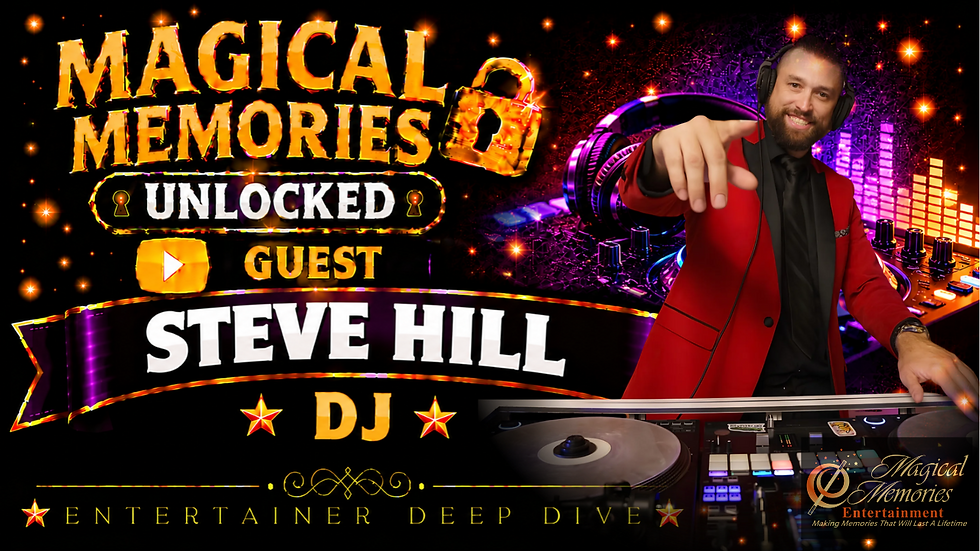
Steve and I discussed much more during our conversation, including the role of an MC, how professional DJs approach weddings, the importance of client relationships and some of the lessons he's learned performing in different parts of the world.
You can watch the full Magical Memories Unlocked: Entertainer Deep Dive conversation below.
Ultimately, Steve's experiences illustrate that a successful dance floor isn't necessarily about having the newest music, the biggest library or the most elaborate transitions.
It's about understanding the people who came to enjoy it.
And sometimes, the smartest thing a DJ can do is play the song that everyone already knows.
Comments