


Beyond the Tricks: The Art of Connecting With an Audience Through Magic
What makes a great magician? Is it their ability to perform an impossible card trick? Their technical skill? The size of their illusions?
Those things certainly matter, but there's another part of magic that audiences don't always recognize.
It's the ability to make people feel like they're part of the experience rather than simply watching it.
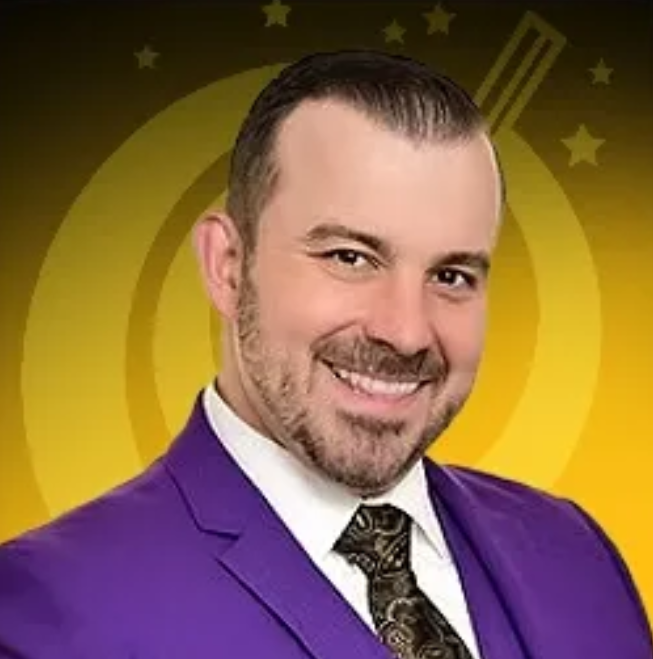
During a conversation on Magical Memories Unlocked, I had the opportunity to explore this idea with professional magician and mentalist Fabian Moreno. Having spent years performing everything from intimate close-up magic to large college productions and corporate events, Fabian has developed an approach that places human connection at the center of his performances.
And as we talked about his career, one idea kept coming up: The strongest magic isn't necessarily the most technically complicated. It's the magic that creates a genuine connection with the audience.
Why Technical Skill Is Only Part of a Great Magic Show
Fabian's interest in magic began when he was six years old. His father made a silk handkerchief disappear and then pulled it from his ear.
That simple experience sparked an interest that eventually led to years of studying sleight of hand and developing his own performances.
His early training was heavily focused on technique. He studied traditional sleight of hand, learned from experienced magicians and spent years refining the physical skills behind his routines.
But as his career progressed, he realized that performing difficult tricks and entertaining an audience were two different skills.
An audience might appreciate an impressive effect, but that doesn't automatically mean they're emotionally invested in the performance.
Fabian began putting more emphasis on the stories, personality and interactions surrounding his magic.
During our conversation, we discussed how an entertainer can perform one impressive trick after another and still struggle to create a meaningful connection.
Great professional magicians combine technical skills with storytelling, personality and audience interaction to make their performances memorable.
Someone with fewer technical effects but a stronger ability to engage people may deliver a more compelling experience.
That doesn't make technique unimportant. It means the technique should support the performance rather than become its entire purpose.
The Importance of Making Audience Members Feel Seen
One of Fabian's most practical insights was surprisingly simple.
Remember people's names.
For his current mentalism show, Fabian explained that he involves approximately 13 audience members throughout the performance.
He makes a conscious effort to learn their names and remember them afterward.
If someone participates early in the show, he may reference that person again later. When the performance ends, he can often greet the participants individually using their names.
It sounds like a small detail, but the effect on an audience member can be significant.
Imagine volunteering during a performance, returning to your seat and then hearing the entertainer reference you by name 30 minutes later.
Suddenly, you're not just another face in the crowd.
You're someone the performer remembers.
Fabian described remembering names as one of the most valuable investments he makes in his performances because it helps people feel recognized.
A Simple Technique for Remembering Names
Fabian also shared a practical method he learned from another magician.
When meeting someone, he finds a natural reason to repeat their name several times.
For example, if someone introduces themselves as Ally, he might ask whether they spell it with one L or two.
That brief conversation allows him to repeat the name naturally and strengthen his memory of it.
It's not about turning the interaction into a memorization exercise.
It's about paying enough attention to the person that the name becomes part of a real conversation.
This principle extends well beyond magic. Whether you're an entertainer, speaker, event host or simply meeting people at a gathering, remembering someone's name can change the way they experience the interaction.
How Storytelling Makes Magic More Personal
Another interesting part of Fabian's performance philosophy is his use of personal stories.
During the interview, he shared a routine from his college performances that began with an unusual statement:
"I dated a witch once."
Naturally, that got my attention.
The story wasn't about an elaborate illusion or a fictional supernatural encounter.
It was about someone he had dated when he was younger.
She enjoyed old horror movies, often wore black and affectionately called him her wizard.
He called her his witch.
Fabian incorporated that genuine experience into his stage show, creating a personal moment between the audience and the performer.
What makes this interesting is that the story didn't depend on a complicated illusion to hold people's attention.
It worked because it was personal, unexpected and authentic.
Fabian spoke about how performers sometimes become so focused on creating a large production that they overlook the importance of giving their material heart.
He compared this approach to an independent film or album, where the strength of the work may come from the story rather than an enormous production budget.
The same idea applies to live entertainment.
A well-told story gives audiences something to connect with beyond the mechanics of an effect.
It helps them understand the personality of the person performing.
And when the audience becomes interested in the performer, the magic itself can become more meaningful.
Close-Up Magic and Stage Magic Require Different Skills
One of the more technical parts of our conversation explored the difference between close-up magic and stage performance.
Fabian has extensive experience with both, and he explained that moving between them requires more than simply performing the same tricks for a larger audience.
Close-Up Magic Is Built Around Intimacy
With close-up magic, the audience is usually standing or sitting just a few feet away.
The magician may be working with cards, coins or small objects directly in front of the spectators.
Everything happens in a relatively small physical space.
Subtle movements, facial expressions and direct conversations can have a significant impact because the audience is close enough to notice them.
The challenge is managing the physical technique while maintaining a natural interaction.
Even when a magician has mastered a sleight, there are still many details requiring attention during a close-up routine.
Stage Magic Requires a Bigger Presentation
When performing on stage, the entire approach changes.
Fabian explained that movements must become larger and more visible.
Objects need to be handled where the audience can see them. Body language and facial expressions become more important because people may be watching from much farther away.
The performer also has to consider how the show flows from one effect to another.
For Fabian, building a set involves selecting routines carefully and creating transitions that feel natural.
He described the importance of arranging material so the audience experiences the performance as one connected presentation rather than a collection of unrelated tricks.
Interestingly, he also found that changing his performance style gave him more freedom to focus on the audience.
That discovery contributed to his growing interest in mentalism.
Why Fabian Shifted From Magic Toward Mentalism
During our conversation, I asked Fabian a question that comes up frequently in the entertainment industry.
What's the difference between a magician and a mentalist?
His first answer was a joke about bigger paychecks.
But his explanation became considerably more interesting.
Traditional magic often focuses on an apparently impossible physical event. A card disappears, an object changes or something appears somewhere it shouldn't.
Performances by professional mentalists typically focus more on apparent thought reading, predictions, decisions and other experiences that seem to involve the mind.
Fabian offered a philosophical interpretation that magic ultimately happens in the mind of the spectator.
The physical effect matters, but the audience's interpretation is what creates the experience of impossibility.
For his own work, he found that mentalism allowed him to spend more time communicating with spectators.
Rather than placing most of his attention on complicated physical techniques, he could focus on conversation, participation and the ideas being explored.
Over time, he began presenting himself primarily as a mentalist for professional events.
He still incorporates traditional magic into his performances, but mentalism gives him a structure that fits his preferred style of audience interaction.
It's an important distinction.
The choice between magic and mentalism isn't simply about which type of trick is more impressive.
It's also about the kind of experience the performer wants to create with the audience.
Sometimes the Audience Connection Begins Before the Show
Fabian shared another technique that demonstrates how much thought can go into engaging an audience.
When performing a stage show, he sometimes begins by doing close-up magic with guests before the main performance starts.
This creates an opportunity for people to interact with him personally before he's introduced on stage.
They've already met him.
They've already experienced something interesting.
And when he eventually begins the main performance, there are people in the audience who feel a connection with him.
Fabian explained that even having one person actively supporting him can make a difference.
This approach reflects a broader philosophy behind his work.
Audience engagement doesn't have to begin when the curtain opens or the microphone turns on.
It can begin during the first interaction between an entertainer and a guest.
Watch my full conversation with Fabian Moreno on Magical Memories Unlocked as we explore magic, mentalism, storytelling and the lessons he's learned throughout his career.
What Happens When a Magic Show Doesn't Go According to Plan?
Of course, connecting with an audience also requires being able to adjust when circumstances change.
Fabian shared several experiences from his years performing at colleges.
One particularly interesting example involved arriving at a university where there had been almost no promotion for his show.
Rather than waiting and hoping students would appear, he went to the dining hall and began performing close-up magic for people at their tables.
As students gathered, he told them about the performance scheduled for later that evening.
According to Fabian, the theater reached approximately two-thirds capacity that night.
He also admitted something that made the story more revealing.
He felt the actual show wasn't very good.
It was one of his first college performances, and he was still developing the material and experience needed for that environment.
But it taught him valuable lessons about promotion, preparation and learning from mistakes.
In another example, Fabian arrived at a college event where only about six people had gathered.
Instead of insisting on presenting his planned stage show to a nearly empty room, he offered to begin with close-up magic.
As he performed, more people started joining the group.
Eventually, the audience grew to approximately 60 people, allowing him to transition into his stand-up material.
These stories demonstrate two different aspects of professional performance.
First, having the technical ability to adjust your material is valuable.
Second, understanding the people and environment in front of you is just as important.
A performer who can read the room and adjust their approach has options that someone relying on a rigid presentation may not.
Understanding the Audience Changes the Performance
As Fabian's career evolved from college performances toward corporate entertainment, his approach to understanding audiences became increasingly important.
Before performing, he wants to know who will be in the room.
What's the average age of the audience?
What type of event is taking place?
What atmosphere are the organizers trying to create?
For corporate events, he may also consider the organization's industry and the messages the client wants incorporated into the performance.
Fabian shared an example of working with groups of attorneys.
To develop material that would resonate with them, he spoke with his girlfriend, who works as a corporate attorney, about terminology and experiences specific to their profession.
He then incorporated an industry-specific reference into his comedy.
The joke worked with those audiences because it reflected something they understood.
That level of preparation helps create material that feels relevant rather than generic.
It also reinforces an important point about audience engagement.
People respond differently when they feel a performance was created with them in mind.
That doesn't mean every moment needs to be customized.
It means understanding the audience well enough to make thoughtful choices about the material and presentation.
The Best Performers Know When to Adapt
One of the recurring themes throughout Fabian's career is adaptability.
He has performed in everything from college dining halls to large theaters, developing ways to work with very different environments.
But adaptability doesn't mean accepting every situation without question.
Fabian also emphasized the importance of communicating what a performance needs to succeed.
For example, he prefers indoor performance environments and generally avoids performing during dinner.
His reasoning isn't simply personal preference.
He wants the audience to be able to focus on the performance without competing with meal service, conversations and the movement of servers.
He also wants event staff to be able to do their jobs without feeling that they're interrupting the entertainment.
That awareness reflects how he views his role at an event.
He's not there simply to present a show.
He's there to contribute to the overall experience.
And sometimes the most professional decision is to adjust the performance or recommend a different approach.
The Real Secret Is Making People Part of the Experience
After more than an hour discussing technique, stagecraft, mentalism, business and years of live performance, the conversation kept returning to the same fundamental idea.
People want to feel involved.
They want to be recognized.
They want to connect with the person entertaining them.
And they want to feel that what's happening in front of them matters.
For Fabian, that means learning names, telling genuine stories, adapting to the environment and creating opportunities for meaningful participation.
His technical training provides the foundation, but his understanding of people shapes how he uses those skills.
That's one of the reasons we created Magical Memories Unlocked.
At Magical Memories Entertainment, conversations with working entertainers give us an opportunity to understand not just what they perform, but how they think about their craft.
And the more we understand those details, the better we can appreciate what makes different entertainment experiences work.
A great magic show may leave people wondering how a trick was accomplished.
But the performances that truly connect with an audience give people something else to remember.
How it felt to be part of the magic.
You can watch the full conversation with Fabian Moreno on Magical Memories Unlocked.
Join us live every Monday for more conversations with entertainers about the skills, experiences and ideas behind their work.
Comments