


The Hidden Art of Caricatures: Why Drawing People Is Only Half the Job
Imagine sitting down in front of an artist at a party. You exchange a few words, smile for a moment and watch as they begin drawing your face.
A few minutes later, you're looking at a cartoon version of yourself. Your features might be exaggerated, your expression might be a little playful and somehow, despite being drawn with just a handful of lines, it looks unmistakably like you.
How does an artist do that so quickly?
There's a lot more happening in those few minutes than most people realize.
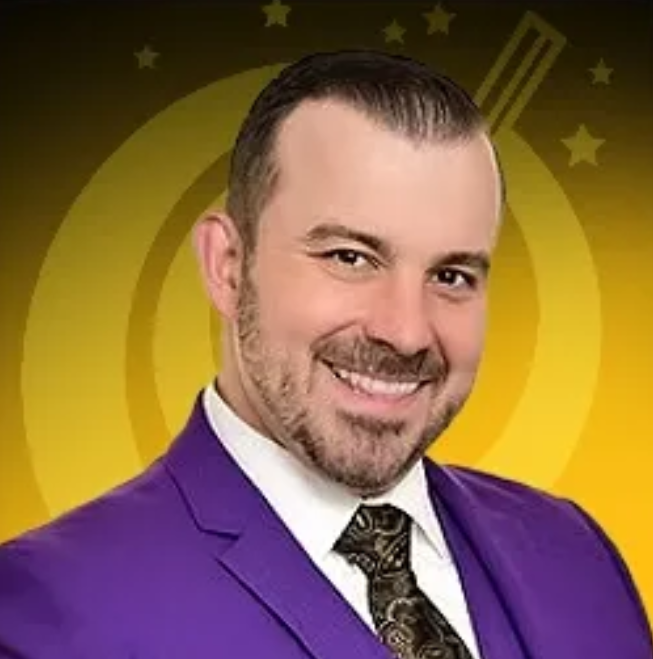
During a conversation on Magical Memories Unlocked, I explored the art of live caricatures with professional caricaturist Aron Laikin, who has spent more than 30 years developing his craft.
Aron's career began with connections to the world of MAD Magazine and eventually took him to cruise ships, celebrity events, major sporting events and private celebrations.
But what makes his perspective particularly interesting isn't simply where he's worked. It's how he approaches the challenge of capturing someone's likeness and personality while simultaneously entertaining them.
As Aron explained, being a talented artist and being a successful live caricaturist are two very different things.
Before You Can Exaggerate a Face, You Have to Understand It
At first glance, caricatures might seem easier to draw than realistic portraits.
After all, the proportions don't have to be perfectly realistic. Features can be stretched, enlarged or simplified.
But according to Aron, that freedom comes from first understanding exactly how a real face works.
He studied fine art and illustration, including realistic portraiture and oil painting, before developing the techniques he uses at live events.
That foundation taught him facial structure, anatomy and how different features relate to one another.
Consider something as simple as a smile.
Most people think about the mouth when they picture someone smiling. But a genuine smile affects the entire face.
The cheeks rise. The eyes change shape. The relationships between the facial features shift.
An artist who understands those relationships can exaggerate an expression while preserving the person's identity.
Without that knowledge, a caricature can quickly become a collection of disconnected features.
Aron emphasized that one of the most important skills an aspiring caricature artist can develop is learning to draw what they actually see rather than what they think they see.
That distinction sounds small, but it changes the entire approach to drawing.
How a Caricature Artist Builds a Face in Minutes
One of the most interesting technical details Aron shared was how he approaches a drawing.
He starts with the eyes.
More specifically, he begins with the person's right eye, which appears on the left side of his drawing.
From there, he works across the paper, using what he's already drawn as a reference point.
The position of the first eye helps establish where the second eye belongs. Those relationships help determine the placement of the nose, mouth and other features.
Instead of treating every feature as an independent drawing, he builds the face through comparisons.
For example, how far does the corner of the mouth extend relative to the eye? Where does the nostril fall in relation to the bridge of the nose?
These small observations help preserve the person's likeness even when certain features are exaggerated.
What's especially impressive is that Aron generally works directly in ink during live events.
There's no preliminary pencil sketch followed by careful erasing and corrections.
Once a line is on the paper, it's there.
That requires a combination of confidence, experience and the ability to make adjustments as the drawing develops.
If an eye ends up slightly higher than intended, for example, Aron may adjust other facial angles to maintain the overall relationship between the features.
It's a different kind of problem-solving than working on a studio portrait where an artist might spend hours refining every detail.
At a live event, those decisions happen almost immediately.
A Caricature Is About More Than Physical Features
Another important part of Aron's process involves understanding the person sitting in front of him.
Not every guest wants the same type of caricature.
Some people love exaggerated drawings and encourage the artist to make them as ridiculous as possible.
Others are more self-conscious.
They might ask the artist to avoid emphasizing wrinkles, a prominent nose or another feature they're uncomfortable with.
Aron explained that reading the individual is an important part of the job.
His approach at parties generally favors flattering caricatures that guests will enjoy taking home.
That doesn't mean removing every distinctive feature. A caricature still needs enough recognizable detail to capture the person's likeness.
The challenge is deciding which characteristics to emphasize and how far to take them.
Portraits, Caricatures and Everything in Between
Aron described three general approaches to representing someone's face.
Realistic portraits aim to capture a person's appearance with relatively accurate proportions.
Exaggerated caricatures push distinctive features further, sometimes dramatically, to create a humorous interpretation.
Flattering caricatures fall somewhere in the middle, preserving a recognizable likeness while introducing playful exaggeration.
The difference isn't necessarily artistic quality.
It's how the artist interprets the subject and what kind of experience they're trying to create.
For live entertainment, Aron generally prefers the middle ground.
A flattering drawing can still be funny and expressive without making the person uncomfortable.
And that brings us to one of the less obvious challenges of caricature art.
Why Drawing Someone You Know Can Actually Be Harder
During our conversation, I asked Aron whether getting to know a guest helped him create a better drawing.
His answer was unexpected.
Sometimes knowing too much about someone can actually make capturing their likeness more difficult.
Aron explained that when an artist knows someone well, memories and preconceived ideas about that person can interfere with what they're seeing in the moment.
Instead of observing the face directly, they may begin drawing their mental image of the person.
Think about a relative you've known for decades.
You remember them at different ages, with different hairstyles and different expressions.
Those memories all contribute to how you picture them.
But the person sitting in front of you right now may look different from that mental image.
For Aron, there's a balance between understanding someone's personality and remaining objective about their appearance.
A brief conversation can help him recognize what makes the person distinctive.
But he still has to concentrate on what's physically in front of him.
This is also why people sometimes have trouble recognizing themselves in a caricature.
Aron shared that guests occasionally question whether a drawing looks like them, even when friends immediately recognize the likeness.
In his experience, people don't always see themselves the same way others do.
That adds another dimension to the artist's responsibility.
They're not simply interpreting someone's face. They're creating an image that the person will hopefully enjoy seeing.
What Happens When the Person Won't Sit Still?
If you've ever watched caricature artists working at a party, you've probably noticed that their subjects don't always sit perfectly still.
People talk, laugh, turn toward friends and react to whatever is happening around them.
For someone trying to establish precise facial proportions, that creates an obvious challenge.
Aron acknowledged that sitting still helps produce a better drawing.
But experienced live artists learn to work around movement.
One technique he described involves creating a mental snapshot of the person before beginning.
The artist studies the face, identifies important characteristics and forms a mental image to reference as the person moves.
When the guest returns to a similar position, the artist can check the drawing against what they're seeing.
Understanding facial anatomy also becomes especially valuable here.
If an artist knows the structure of a face, they can better anticipate how the features will appear when the person turns.
It's not always perfect.
Aron admitted that excessive movement can occasionally create challenges even for experienced professionals.
But being able to adapt is part of what separates live caricature drawing from traditional studio work.
The Artist Is Also the Entertainment
Perhaps the biggest difference between a studio artist and a live caricaturist is the environment.
A studio artist generally has time to work privately, make corrections and concentrate entirely on the artwork.
A live caricature artist might be surrounded by dozens of people, with guests watching every line appear on the paper.
And those spectators are part of the experience.
Aron described how he learned the entertainment side of his craft while working at fairs, festivals and popular locations in the Hamptons as a teenager.
In those environments, attracting and maintaining an audience was just as important as finishing the drawing.
He explained that artists working on a boardwalk sometimes have to pay attention to the pace of their work because spectators are gathering to watch.
If the drawing ends too quickly and there's nobody ready to sit down next, the audience may disperse.
At a wedding or during corporate events, the priorities can be different, especially when considering how wedding entertainment fits alongside the rest of the celebration.
Guests have other activities to enjoy and the artist needs to keep things moving efficiently.
Aron described completing traditional black-and-white caricatures in approximately four to five minutes per person, with color drawings taking somewhat longer.
That speed isn't simply about drawing faster.
It requires knowing what details matter most.
When an event becomes particularly busy, Aron may simplify the drawing by reducing shading, concentrating on the face or using a less elaborate body pose.
The goal is to preserve the recognizable likeness while working within the available time.
This is a skill that takes years to develop.
And it's why a talented portrait artist isn't automatically equipped to entertain at a live event.
That's what makes live caricature entertainment unique: the artist isn't just creating a drawing, but providing an engaging experience for the guest and the people watching.
Why the Live Experience Still Matters in a Digital World
Technology has introduced some interesting alternatives to traditional caricature drawing.
Digital caricature artists can create drawings on tablets, display the process on large screens and provide finished artwork as printed or digital files.
AI-powered photo experiences can also generate cartoon-style images.
During our conversation, Aron and I discussed what these developments mean for traditional caricature artists.
Aron does digital caricatures himself, but he sees an important distinction between digital tools and automated artwork.
A digital artist is still making creative decisions and interacting with the guest.
The tablet simply changes the medium.
An automated image doesn't provide the same personal interaction.
When a live artist draws someone, the guest becomes part of the process.
They can talk with the artist, watch the illustration take shape and see how individual features are interpreted.
Other guests can gather around and enjoy watching the drawing develop.
I think that shared experience is an important part of what makes live entertainment valuable.
You're not just receiving a finished picture.
You're watching someone create it specifically for you.

Watch my full conversation with Aron Laikin on Magical Memories Unlocked for more about his artistic techniques, career experiences and the challenges of creating caricatures at live events.
Sometimes the Most Important Artistic Decision Is Knowing When to Stop
Toward the end of our conversation, I asked Aron about something that affects many creative professionals: perfectionism.
Artists often notice imperfections in their own work that nobody else would recognize.
That attention to detail can motivate them to improve.
But live entertainment introduces limitations that don't always exist in a studio.
An artist can't spend an unlimited amount of time refining every drawing while a line of guests waits.
Aron described the importance of separating his studio mindset from his live-event mindset.
In a studio, he might revisit a drawing repeatedly, making adjustments until he's satisfied.
At a party, he needs to recognize when he's captured enough of the person's likeness and personality to complete the drawing.
The finished artwork still needs to be good.
But the definition of success changes.
It isn't necessarily about creating the most detailed illustration possible.
It's about creating something recognizable, enjoyable and appropriate for the situation.
That means understanding the available time, the audience and the purpose of the work.
More Than a Drawing
One of the things I enjoy about hosting Magical Memories Unlocked is getting to explore the work that goes into entertainment people might otherwise take for granted.
Caricatures are a perfect example.
From the outside, it looks like someone sitting at an easel drawing funny pictures.
But behind every drawing are years of artistic development, an understanding of human anatomy, quick creative decisions and the ability to connect with people.
Aron's experience demonstrates that a great live caricaturist needs two different sets of skills.
They need to be an artist who understands how to capture someone's likeness.
And they need to be an entertainer who can turn that process into something enjoyable for the person sitting in front of them and everyone watching.
The finished drawing is the keepsake.
The experience of watching it come to life is what makes live caricature entertainment something different.
That's exactly the kind of expertise we enjoy exploring through Magical Memories Unlocked at Magical Memories Entertainment.
Because the more we understand what goes into creating great entertainment, the more we can appreciate the people who make it happen.
Join us live every Monday for Magical Memories Unlocked as we explore the stories, skills and experiences behind the entertainment industry.
Comments