


The Secret to a Great Reptile Show Isn't Just the Reptiles

Bring a snake into a room full of kids and you're almost guaranteed to get a reaction.
Some will immediately rush forward for a closer look. Others will hang back, curious but cautious. A few might decide they'd rather watch from across the room.
The animals get everyone's attention. But what happens next depends largely on the person presenting them.
That's something Steve the NJ Snake Man understands particularly well. During our conversation on Magical Memories Unlocked, he shared an interesting discovery that changed the way he approached his business.
He realized that putting on a great reptile show isn't just about understanding reptiles. It's about understanding people.
And that distinction affects everything from how presenters are hired to how they help someone who's nervous about touching a snake.
A Reptile Expert Who Realized He Was in the People Business
Steve has been fascinated by reptiles since childhood. He caught his first snake when he was four years old and eventually turned that interest into a career presenting educational animal programs.
With that background, you'd expect reptile knowledge to be his top priority when choosing someone to lead a show.
For a long time, that might have seemed like the obvious approach.
Then something interesting happened.
Steve noticed that one of his younger employees was receiving particularly strong reviews. Curious about what made her presentations so successful, he went back through her background.
She had experience with reptiles, but another part of her résumé stood out. She had spent approximately ten years working as a nanny.
That observation led Steve to rethink what his company was actually providing.
"We're in the kid business. We're not in the reptile business."
He went on to explain that his team now looks for people who are naturally good with children and teaches them the reptile knowledge they'll need.
It's an important distinction.
Someone might know everything about a particular snake species but struggle to keep a group of excited children engaged. Another presenter might begin with less specialized animal knowledge but have a natural ability to communicate, read the room and respond to different personalities.
Of course, animal knowledge still matters. The person handling the reptiles needs to understand their behavior and limitations.
But Steve's experience showed him that technical expertise alone doesn't create an engaging educational experience.
The connection between the presenter and the audience matters just as much.
Why a Great Animal Presentation Is More Than Showing Animals

One of the things I brought up during our conversation was that animals are fascinating on their own, but that doesn't automatically make a presentation engaging.
A presenter still has to connect with the audience.
Steve's approach to his reptile programs illustrates that idea.
This is what makes interactive reptile shows so engaging: they combine fascinating animals with educational storytelling and opportunities for audience participation.
His popular mixed reptile and amphibian presentation generally has three parts.
First, he introduces the animals and helps the audience learn about them. These can include snakes, lizards, turtles and frogs.
Next comes a feeding demonstration, which his team attempts during its programs.
Finally, there's an opportunity for hands-on interaction with appropriate animals.
That last part is especially important to Steve.
He remembers being the kid who didn't just want to look at a snake. He wanted to hold it, feel what it was like and experience something he'd only seen other people do.
Now he tries to make those opportunities available to his audiences when the particular animal and circumstances allow it.
But there's another side to that approach.
Not everyone wants to hold a snake.
And Steve has learned that recognizing the difference is a major part of being a good presenter.
Helping People Feel Comfortable Around Snakes

Snakes can produce very different reactions from different people.
For someone who loves reptiles, holding a snake might be the highlight of the day.
For someone who's afraid of them, simply sitting nearby might feel like a big accomplishment.
When I asked Steve how he handles those situations, his answer wasn't about convincing everyone to participate.
It was about understanding their comfort levels.
Sometimes "No Thank You" Is the Right Answer
Steve makes something clear to his audiences before hands-on interaction begins.
People will have opportunities to touch appropriate animals, but participation is optional.
As he explains it, a simple "no thank you" is an acceptable answer.
That creates an important distinction between two situations: someone who genuinely doesn't want to participate and someone who's curious but needs a little encouragement.
Recognizing that difference requires more than reptile knowledge.
It requires the ability to read people.
Some participants want to overcome their nervousness but aren't quite ready to take the next step. Others have a firm boundary that needs to be respected.
Steve believes a good presenter needs to recognize both.
Making an Unfamiliar Animal Less Intimidating
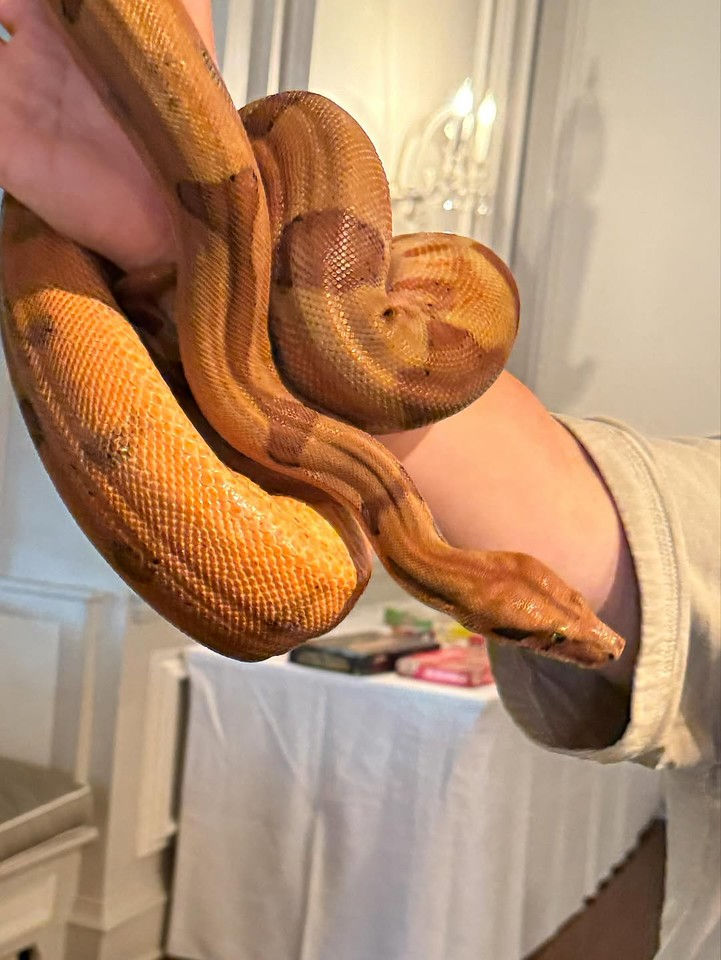
For someone who wants to try touching a snake but feels nervous, Steve described how he sometimes introduces the experience gradually.
He may position the snake's head near his own shoulder and offer the participant an opportunity to touch its tail while he maintains control of the animal.
This is part of his own handling approach, using animals whose behavior he knows well.
It's also a way to address a misconception.
Some people aren't necessarily afraid of being bitten. They're uncomfortable because they imagine snakes will feel slimy.
Steve helps them discover that a snake's skin feels quite different from what they expected.
He jokingly compares the texture to leather.
That small discovery can change the way someone thinks about the animal.
The snake hasn't changed. The person's understanding of it has.
And that's an important part of educational entertainment.
Why Having Different Animals Can Help
Steve shared another observation that says a lot about audience psychology.
As someone who absolutely loves snakes, he doesn't necessarily find tortoises the most exciting animals in his collection.
But kids love them.
He's seen children become especially excited about a tortoise even when they aren't comfortable around snakes.
That difference is one reason he often recommends programs that feature several kinds of reptiles and amphibians rather than concentrating exclusively on snakes.
These educational animal programs give children opportunities to learn about different species while participating in engaging, hands-on experiences.
A child who doesn't want to hold a snake might be perfectly happy interacting with a tortoise.
Another child might find a lizard fascinating.
Someone else may prefer to watch everything from a distance.
Different animals give participants different ways to engage with the experience.
And sometimes, getting comfortable around one animal can make someone more curious about another.
The point isn't to make everyone interact with every animal.
It's to create opportunities for people with different interests and comfort levels to find something that connects with them.
Understanding the Animals Is Still Essential
Being good with people is only half of the equation.
Steve also explained the work that goes into deciding whether an animal is appropriate for public interaction.
When his team acquires a new animal, evaluating its health comes first. They assess its condition and involve a reptile veterinarian when needed.
Only after considering its health do they begin evaluating its behavior through handling.
That sequence matters because an unhealthy animal may behave differently from a healthy one.
Steve shared an example involving a rainbow boa that initially seemed unusually calm. The snake was dehydrated and malnourished when he received it.
Once its health improved, its behavior changed significantly.
The animal that had initially seemed easygoing became much more reactive.
That's an important reminder that judging an animal's suitability for handling isn't always as simple as observing it once.
Steve also explained that not every animal in his collection participates in public handling.
Some are better suited to being observed than touched.
This is where the presenter's responsibility extends beyond making the audience happy. A professional has to consider both the people participating and the welfare of the animals involved.
Sometimes the best decision is to introduce an animal without allowing people to hold it.
And sometimes it's to choose a different animal altogether.
The Best Moments Aren't Always About the Animals
One of the more meaningful examples Steve shared involved educational programs he conducted for young people receiving inpatient care at a hospital.
Some of those participants were dealing with difficult life experiences, including trauma and challenges with trust.
Steve remembered seeing them become curious about the animals, gradually open up to the experience and sometimes work through their fears.
Those interactions were particularly rewarding for him.
Not because everyone suddenly loved snakes, but because the animals provided an opportunity for connection.
A different example came from a high school photography program.
Steve's team brought animals for students working on macro photography. As other students passed the classroom on their way to lunch, they noticed what was happening and wanted to come inside.
According to Steve, the team ended up staying for approximately another hour because so many students wanted to see the animals.
Experiences like these show how school assemblies and educational entertainment programs can spark curiosity and create memorable learning opportunities for students.
These are very different situations.
One involved young people navigating difficult personal circumstances. The other involved high school students who simply couldn't resist taking a closer look at some interesting creatures.
But both demonstrate something valuable about live animal education.
Animals can become a starting point for curiosity, interaction and conversations that might not have happened otherwise.
Watch the Full Conversation with Steve the NJ Snake Man
There's much more to Steve's work than we could cover in one article. We also discussed his background, how he evaluates animals for programs, the different types of experiences his team offers and what he's learned from building a career around something he loved as a child.
You can watch our complete conversation from Magical Memories Unlocked: Entertainer Deep Dive below.

What Really Makes a Great Reptile Show?
A collection of interesting animals can draw a crowd.
But creating a meaningful experience with those animals requires something more.
It takes someone who understands the reptiles well enough to recognize their behavior and limitations. It takes someone who can communicate that knowledge in an interesting way. And it takes someone who recognizes that every person in the audience brings a different level of curiosity, confidence and comfort.
That's what makes Steve's realization about being in the people business so important.
The reptiles may be what bring everyone together, but the human connection is what turns that moment into an educational experience.
At Magical Memories Entertainment, conversations like this are part of why we created Magical Memories Unlocked. We want to understand more than what entertainers bring to an event. We want to understand how they think, how they work and what makes their approach special.
Steve's experience offers a valuable reminder that some of the most important skills in entertainment aren't necessarily the ones the audience can see.
Sometimes they're found in knowing when to encourage someone, when to give them space and how to help them discover something new.


Comments