


Behind the Circus Ring: What It Really Takes to Create a Circus Show

When you watch a circus performance, everything seems to happen naturally. The ringmaster introduces the next act, the music starts at just the right moment and talented performers take turns doing things most of us wouldn't even attempt.
But what does it actually take to make all of that happen?
As it turns out, a great circus isn't simply a collection of talented performers. It's a carefully planned production where every act, transition, costume and piece of equipment needs to work together.
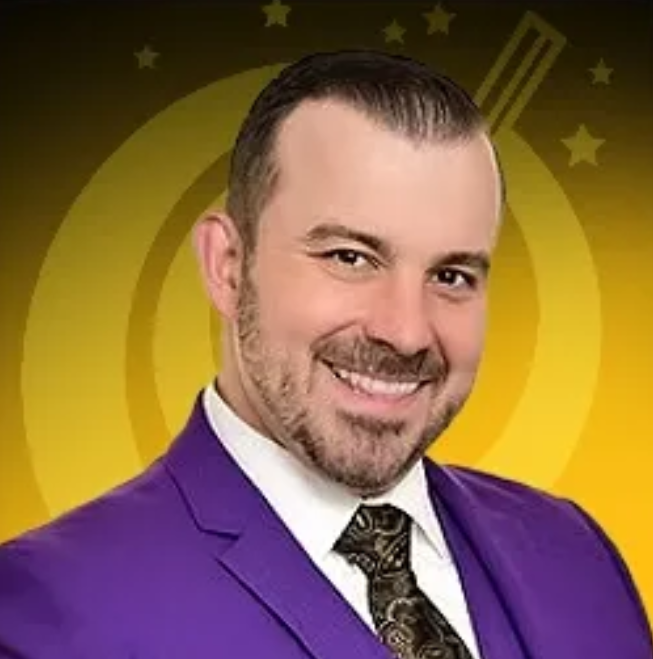
To better understand what goes into creating a circus show, I spoke with Zabo, a longtime circus performer and producer who has spent much of his life working in the industry.
Behind professional circus entertainment is a combination of specialized performers, careful coordination and production planning that audiences rarely get to see.
Zabo and I go back nearly 20 years. In fact, he was one of the first stilt walkers to work with Magical Memories Entertainment. Over the years, he's developed his own circus productions while continuing to perform as a clown, juggler and balancing artist.
Our conversation on Magical Memories Unlocked offered a fascinating look at everything that happens before the audience ever takes its seats.
A Great Circus Show Starts With Variety
One of the first things Zabo emphasized was the importance of variety.
A circus is different from a traditional stage show because audiences expect to experience several types of entertainment within one production.
There might be an aerialist performing high above the ring, followed by a comedy routine, a contortionist, a juggler or a daredevil act.

The challenge isn't simply finding talented people. It's putting together a lineup that feels balanced.
For example, Zabo explained that having multiple acts featuring similar juggling techniques might not create the strongest show. Instead, he looks for performers who bring something different to the production.
A well-designed circus gives the audience a reason to remain curious about what's coming next.
That means thinking about the contrast between acts, the visual presentation and how the performers complement one another.
Zabo even shared that although he enjoys juggling, he'll sometimes leave that part of his performance out when producing a circus. If another juggler is better suited for the production, he'd rather feature that performer and concentrate on his own clowning.
It's a perspective that says a lot about what makes a good producer.
The goal isn't to showcase every skill one person has. It's to create the strongest possible show.
The Ringmaster Does More Than Introduce Performers
A strong circus production also needs someone who understands how to guide the audience through the experience.
That's where the ringmaster comes in.
While the audience might think of the ringmaster as the person announcing each act, Zabo sees the role as something much more important.
An experienced ringmaster understands the flow of the performance, knows how to communicate with the audience and helps maintain the energy throughout the show.

They also become particularly valuable when something unexpected happens.
If music stops or a performer needs additional time to prepare, the ringmaster may need to improvise, engage the audience or use humor to keep the performance moving.
These moments can appear effortless when handled well, but they depend on experience and an understanding of live entertainment.
The ringmaster isn't simply filling the spaces between acts.
They're helping hold the entire production together.
Circus Clowning Is a Different Kind of Comedy
One of the more interesting parts of my conversation with Zabo involved the difference between a traditional circus clown and the type of clown someone might hire for a birthday party.
Both entertain audiences, but they often work in very different ways.
At a birthday party, a clown may interact directly with children and families through games, conversation and individual engagement.
In the circus ring, the relationship with the audience changes.
There's often much less talking.
Instead, the performer relies on physical movement, facial expressions, timing and visual storytelling to communicate.
Zabo explained that a circus clown needs to create a routine with a recognizable beginning, middle and end while making sure the audience understands what's happening.
That becomes especially challenging when the audience includes young children, teenagers, adults and seniors.
The performer also has to account for different cultures and languages.
A well-developed physical comedy routine can communicate an idea without requiring everyone in the audience to understand the same words.
But achieving that kind of connection takes practice.
Zabo credits much of his development to years spent working alongside other circus performers and learning from their experiences.
He also spoke about Greg Milstein, a longtime circus professional who helped him develop his microphone skills, comedic timing and performance techniques.
For Zabo, mentorship and constructive criticism have played an important role in becoming a better entertainer.
That experience reinforces something worth remembering about circus performances.
The comedy might look spontaneous, but getting an entire audience to follow a physical story requires considerable skill.
The Circus Has to Fit the Space
One of the biggest misconceptions about circus entertainment is that every circus requires an enormous tent or a dedicated performance venue.
According to Zabo, that's not necessarily the case.
Circus productions can take several different forms depending on the location, available space and budget.
A smaller pop-up circus might feature a handful of performers with limited equipment.
These productions can sometimes work in school auditoriums, gymnasiums and multipurpose rooms.
A larger circus featuring aerial performers, a full ring and more elaborate staging requires a very different level of preparation.
The available ceiling height becomes particularly important when aerial equipment is involved.
Why Ceiling Height Matters for Aerial Performances
Zabo explained that many aerial performances use a portable structure called an aerial rig.
An aerial rig is a freestanding metal frame that supports specialized equipment used by aerial artists.

Rather than relying on the venue's ceiling, performers can bring a suitable portable structure for their act.
However, that doesn't eliminate the need for adequate space.
Zabo gave an example of an aerial rig measuring approximately 20 to 25 feet tall. For a setup of that size, he explained that a venue might need ceilings approximately 30 to 40 feet high.
Those figures were examples from his experience rather than universal requirements.
Actual clearances and rigging specifications depend on the equipment, performers and venue.
And although a building might have a high ceiling, that doesn't automatically mean aerial equipment can be suspended from it.
Not every ceiling or structure is suitable for supporting that kind of load.
For that reason, appropriate rigging arrangements and venue suitability need to be established before the performance is planned.
What About Smaller Spaces?
For events without the space for a traditional aerial rig, Zabo discussed another option called a lollipop apparatus.
A lollipop is a hoop mounted on a vertical support. Depending on the apparatus and performer, it can allow for aerial-style movements within a more compact setup.
These performances may be used for ambient entertainment, where the aerialist provides a visual element rather than presenting a traditional circus routine.
It's one example of how different circus disciplines can be adapted to different environments.
The important distinction is that the available space helps determine which performances are appropriate.
The Details Nobody Thinks About Until Something Goes Wrong
One of my favorite stories from the conversation involved a circus performance Zabo worked on at a school in the Bronx.
The production was scheduled to take place in the school gymnasium.
Everything seemed reasonable until the performers arrived and discovered one very important detail.
The gymnasium was on the third floor.
There was no elevator.
Suddenly, all the equipment that would normally be unloaded and brought directly into a performance space had to be carried up several flights of stairs.
It's a funny story in hindsight, but it illustrates a serious point.
When you're producing a circus, knowing the dimensions of the performance area is only part of understanding the venue.
You also need to know how everything is getting there.
Zabo explained that he regularly asks clients questions about access, parking, doorways and loading arrangements.
Can a vehicle pull up near the building?
Are there double doors?
Are there stairs between the loading area and the performance space?
Are photos or videos of the venue available?
These details can influence how a show is designed and how much time and labor might be needed for setup.
The audience might only see an hour of entertainment, but the work involved in bringing that performance to life begins well before showtime.
Why Outdoor Circus Shows Require Extra Planning
Weather presents another challenge.
And it isn't just rain.
Wind can have a major impact on the types of circus acts that can be performed safely.
Zabo used juggling as an example.
He enjoys performing with flying hats, but on a particularly windy day, that routine might no longer be suitable.
The same issue can affect acts involving spinning plates, diabolo props and other equipment influenced by wind.
Some performances are even more sensitive to environmental conditions.
Zabo mentioned working with a foot juggler whose act includes balancing objects such as umbrellas and rugs. That style of performance might be much more appropriate indoors than at an exposed outdoor festival.
Choosing the right entertainment for fairs and festivals means considering the venue, weather conditions and types of performances that will work best in an outdoor setting.
The same applies to certain daredevil acts, where changing weather conditions can introduce serious safety concerns.
The solution isn't simply asking performers to continue regardless of the conditions.
It's understanding which acts are suitable for the environment, developing appropriate alternatives and knowing when a performance needs to be changed or cannot safely proceed.
Zabo also emphasized the importance of the ground itself.
Grass, pavement, uneven surfaces and locations exposed to wind can all affect a production.
Equipment anchoring, performer suitability and the physical environment need to be evaluated together.
That's why preparation and flexibility are both essential parts of circus production.
What Happens When the Music Stops?
Even a well-planned performance can run into unexpected problems.
Zabo recalled occasions when audio equipment overheated during outdoor events.
On one occasion, he was able to work around the problem by connecting his phone to another device and getting the music running again.
But his larger point wasn't about that particular solution.
It was about knowing how to respond when something goes wrong.
A performer might need to improvise while an audio problem is being resolved.
A ringmaster might need to engage the audience.
A planned routine might need to be adjusted because of weather.
These are all situations where experience makes a difference.
Zabo believes performers develop that judgment by learning from mistakes, working alongside experienced entertainers and repeatedly facing the unpredictable realities of live performances.
"The show must go on" is a familiar phrase in entertainment.
But as our conversation demonstrated, making that happen takes preparation, flexibility and good judgment. And when conditions aren't safe, good judgment includes knowing when not to proceed.
Building a Circus Months Before the First Performance
Zabo shared an example of a circus production he organized at a farm in upstate New York.
He considered it one of his successful productions, largely because of the preparation that went into it.
Months before the event, he visited the farm to meet with the owners and inspect the property.
He evaluated the space, took pictures and considered which performers would be suitable for that particular environment.
Rather than simply assembling a lineup of talented entertainers, he thought about how each performer would fit the venue and the overall show.

He also worked through the production details well in advance.
That included determining who would handle setup and breakdown, who would operate the music and how other elements of the event would be managed.
Power requirements, backup equipment and possible weather issues were also part of the planning process.
By the time the audience arrived, the goal was to have as many of those decisions settled as possible.
The event featured a full variety circus presentation with an intermission and attracted a strong turnout, according to Zabo.
What made the production stand out to him wasn't a single extraordinary act.
It was that the different pieces had been planned to work together.
And that may be one of the most useful lessons from his experience.
A successful circus is created long before the first performer enters the ring.
Watch the Full Conversation with Zabo
There's much more to Zabo's experience than we could explore in one article.
During our conversation, we also discussed his family's circus background, the creativity behind custom stilt-walking costumes, his work with balancing acts and his experiences returning to a touring circus after years away.
You can watch our complete conversation below.

A Lifetime of Circus Experience Comes Down to One Thing
Toward the end of our conversation, Zabo spoke about something that clearly means a great deal to him.
He grew up around the circus, learning from his father and other performers before developing his own career.
He later moved to the United States with his family and continued working toward building a future in entertainment.
During the COVID period, he began developing the idea of creating his own circus production.
Turning that idea into a working circus became one of his proudest accomplishments.
What stood out throughout our conversation was how often Zabo returned to the same principles.
Keep learning. Ask questions. Prepare thoroughly. Surround yourself with good performers. And don't assume that talent alone is enough to produce a successful show.
At Magical Memories Entertainment, conversations like this are an important part of why we created Magical Memories Unlocked
We work with performers across many different areas of entertainment, but there's always more to learn about the craft and experience behind what they do.
Zabo's story is a reminder that what an audience sees in the circus ring is only a small part of the work involved.
Behind every polished performance are countless decisions, years of practice and people who have dedicated their lives to getting those details right.
And understanding that work gives us a whole new appreciation for the show.
Comments