


Beyond the Tricks: How Magicians and Mentalists Connect With an Audience
A magician can spend years perfecting an incredible sleight of hand technique. A mentalist can create an effect that seems completely impossible. But neither guarantees that the audience will walk away feeling connected to the performance.
There's a difference between impressing someone with a trick and making them feel like they were genuinely part of something.
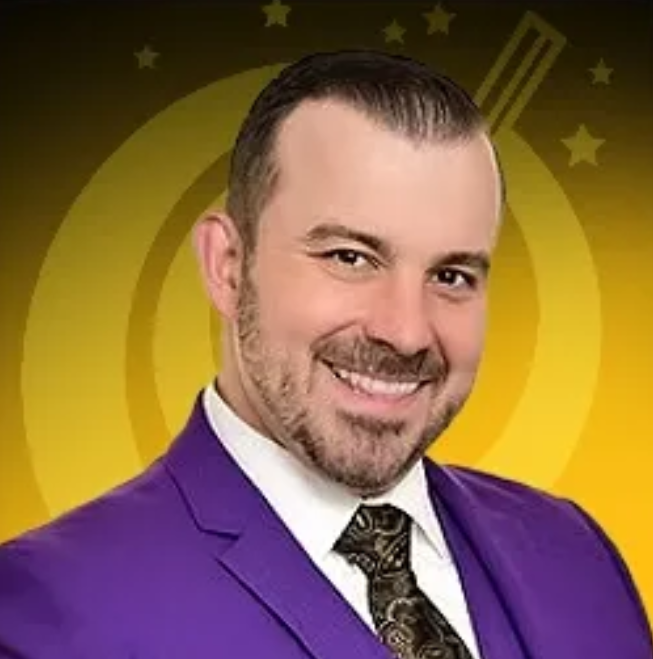
That distinction became one of the most interesting parts of my conversation with magician, mentalist and speaker Fabian Moreno on Magical Memories Unlocked.
Fabian has spent years performing for audiences ranging from intimate private gatherings to college crowds numbering in the thousands. Throughout that experience, his approach has evolved from concentrating heavily on technical magic to building performances around storytelling, personality and the people sitting in front of him.
And as we discussed his career, one idea kept coming up: The most powerful part of a magic show isn't always the magic. Sometimes it's how the performer makes people feel.
Magic Happens in the Mind of the Audience
One of the questions I asked Fabian was about the difference between a magician and a mentalist.
It's a question that comes up frequently because, while the two performance styles share similarities, the experience can feel completely different.
Traditional magic often focuses on seemingly impossible physical events. A card disappears and reappears somewhere unexpected. An object changes location. Something the audience believes should be impossible happens right in front of them.
Performances by professional mentalists generally focus on the appearance of extraordinary mental abilities, including thought prediction, mind reading and psychological demonstrations.
Fabian offered a perspective that went beyond those definitions.
As he explained it, magic ultimately exists in the mind of the spectator. Regardless of the physical technique being performed, the audience is responsible for interpreting and experiencing the impossible moment.
For Fabian, that understanding influenced how he approached his work.
He had spent years studying demanding sleight of hand techniques, but as he developed his mentalism performances, he discovered something interesting.
He found that he had more freedom to concentrate on the people in front of him.
Rather than managing every detail of a technically complicated physical routine, he could dedicate more attention to conversation, participation and the audience's reactions.
That doesn't mean mentalism is inherently easier than magic. It means Fabian designed his performances in a way that allowed him to focus more of his attention on the audience.
And that changed the experience he wanted to create.
Why Technical Skill Alone Doesn't Make a Great Performance
Fabian's technical background is extensive. He grew up studying sleight of hand and learning from traditions passed down through generations of magicians.
But his development as an entertainer didn't happen exclusively through practicing tricks.
He also participated in theater productions, learned about technical production and spent time performing at open mic nights.
The open mic experience was particularly interesting.
Fabian explained that he spent time around comedians, not because he necessarily wanted to become one, but because he wanted to become comfortable holding an audience's attention without relying entirely on magic.
That's a very different skill from mastering a card trick.
Professional magicians might know exactly how to execute impressive effects, but connecting with an audience requires additional abilities.
The performer needs to understand pacing, read reactions, carry a conversation and recognize when an audience wants to participate.
There also needs to be something worth paying attention to between the tricks.
During our conversation, Fabian described the importance of bringing personal experiences and authentic stories into a performance.
That led to one of my favorite examples from the interview.
The Story About Dating a Witch
At one point, Fabian casually mentioned a line he used in his college show:
"I dated a witch once."
Naturally, I had to ask him to explain.
As it turns out, the story wasn't about anything supernatural.
Fabian described meeting a woman while performing at local open mic nights. She enjoyed horror movies, wore black and had an interest in things associated with witches and the supernatural.
As they got to know each other, she affectionately called him her wizard and he called her his witch.
It was a real relationship and a personal story that eventually became part of his performance.
What made it particularly interesting was how he used it.
Rather than introducing another trick immediately, Fabian could pause the show and tell a story that revealed something about his personality.
The audience wasn't just watching a magician anymore. They were getting to know the person performing for them.
Fabian explained that he wanted his show to build in intensity as it progressed. Personal storytelling became part of that progression, giving the audience a different kind of experience between magical effects.
He also made sure the woman involved was comfortable with him sharing the story in his act.
The lesson wasn't that every entertainer needs an unusual personal story.
It was that authentic experiences can create connections that technical demonstrations alone might not accomplish.
A trick gives people something to watch.
A story gives them something to relate to.
Remembering Someone's Name Might Be the Most Powerful Trick
Of all the techniques Fabian discussed, one of the most practical had nothing to do with sleight of hand or mentalism.
It was remembering people's names.
Fabian places tremendous importance on learning the names of audience volunteers and using them naturally throughout his performances.
He described how his current show involves approximately 13 audience participants.
Rather than treating each interaction as an isolated moment, he makes an effort to remember those individuals and acknowledge them afterward.
Why?
Because people feel recognized.
Imagine volunteering during a show with hundreds of other guests. You participate in an effect, return to your seat and continue enjoying the performance.
Then, after the show, the entertainer approaches you and remembers your name.
That simple interaction can make the entire experience feel more personal.
Fabian even shared a practical technique he uses when meeting someone.
If someone introduces themselves as Ally, for example, he might ask how they spell their name. That gives him a natural reason to repeat it several times during the conversation.
It's a small detail, but one he credits with helping him remember people.
During our discussion, we talked about how hearing your own name can be meaningful.
Fabian jokingly described it as someone's own "abracadabra."
And there's something worth considering there.
While audiences may forget the exact sequence of a card trick, they can remember the feeling of being personally acknowledged.
That's audience engagement at its most basic and often most effective level.
The Audience Should Be Part of the Performance
One of Fabian's recurring points was that audiences don't necessarily want to sit passively and watch someone demonstrate how talented they are.
They want to be involved.
That involvement can take different forms.
Sometimes it's bringing someone onto the stage for a mentalism demonstration. Other times it's asking questions, incorporating audience responses or simply remembering something a spectator mentioned earlier.
Fabian also discussed how his approach to interaction became especially important during virtual performances.
When live events shifted online during the pandemic, he developed a show that emphasized active participation rather than simply asking viewers to watch him perform through a screen.
He believed people were looking for connection and structured his performances to encourage that exchange.
Interestingly, he didn't report the decline in college audience attention that many people might expect.
In his experience, audience involvement actually intensified following the pandemic.
That's his observation rather than a universal conclusion about audience behavior, but it reinforces an important distinction.
An audience's willingness to pay attention isn't necessarily determined by its age or generation.
The way a performance invites people to participate can also influence how engaged they become.
Why a Great Performer Needs to Adapt to the Room
Fabian's experience performing on college campuses provided another valuable perspective.
Not every show takes place in a beautiful theater with professional lighting and a full audience.
Sometimes the performance is in a cafeteria.
Sometimes it's in a coffee shop or gymnasium.
And sometimes the audience is considerably smaller than expected.
Fabian shared a particularly memorable story about arriving at a college event where almost nobody knew he was performing.
There had been virtually no promotion.
Instead of accepting that he would have an empty room, he asked to be taken to the dining hall.
He began performing close-up magic for students at their tables, introducing himself and letting them know about the show later that evening.
By the time the event started, he recalled that the venue as approximately two-thirds full.
But he was quick to acknowledge something else.
He didn't think the actual show was particularly good.
He was still developing as a performer and viewed the experience as a lesson.
That honesty was refreshing because it illustrated two different aspects of professional entertainment.
First, the ability to attract and engage an audience matters.
Second, attracting an audience doesn't replace the responsibility to deliver a strong performance.
Both require practice.
Turning a Small Audience Into a Different Experience
Fabian described another college performance where he initially had an audience of approximately six people.
Rather than immediately presenting his full stage show to such a small group, he offered an alternative.
He could perform close-up magic in a more intimate setting.
As the performance continued, other people began noticing what was happening and joining the audience.
Fabian recalled that the crowd eventually grew to approximately 60 people.
At that point, he was able to transition from close-up magic into his stand-up performance.
That transition wasn't accidental.
Fabian explained that moving between close-up and stage magic requires an understanding of how performances are structured.
In close-up magic, the audience is physically near the performer. The movements can be smaller and much of the action happens at tabletop level.
On stage, gestures, facial expressions and the visual presentation need to communicate across a larger space.
The performer also needs to think about how individual effects connect so the show feels continuous rather than like a collection of unrelated tricks.
This is where years of experience become especially valuable.
A good entertainer isn't necessarily someone who performs the exact same show under every circumstance.
It's someone who understands their material well enough to adapt it when the environment changes.
Building a Show Around the People Watching It
Fabian also explained how he approaches customizing performances for corporate entertainment.
Rather than creating an entirely new performance for every event, he works from an established show structure that can accommodate personalized material.
His standard show contains six pieces, with certain routines that can be adjusted depending on the audience.
For example, he might involve a company executive in a mentalism demonstration or incorporate a recognizable company reference into a revelation.
He also considers the audience's professional background when developing humor.
During a series of events for attorneys, Fabian wanted to include a reference that would resonate specifically with that profession.
Rather than guessing, he spoke with his girlfriend, a corporate attorney, about industry terminology.
That conversation helped him develop a line involving insurance policy limits that he found worked well with the audiences he was entertaining.
It's a small example of a much larger principle.
Personalization works best when it comes from understanding the audience rather than simply mentioning the company's name.
A generic joke might get a laugh.
A relevant observation about something the audience actually understands can make the performance feel like it was created with them in mind.
Fabian also emphasized authenticity.
He doesn't try to force himself into the role of a stand-up comedian. Instead, he incorporates humor in ways that fit his own personality and storytelling style.
That consistency is part of what makes the performance feel natural.
Connection Can Start Before the Show Begins
One of Fabian's most interesting professional habits is that he sometimes performs close-up magic for guests before his scheduled stage show.
This isn't necessarily a separate contracted performance.
For him, it can be a way of establishing a relationship with the audience before he steps onto the stage.
Guests get an opportunity to meet him, experience his personality and participate in something interesting.
Then, when he takes the stage, some of the audience members already feel familiar with him.
They aren't watching a complete stranger.
Fabian explained that this can help create a supportive atmosphere for the rest of the performance.
He credits this approach to lessons he learned from other professional magicians earlier in his career.
It's another example of how the audience experience extends beyond the individual effects in a show.
The performance can begin with the first interaction.
And the impression it creates can continue long after the final trick.
Watch the Conversation With Fabian Moreno
There's much more to Fabian's perspective than can fit into a single article.
We also discussed his transition from college entertainment to corporate mentalism, how he approaches challenging performance environments and the lessons he's learned from years of working with different audiences.
You can watch our full conversation on Magical Memories Unlocked: Entertainer Deep Dive below.

The Difference Between Performing at People and Performing With Them
As our conversation developed, I found myself returning to a distinction that applies well beyond magic and mentalism.
There's what an entertainer does and then there's how they do it.
A demonstration can be technically flawless and still leave an audience feeling disconnected.
Another performance might rely on simpler material but create a stronger experience because the entertainer understands how to bring people into it.
Fabian's approach reflects years of learning both sides of that equation.
He developed his technical abilities through study and practice. Then, through countless live performances, he continued developing the skills that allow him to communicate with audiences, understand their expectations and create moments that feel personal.
That doesn't make technical skill unimportant.
It makes technique one part of a much larger craft.
At Magical Memories Entertainment, conversations like this are part of why we created Magical Memories Unlocked. Understanding how entertainers think, prepare and connect with audiences helps us appreciate the differences between performance styles and recognize what makes an entertainer a good fit for a particular event.
And sometimes those insights are surprisingly simple.
Remember someone's name.
Listen to what they're telling you.
Tell a story worth hearing.
Give people an opportunity to participate.
The best magic doesn't always happen when something disappears.
Sometimes it happens when someone in the audience feels seen.
Comments