


The Art of Clowning: Why Great Circus Entertainment Is About More Than Tricks

When most people picture a clown, they imagine colorful makeup, oversized shoes, a red nose and someone twisting balloons at a birthday party.
But what if none of those things are necessary to be a clown?
Professional clowning is a much broader performance art than most people realize. It combines physical comedy, character development, improvisation and an understanding of how audiences respond to the unexpected.
For circus performer Rich Potter, the heart of clowning isn't necessarily about getting someone to laugh at a joke or react to an impressive trick. It's about creating a situation where people feel comfortable letting their guard down and playing along.
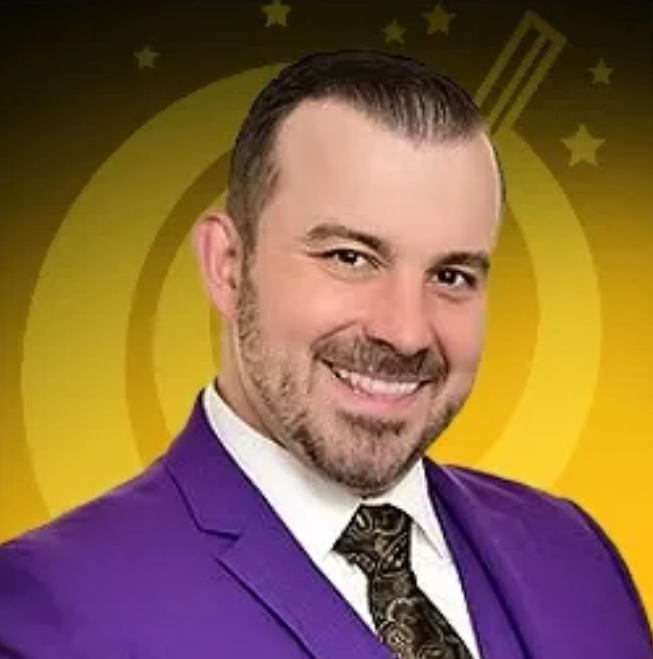
Rich joined me on Magical Memories Unlocked: Entertainer Deep Dive to explore an art form he's spent decades developing. His experience includes training at Ringling Bros. and Barnum & Bailey Clown College, performing with the circus, working as a street entertainer and bringing clowning into hospital environments.
What emerged was a perspective on entertainment that goes well beyond the circus.
What Actually Makes Someone a Clown?
Rich describes himself as a juggler, stilt walker, comedian, unicyclist and wire walker. He also performs mime and magic.
This range of skills reflects the variety found in circus entertainment, where performers combine physical skill, comedy and creativity to engage different audiences.
But there's one title he considers more important than all the others.
Clown.
Interestingly, he often puts that title at the bottom of the list when introducing himself professionally.
The reason is simple. People already have an idea of what a clown is supposed to look like and what a clown is supposed to do.
Mention clowning and someone might immediately think of balloon twisting, face paint or a performer in an oversized costume.
Rich doesn't see those things as the definition of his work.
Instead, he views clowning as a form of expression built around behavior, relationships and the situations a performer creates.
One of the ideas he explored was the traditional trickster character. Throughout different cultures and forms of storytelling, the trickster is someone who behaves contrary to expectations, gives in to impulses and often creates their own problems.
That concept translates beautifully into physical comedy.
Imagine a character who desperately wants something but can't quite get it. Maybe they know exactly what they should do, but their impulses keep getting in the way.
The audience can see the mistake coming. The character cannot seem to stop themselves.
The result is funny because the performer has created a situation where the character becomes responsible for their own predicament.
And none of that requires clown makeup.
The Real Skill Is Inviting People to Play
One of the most useful ideas Rich shared was his description of clowning and mime as an invitation to play.
Consider one of the strolling entertainers approaching guests at an event.
Those guests might be having a conversation, enjoying a drink or simply watching everything happening around them.
A performer who immediately demands attention can make the interaction uncomfortable.
A skilled clown approaches the situation differently.
Rich described looking for a natural reason to interact. It might begin with a simple visual gag, a juggling trick or an unexpected gesture.
He might offer someone an imaginary object and allow that person to discover what they're supposedly holding.
Suddenly, two strangers are participating in a shared imaginary world.
The interaction doesn't work because the performer has forced everyone to pay attention.
It works because the guest has chosen to participate.
That distinction matters.
Reading the Audience Before Creating the Moment
Rich emphasized that experienced performers pay attention to how people react before deciding how far to take an interaction.
Some guests immediately understand the invitation and want to join in.
Others need time to figure out what's happening.
And some simply aren't interested.
Recognizing those differences is part of the craft.
A mime might use a handshake to introduce a comedic situation. A clown might turn an ordinary movement into a physical gag. But the performer still has to understand whether the other person is comfortable participating.
This is where clowning becomes more than rehearsing funny material.
The performer needs to observe, respond and sometimes change direction entirely.
Why Adults May Need Clowning More Than Children
Rich also shared an interesting idea from one of his teachers.
Children are naturally inclined to play. They're constantly experimenting, imagining and responding to the world around them.
That's part of the appeal of family entertainment, where imaginative performances and interactive activities can give children and adults opportunities to enjoy an experience together.
Adults often become more concerned with behaving appropriately, avoiding embarrassment and maintaining control.
A clown can help break through those expectations.
That doesn't mean adults suddenly become children. It means they get an opportunity to participate in something without worrying quite so much about how they're supposed to behave.
Rich described clowns and mimes as catalysts for play.
It's a useful way to think about live entertainment, particularly when an audience might otherwise remain passive.
Why Great Clowning Requires More Than Physical Skills
Watching someone juggle several objects, balance on a unicycle or perform a difficult stunt can be impressive.
But Rich made an important distinction between demonstrating a skill and creating an entertaining performance.
He explained that when he walks onstage as a juggler, the audience already expects juggling.
Everything becomes a question of how impressive the juggling will be.
Rich is increasingly interested in reversing that expectation.
Rather than presenting himself primarily as someone about to demonstrate amazing tricks, he wants audiences to become curious about the character and the experience.
Then, when juggling enters the performance, it becomes an unexpected bonus.
That approach allows comedy and storytelling to become just as important as the physical skill.
The Difference Between a Trick and a Theatrical Moment
One of Rich's favorite routines illustrates this idea.
He walks onto the stage carrying a cardboard box.
The audience doesn't know what's inside.
He takes his time introducing the box, drawing people into the situation and allowing anticipation to build.
Eventually, he reveals what's inside.
A stalk of celery.
That's it.
Yet Rich described the routine as approximately eight minutes of entertainment.
The humor doesn't come from revealing a particularly impressive object. It comes from the expectations created around something completely ordinary.
The box becomes interesting because of the performer's behavior.
The audience starts imagining what might happen.
And when the reveal finally arrives, the gap between expectation and reality becomes the joke.
It's a reminder that entertainment isn't always about having bigger props or more complicated tricks.
Sometimes the real skill is knowing how to make an audience care about something as ordinary as a piece of celery.
What Ringling Bros. Clown College Actually Taught
Rich's understanding of the craft comes from a particularly interesting chapter in circus history.
He attended Ringling Bros. and Barnum & Bailey Clown College, a training program created to develop a new generation of circus clowns.
According to Rich, the school was established as the circus needed younger performers to carry forward its traditional American three-ring clowning style.
He described a highly competitive selection process followed by an intensive training program in Venice, Florida.
But what stood out most wasn't simply the physical training.
It was the range of skills students were expected to develop.
Clown College covered physical comedy, mime, improvisation, character development, juggling, stilt walking, costume construction and prop building.
Students learned not only how to perform an act but also how to create one.
The training included the practical mechanics of physical comedy, such as choreographed falls and exaggerated movements.
Those techniques weren't simply about being silly.
They had to be controlled, understandable and visible to audiences seated throughout a large arena.
Performing for 20,000 People Is Different From Performing for 20
Rich explained a concept called arena choreography.
In a large circus arena, someone sitting far from the performance needs to understand what the clown is doing.
That requires broad physical movements and expressions.
A subtle facial reaction that works beautifully a few feet away might disappear completely in an arena.
But the opposite is also true.
When Rich eventually moved into smaller performances, he discovered that the exaggerated movements he'd learned for the circus didn't always translate naturally.
What worked for thousands of spectators could feel excessive when performed directly in front of someone.
He had to learn how to scale his performance down.
That adjustment became especially important when his work took him into hospitals.
From the Circus Arena to a Hospital Room
One of the most revealing parts of our conversation was Rich's description of hospital clowning.
In an arena, the performer has to project energy outward so that thousands of people can understand what's happening.
In a hospital room, the challenge can be almost the opposite.
The performer may be entering the personal space of a child who is uncomfortable, frightened or simply not interested in having another visitor.
Rich explained that permission is fundamental to his approach.
The child needs to have a choice about whether the clown enters and interacts.
If the answer is no, the performer respects it.
Rather than arriving with an established routine and expecting the child to participate, the clown looks for a connection that feels appropriate to that particular moment.
This is a powerful example of how the same performance discipline can require very different approaches depending on the audience.
When a Simple Game Became Something More
Near the end of our conversation, I asked Rich to share a moment from his career that made him particularly proud.
He remembered working in a hospital with another clown.
A young patient had undergone a medical procedure and was anxious about moving her head. According to Rich, medical staff wanted her to demonstrate that movement before she could be discharged.
Despite their encouragement, she was reluctant.
Rich and his partner were invited to see whether they could help.
They approached the room and allowed the girl to decide whether they could enter.
Once she welcomed them inside, they began creating a playful situation.
Rich suddenly announced that he could see an elephant outside the window.
He moved toward the window, reacted with surprise and encouraged his partner to investigate.
The imaginary scene developed as the clowns moved around the room.
The girl began following the action, turning her head to see what was happening.
Rich recalled that she was eventually able to go home.
The story isn't about clowning replacing medical care. The medical team was already caring for the child.
What makes it meaningful is how the performers used imagination and play to help her participate in something she had been afraid to do.
The same principles Rich described earlier in the conversation were present here: invitation, permission, observation and adaptation.
Only the setting had changed.
The Relationship Between Performer and Audience
Rich also explained why he eventually preferred smaller performances to the enormous circus audiences he'd worked with.
In a traditional circus, he could be one of many performers entertaining thousands of people.
When the crowd laughed, it wasn't always possible to know which performer or action had created the reaction.
Sometimes the music and activity made it difficult to hear the response at all.
Rich wanted a more direct connection.
Street performing gave him that opportunity.
If the audience laughed, he knew what had worked.
If they didn't, he knew that too.
That immediate feedback became part of how he developed his material.
Rather than treating a performance as something fixed that must unfold exactly the same way every time, he described a constant exchange between entertainer and audience.
The performer introduces an idea.
The audience responds.
And the performer adjusts.
Sometimes that means extending a moment. Other times it means changing the pace or moving on.
The material may be rehearsed, but the relationship is happening in real time.
That's one of the most interesting distinctions between simply demonstrating a skill and creating an engaging live performance.
Understanding the Craft Changes How We Experience Entertainment
At Magical Memories Entertainment, I spend a lot of time getting to know the performers we work with.
One of the things I discussed with Rich is how important it is to understand what different entertainers actually enjoy creating.
Two performers might both describe themselves as jugglers, but their shows could be completely different.
One might focus on increasingly difficult technical tricks.
Another might build a theatrical experience where juggling supports a larger comedic story.
Neither approach is automatically better.
They serve different audiences and create different experiences.
Rich's career is a good example of why those distinctions matter.
His work draws from circus training, physical comedy, mime, improvisation and theatrical storytelling. The result isn't limited to one particular type of event or a single definition of what a circus performer should be.
Understanding those differences helps us appreciate the decisions performers make long before the audience sees the finished show.
And it's one of the reasons I enjoy having these conversations on Magical Memories Unlocked.
Watch the Full Conversation With Rich Potter
Rich shares much more about his experiences at Ringling Bros. Clown College, life traveling with the circus, performing internationally and the creative process behind his theatrical shows.
If you're interested in how professional entertainers develop their skills and connect with audiences, the full conversation offers a fascinating look behind the curtain.

You can also explore more conversations with working entertainers through our Magical Memories Unlocked series.
Sometimes the Best Entertainment Begins With an Invitation
When Rich first introduced himself, he listed a remarkable collection of physical skills.
Juggling, stilt walking, unicycling, wire walking and more.
But the strongest idea from our conversation wasn't about any one of those abilities.
It was about what happens when a performer creates an opportunity for someone else to join the experience.
A clown can make someone laugh, but the craft goes deeper than delivering a punchline.
It involves knowing when to approach, when to step back, when to exaggerate and when to let a simple moment unfold naturally.
Sometimes that means entertaining thousands of people in an arena.
Sometimes it means making a room full of adults feel comfortable being a little silly.
And sometimes it means helping one child follow an imaginary elephant outside a hospital window.
Comments